Blog

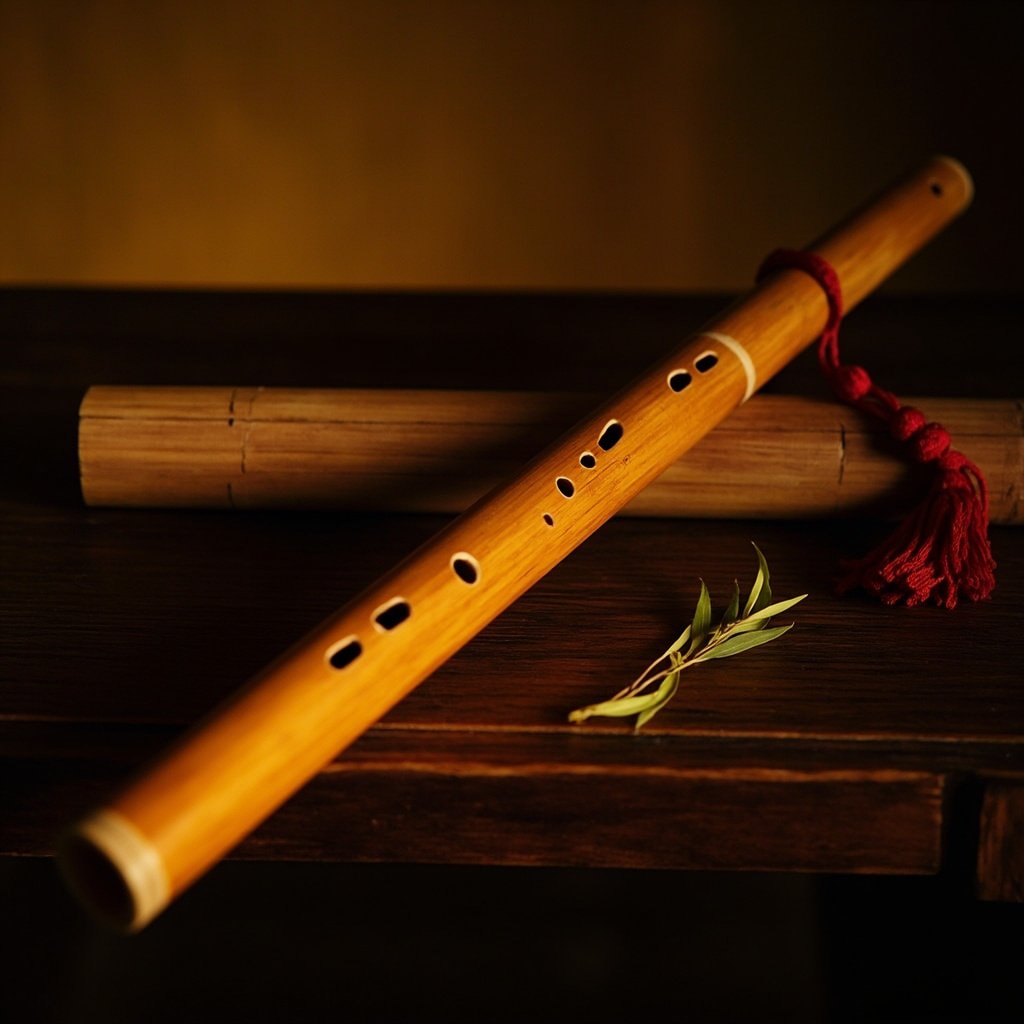
Chinese Bamboo Flute Feng Shui Meaning: The Dizi Guide
Walk through an older Chinese home and you may find a bamboo flute hanging on a wall, laid across a shelf, or tucked beside a scholar’s brush pot. The Chinese bamboo flute, the dizi, is a musical instrument first, but it also carries a long second life as a feng shui object. Its hollow body, its breath-driven sound and its bamboo material all point the same direction: movement of air, and the clearing of what has gone stale. This guide explains the traditional reading of the dizi and how to place one so it supports a room instead of merely decorating it.
What the Dizi Is
The dizi is a transverse flute cut from a single length of bamboo, with six finger holes and an extra membrane hole covered by a thin reed film. That membrane gives the instrument its bright, slightly buzzing timbre, a sound Chinese listeners describe as carrying a living edge.
Historically the dizi travelled with opera troupes, folk musicians and court ensembles, and it remains one of the most recognisable sounds of Chinese music. What interests feng shui is not the repertoire but the mechanism: a flute only speaks when breath passes through it.
Why Sound Matters in Feng Shui
Classical feng shui is concerned with chi, the quality of energy moving through a space. Two conditions are treated as problems: stagnant chi, where air and activity settle into corners, and rushing chi, where corridors push energy through too fast.
Sound is one of the traditional corrections for stagnation. Bells, gongs, chimes and flutes all set air in motion without adding mass to a room. A wind chime waits for the breeze; a flute waits for a player. Both introduce rhythm into a space that has gone quiet in the wrong way.
This is why a flute is classified with the sound remedies rather than the object remedies. It does not block sha chi the way a screen blocks a sightline. It shifts the quality of the air itself.
Bamboo as Wood Energy
In the five element system of wu xing, bamboo belongs to wood. Wood energy is associated with growth, upward movement, flexibility and the early morning. A hollow bamboo stem also carries a second symbolic layer: it is empty inside, which classical texts link to receptivity.
For a home, wood energy supports:
- Growth and learning, particularly in a study or a child’s room.
- Health and vitality, since wood feeds steady expansion.
- Softening metal-heavy rooms, where white, grey, glass and steel dominate.
- Warmth in rooms that feel cold, without the visual weight of furniture.
Because bamboo is wood and hollow, a flute placed in a stagnant corner works on two registers at once: the material feeds the element, and the instrument invites sound into a dead zone.
The Symbolic Vocabulary of the Flute
The dizi carries a cluster of meanings that Chinese culture attached to it over centuries.
- Harmony between people. The phrase for a well-matched pair, he ming, comes from paired birds calling in agreement; flute music is traditionally used to evoke that same accord within a household.
- The scholar’s refinement. Alongside the guqin and the game of weiqi, the flute belonged to the accomplishments of a cultured person. Hanging one signals cultivation rather than wealth.
- Good news arriving. Bright flute tones are associated with celebration and with announcements worth hearing.
- Release of obstruction. Because breath must pass through the tube, the flute became a metaphor for clearing what is blocked, in the body as much as in a room.
Late imperial households often hung a bamboo flute on a family room wall, not to play it, but to keep its meaning in view.
Where to Place a Bamboo Flute
Placement depends on what the room needs. Treat the flute as a light, mobile remedy rather than a structural one.
The east or southeast. East is the wood direction and southeast is the traditional wealth and growth sector, so a flute on an east wall supports the element already present there.
A study or home office. Hanging a dizi beside bookshelves reinforces the scholar association, especially in a room that feels mentally heavy.
A long corridor. A classic spot for rushing chi. A flute hung across the flow, paired with a plant or soft textile, slows the movement and gives the eye a resting point.
A child’s study area. Bamboo is the traditional wood remedy for learning spaces. Keep the instrument high enough that it is admired rather than knocked down.
Avoid hanging a flute directly over a bed.
Material and Condition
Feng shui reads condition as signal. A cracked or split flute carries the meaning of a broken channel, so a damaged instrument should be repaired, retired, or kept purely as an antique. Natural bamboo, aged to a honey or amber tone, is preferred over lacquered novelty replicas, and a plain undecorated flute reads as restraint. Length matters less than proportion.
Pairing a Flute With Other Remedies
The flute rarely works alone. Traditional combinations include:
- Flute and bamboo plant. Wood reinforced by living wood, ideal for a growth sector.
- Flute and wind chime. Both move air, but the chime adds metal energy, so use the pair where a room needs movement and definition.
- Flute and calligraphy. A scroll of a single auspicious character beside a flute creates a scholar’s wall, a recognised arrangement in traditional practice.
- Flute and water feature. Water feeds wood. Place the flute near a small fountain in a wealth sector, not directly over the water.
Do not stack four or five sound remedies in one room. Movement becomes noise, and the correction turns into the problem.
Common Mistakes
The most frequent error is treating the flute as an ornament and hanging it wherever a nail fits. A second error is placing it in a bathroom or above a stove, where the elemental reading is confused. Buying a flute that cannot be played is a third, since the symbolic weight depends on the object being a real instrument with a real bore, even if no one ever plays it.
Finally, avoid hanging a flute in a room where the household is already agitated. Sound remedies amplify what is present, and in an argument-prone space the flute is better replaced by a calm material like stone or ceramic.
Frequently Asked Questions
Can a flute be hung in a bedroom?
It can, but placement must be careful. Bedrooms favour rest, and a bright sound symbol is better kept on a wall away from the bed rather than above it.
Is a Western concert flute equivalent?
It carries a similar sound meaning, but the wood element association belongs to bamboo. For elemental work, bamboo is the traditional choice.
A Small Object, a Clear Correction
The Chinese bamboo flute earns its place in a home for a simple reason. It is a hollow wooden tube that exists to move air, which is precisely what a stagnant room lacks. Placed with intention, in an east or southeast position, in a study or across a dead corridor, it does quiet remedial work that costs almost nothing.