Blog

Rice Bowl Feng Shui Meaning: The Vessel That Holds a Household’s Wealth
The bowl is the most ordinary object in a Chinese home and, in a sense, the most consequential. It is where cooked rice lands, where the family measures its daily nourishment, and where the first and last meal of the day take place. Because of that, feng shui has always treated the rice bowl as more than tableware: it is read as a container of fortune. Understanding rice bowl feng shui meaning is really about understanding how a household gathers, holds, and loses wealth.
The Bowl as a Container of Gathered Wealth
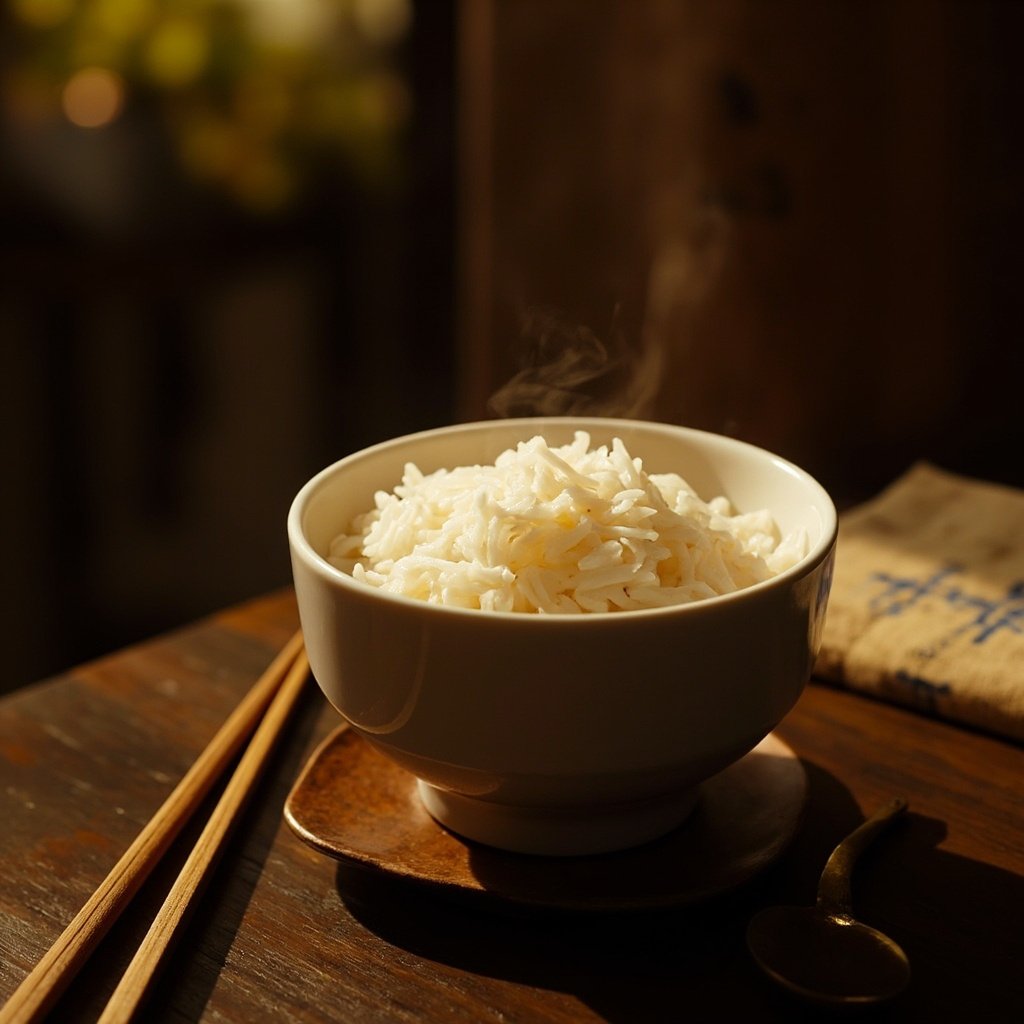
Classical feng shui works on the principle that what a vessel holds, a house keeps. This is why basins, jars, bowls, and cups have always been evaluated by whether they are open or closed, empty or full, and clean or neglected. An open, clean, filled bowl on a table is a small but coherent picture of a household that receives nourishment and does not waste it.
Rice is the harvest itself, gathered, husked, and stored. A filled bowl says the year’s work produced something the family can sit down and eat; an empty bowl turned over on the drying rack says the grain ran out.
The Sound of the Name: Stability as a Hidden Value
There is a wordplay running through the tradition that explains why the bowl specifically carries the meaning of security. The Mandarin word for bowl, wan, is also the word for ten thousand, an idiom for abundance and for an unlimited quantity. In the same family of ideas, the phrase wan shi, meaning ten thousand things or everything, is attached to bowls and to households alike.
Read alongside this, the bowl becomes a quiet but reliable carrier of intent. A family that eats from bowls is continuously expressing the wish for a steady and sufficient life, which is why a set of bowls is treated as an heirloom and a set of plates is not.
Never Fill the Bowl to the Brim
One rule appears in almost every household custom that concerns bowls, and it is the one most often broken by well-meant hospitality: leave a little space. A bowl filled to the rim is read as a bowl with no reserve, and reserve is what the symbol is meant to hold.
- Leave a spoon of space. The margin stands for surplus, for what will be saved, and for what has not yet arrived.
- Do not press rice down. A heaped mound fills the shape of the bowl while destroying the margin, defeating the symbol.
- Keep the serving bowl covered when not in use. An open bowl left standing for hours is read as letting fortune out, which is why families covered the rice pot as a matter of course.
- Keep the family bowl away from the doorway. A bowl placed where people walk past it is treated as wealth being scattered rather than held.
Table Placement and Eating Etiquette as Feng Shui
Because the bowl travels to the table every day, table practice is the most active part of this symbolism. The bowl sits at the center of the diner’s place and is the one item on the table that is not shared. That makes its position a clean statement about the person it belongs to.
- Do not tap the bowl with chopsticks, since drumming on a bowl is the gesture of a hungry ghost in folklore and the sound of an empty vessel asking to be filled.
- Do not balance a bowl on the rim of another, and do not stand a bowl upside down in the middle of the table.
- When the meal is finished, stack the bowls neatly, because a table left in disorder is read as a household that has lost its order.
Five Grains, the Harvest, and the Offering Bowl
The bowl is also the object of ritual. In ancestor worship, a bowl of cooked rice is set on the altar, with a pair of chopsticks standing upright in it as the marker that a seat has been laid for the ancestors. The chopsticks are the sign; the rice is the meal. A full bowl on an altar says the harvest is sufficient to feed those above as well as those below.
The same logic runs through the symbolism of the five grains: when rice is served, the reading is that all five have been gathered, not only the cultivated one. A household wanting to mark that intention refreshes the offering bowl at the turn of the year and gives the old rice away, closing the cycle that began with the harvest.
The Iron Rice Bowl in Modern Language
The phrase meaning a lifetime position, a job that cannot be lost, entered the language in the twentieth century and is now common in the Chinese workplace. Its metaphor is still the bowl: a bowl that is solid, that holds what is put in it, and that never empties. It migrated into English business writing and remains legible to anyone who knows the source.
The phrase reminds the reader that the bowl carries more than wealth. It carries the promise of continuity. A household that eats steadily, from the same bowls, at the same table, is performing the claim of the symbol every day, which is that nourishment will continue.
Material, Element, and the Taboos Around a Bowl
Bowls are assigned to elements by material, and the assignment changes how they behave in a room. Stoneware and porcelain are fired clay, so they read as earth: stabilizing, holding, and grounding. A wooden bowl reads as wood, which supports growth and a warmer, more living feeling. A metal bowl is less common and reads as metal, with a sharper and more decisive character.
The taboos follow the same logic as the symbol. Breaking a bowl is the most severe, because it reads as the vessel of the household breaking, and in most regional customs it is treated as far more than an accident. Setting a bowl upside down is read as pouring the fortune out. And using a bowl to strike a surface or drum on it strips the object of its function as a container of nourishment and reduces it to a noise-maker, the opposite of what the symbol stands for.
Used well, the bowl is the quietest wealth object in the home. It asks only that the family eat regularly, that a margin be left in the bowl, and that the vessel be treated with the respect due to the thing that holds the year.