Blog

Chinese Sachet Feng Shui Meaning: The Xiang Nang Herbal Pouch Guide
Long before air purifiers and diffusers, Chinese households relied on a small embroidered cloth bag filled with dried herbs. The Chinese sachet, known as a xiang nang (fragrant pouch), hung from a child’s collar, a bedpost, a curtain tie or a traveling bag. It was never treated as mere decoration. It was a working object: a portable boundary that kept stale air, insects and unwelcome influences at a distance while releasing a slow, protective fragrance.
In feng shui terms, the sachet is one of the few remedies that works on air quality and scent rather than on furniture placement. This guide explains its origins, its symbolic vocabulary, and how to use one in a modern home without turning it into clutter.
What Is a Xiang Nang?
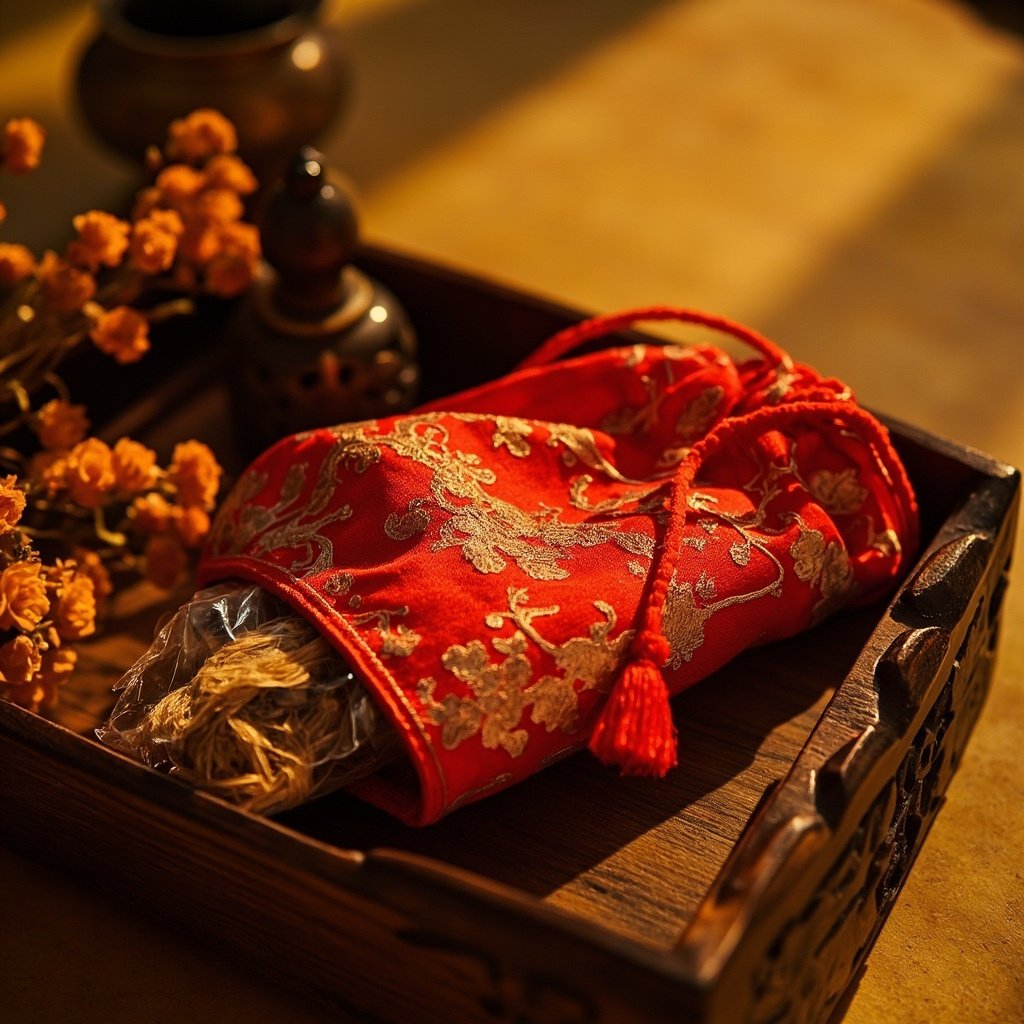
A xiang nang is a sewn pouch, usually of silk or brocade, closed with a drawstring and finished with a knotted cord and tassel. Inside sits a sachet blend: dried mugwort, angelica, sandalwood, clove, patchouli, citrus peel, or regional herbs chosen for a specific purpose. The pouch may be plain, or embroidered with auspicious motifs such as peonies, lotus, bats, or the character for longevity.
The object belongs to a family of Chinese fragrant remedies that includes the incense burner, the herb pillow and the medicinal charm. What separates the sachet is portability. It travels with a person, which means the energy it carries is personal rather than architectural.
The Classical Roots of the Fragrant Pouch
References to fragrant pouches appear in classical poetry and court records, where they were worn by nobles and offered as tokens of affection. Over the centuries the sachet moved from the palace to the household, and from fashion to function.
Two ideas shaped its use:
- Fragrance as a purifier. In traditional Chinese medicine and in Taoist practice, aromatic herbs were understood to dispel turbid air. Since feng shui treats stagnant or foul air as a form of sha chi, a scent that moves and lightens the air was seen as a genuine correction, not a cosmetic one.
- Fragrance as a container of intention. Herbs were stuffed into the pouch during an auspicious hour, sometimes with a written blessing or a small charm. The pouch then held that intention the way a jar holds water.
This double function explains why the sachet survived modernization. It addresses both the physical room and the mind of the person carrying it.
What the Sachet Symbolizes in Feng Shui
Read symbolically, the xiang nang carries four distinct meanings.
1. Protection of Health
The most common use is safeguarding the body. Dried mugwort and other warming herbs were hung near the sick, the very young and the elderly. In feng shui language, the sachet supports the health sector and the earth element’s role in nourishing the body.
2. Sealing and Containing
A pouch gathers loose material into a single closed form. This mirrors the feng shui principle of containing energy so it can settle rather than scatter. For rooms where chi feels restless, a sachet adds a quiet point of concentration.
3. Carried Blessing
Because it moves with its owner, the sachet is a portable talisman. Travelers carried them for safety on the road; students carried them to exams. The pouch becomes a reminder of intention at the moment it is needed.
4. Seasonal Rhythm
Herbal blends changed with the calendar. Cooling herbs dominated summer, warming ones winter. This is a practical expression of the feng shui idea that a home should adapt to the season rather than hold one fixed state all year.
How to Choose a Sachet
Selection matters more than price. Three factors deserve attention.
- The herb blend. Ask what is inside. A pouch meant for sleep should smell soft and resinous; one meant for alertness should be sharper and citrus-forward. Avoid anything with synthetic fragrance, which sits heavy in the air rather than dispersing.
- The fabric and thread. Silk, brocade and cotton all breathe. Red and gold are the classic auspicious pairing, while pale green or undyed cloth suits quieter rooms.
- The closure. A drawstring that seals well keeps the herbs from spilling and keeps the scent concentrated. Loose pouches fade within weeks.
Where to Place a Sachet at Home
A sachet is small, so it works best as an accent rather than a centerpiece.
- Entry and hallway. Hang one just inside the door to freshen the first breath of incoming chi. Replace it when the scent fades.
- Bedroom. Place a gentle herbal blend near the headboard, not directly on the pillow, to support rest without overwhelming the nose.
- Wardrobe and drawers. A traditional use that also keeps stored clothing fresh during humid months.
- Study desk. A citrus or sandalwood pouch sits well beside books, where sharpness of mind is wanted.
- Car. A small sachet on the mirror freshens the cabin air and gives the driver a calm focal point.
Keep the count low. Three or four well-placed pouches read as considered; a dozen hanging everywhere read as clutter, which defeats the purpose entirely.
Care and Renewal
Herbs have a lifespan. Most blends hold their scent for two to three months in open air, and longer when stored sealed. When the fragrance dulls, the pouch has done its work and should be replaced or refilled.
Handle a used sachet with a little respect. Empty the old herbs into the garden rather than the bin, and air the fabric in sunlight before refilling. This small ritual of renewal is the practice: the object is meant to be maintained, not discarded carelessly.
The Sachet Alongside Other Remedies
The sachet is often confused with the talisman, and the two do overlap. The difference is method. A talisman works through inscription and consecration, while a sachet works through scent and containment. A talisman addresses a specific threat; a sachet adjusts the general atmosphere.
Because of this, a sachet pairs naturally with incense, crystals and salt lamps. It blends into a room’s air rather than competing for wall space, making it one of the easiest remedies for renters and small apartments.
Common Mistakes
- Hanging a sachet in direct sunlight, which bleaches the silk and drives off the oils.
- Choosing a strong scent for a bedroom, where it disturbs rest.
- Leaving faded pouches in place for years out of sentiment.
- Treating the pouch as a substitute for cleaning. Fragrance cannot fix a cluttered room.
Bringing the Practice Home
The Chinese sachet endures because it asks almost nothing of the person who uses it. It needs no wiring, no floor space and no renovation. What it offers is a small, deliberate act of care: seal a good intention into cloth, hang it where the air moves, and let it do quiet work.
In a practice built on flow and balance, that is a fitting remedy. The best feng shui adjustments rarely announce themselves. They simply make a room easier to breathe in, and a day easier to move through.