Blog

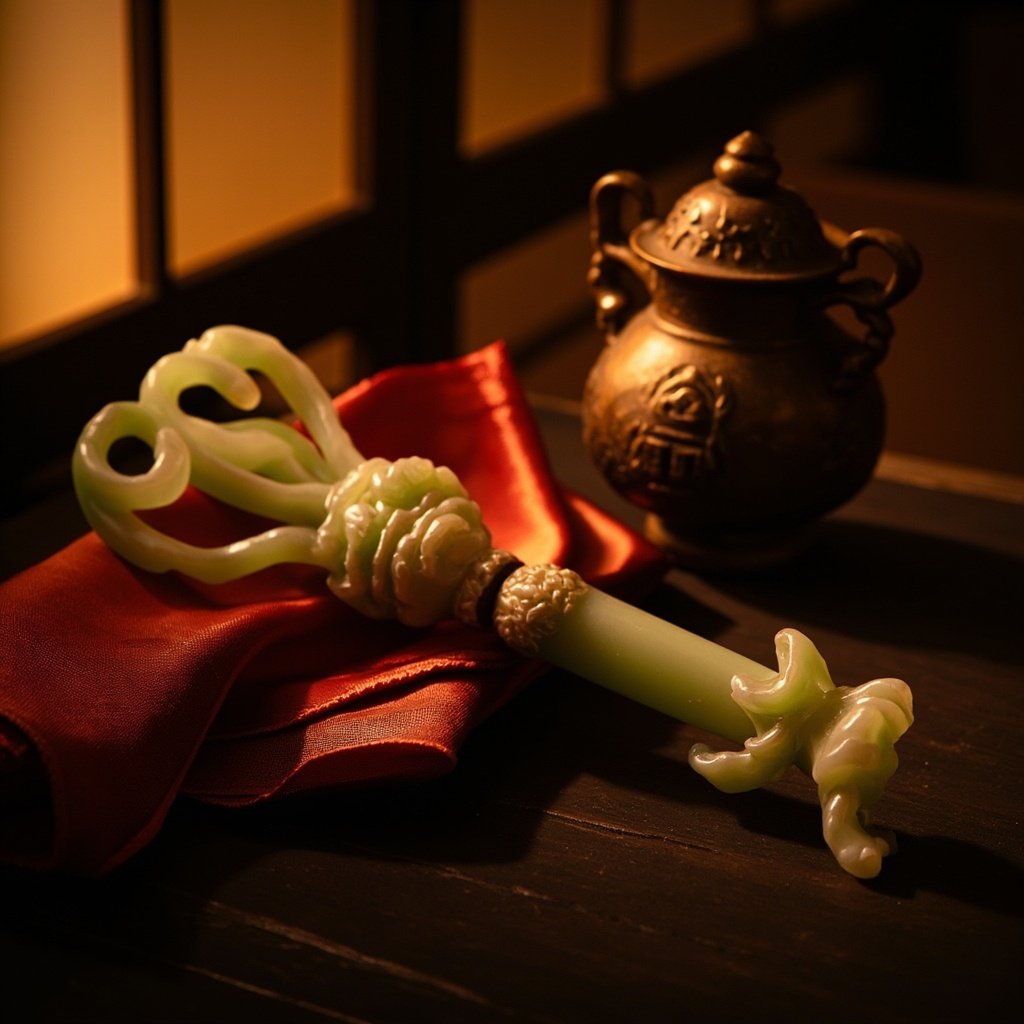
Ruyi Feng Shui Meaning: The As You Wish Scepter
The ruyi is among the most recognizable objects in Chinese decorative art and among the least understood outside the culture that produced it. It appears on wedding altars, scholar desks, temple tables, and in the hands of smiling immortals in painted scrolls. In feng shui it is something more precise: a scepter that embodies fulfilled intention, the wish that reaches its conclusion.
That makes ruyi feng shui meaning easy to state and hard to apply. A blessing with no direction is only sentiment, so what follows covers the name, the shape, the carved symbols, the material, and the placement rules that turn a decorative piece into a working part of a home.
What the Name Means
Ruyi is a compound of ru, meaning as you wish or according to your desire, and yi, meaning thought, intention, or the fulfillment of what one has in mind. The phrase entered ordinary Chinese early and appears in classical literature long before the object took its familiar form. When someone says something is going ruyi, they mean events are unfolding as they hoped.
The object takes its name from that phrase. A ruyi is shaped so the head rests in the palm while the shaft lies across the forearm. The earliest examples are associated with Buddhist ceremonial practice.
The Shape of a Ruyi
The mature form developed over centuries into three recognizable silhouettes, and each carries its own reading.
- Cloud head. Layered curling cloud scrolls, often with a lingzhi fungus at the center. Clouds in feng shui are generative: they carry rain and sit above the earth as the element of moisture and movement. This is the most common form, and the one tied most directly to a wish for things to proceed smoothly.
- Lingzhi form. The head swells into the shape of the lingzhi bracket fungus, a Shang dynasty bronze motif that became one of the most auspicious in the repertoire. Lingzhi stands for longevity, healing, and spiritual attainment, so this ruyi is chosen when the wish concerns health or long life.
- Gourd form. The head takes the shape of a hulu, associated with the immortal Li Tieguai and with the idea that a small seed contains a whole universe. Gourd ruyi are often given to new businesses, because a gourd holds, conceals, and releases.
Blessings Carved on the Handle
The shaft is the most densely inscribed part of the object, and its carvings turn a general symbol into a specific prayer.
- Many blessings, many years, many sons. The three-star blessing is the most common program on a ruyi shaft, expressing the classical wish for abundant fortune, long life, and a line of descendants.
- Peaches and bats. The peach of immortality appears on fine examples, sometimes flanked by bats, an old rebus for doubled blessing.
- Lotus and lotus pods. The pod is full of seeds, a sign of lineage and of potential not yet arrived.
- Dragons, clouds, and cranes. Authority, favorable weather, and longevity, usually carved in relief so that they catch moving light along the shaft.
Jade, Silver, and Sandalwood
Material determines element affinity, and the choice should follow the sector you intend to strengthen.
- Jade. Permanence, refinement, and a reputation for holding favorable qi. Placed where stability matters: a study, a personal wealth position, a reception area.
- Silver. The pure metal element, associated with clarity, decisiveness, and autumn. Silver ruyi suit an entry hall or a meeting room.
- Sandalwood and hardwood. Warm and grounding, the earth element. The practical choice for a home that feels restless, and it ages into a patina many owners value more than shine.
- Gilt bronze and lacquered wood. Traditional court and altar material, where the element reading is secondary to the form and the workmanship.
Where to Place a Ruyi
A ruyi is a hand-held object, so unlike a bagua mirror it should not be nailed above a door or aimed at a sleeping person. It does best when it is moved, held, and deliberately offered.
- Living room, east side. The east belongs to the wood element and to Zhen, the trigram of beginnings. A ruyi resting on a console there supports projects that need to start and grow.
- Study. Put it where the hand reaches it, on a desk corner or a shelf in sight of the working chair. The head should not point directly at the seat, which reads as pressure rather than support.
- Entry hall. Displayed near the door, a ruyi sets the tone of the household as it enters. A small bronze or silver example works best at this scale.
- Guest area. Holding it out toward a visitor as a welcome is an old custom, and keeping the object within reach keeps that gesture alive.
Ruyi as a Gift
This is where the ruyi earns its reputation. Because the object was designed to be given, held, and passed along, it carries the meaning of the wish more directly than any static ornament.
At a housewarming, a ruyi says that the new household may obtain what it needs. At a business opening, it says the venture may proceed as intended. At a birthday, it says the years ahead will be as the recipient hopes. A ruyi given at a wedding carries the blessing of the union.
Two notes on giving. The single scepter is the traditional form, though pairs are used for couples. And presentation matters: a ruyi held with the head raised toward the recipient reads as a wish for advancement, while a head lowered toward the table reads as a wish to settle and be at ease.
Ruyi and the Language of Auspiciousness
The ruyi sits inside a whole vocabulary of auspicious expression. The blessing jixiang ruyi, often rendered in English as may everything be auspicious and go as you wish, is used in greetings, on red packets, and in wedding decoration. When the ruyi shape appears beside lotus, peony, or the peach of immortality, the wish becomes specific: fortune, beauty, or longevity.
Understanding that vocabulary matters because the object is a compressed sentence. It is a phrase you can hold, and the way it is placed and given decides which part of the sentence you are speaking.