Blog

Chinese Knot Feng Shui Meaning: The Auspicious Knot Guide
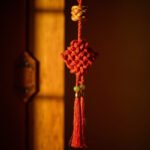
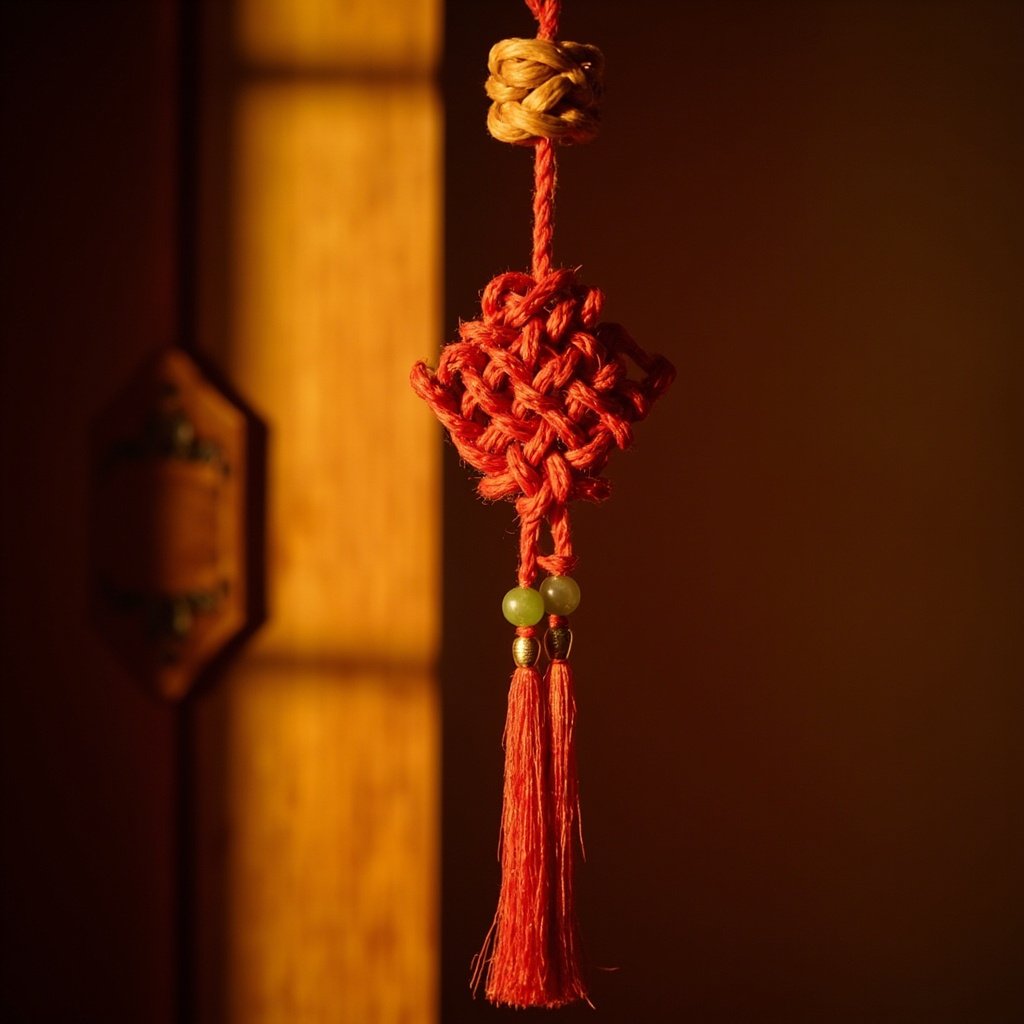
Walk into almost any traditional Chinese home and you will find one hanging near a doorway, above a bed, or beside a shop counter. Bright red cord, woven into a symmetrical pattern with two silken tassels trailing below. Foreign visitors often read it as decoration alone. In the Chinese metaphysical tradition it is something closer to a working instrument, a piece of applied feng shui with a symbolic grammar that has been refined over more than a thousand years.
This guide explains what the Chinese knot means, why it carries such weight in Taoist culture, and how to place one correctly in a modern home.
What Is a Chinese Knot?
The Chinese knot, known as jie in the classical language, is a hand-woven cord ornament made from a single continuous thread. The weaver folds, loops, and pulls the cord until a symmetrical figure appears, then finishes it with tassels and often a jade bead, a coin, or a carved charm at the center.
The craft is genuinely old. Knotting appears in Chinese decorative arts well before the Tang dynasty, and by the Ming and Qing periods it had matured into a recognized discipline with named patterns, regional styles, and dedicated artisans. Each knot is tied from one unbroken cord, and that detail carries the meaning: continuity without a break, a life or a family that does not come apart.
Because the cord never ends, the knot is also read as a closed loop of energy. Nothing enters and nothing leaves. In feng shui terms this makes it a container, which is why it is so often paired with protective or wealth-attracting objects rather than used alone.
The Symbolism Behind the Knot
Several layers of meaning sit inside a single ornament.
- Continuity and longevity. The unbroken cord stands for an unbroken line, whether of family, fortune, or health.
- Unity and connection. The interlaced loops represent people bound to one another, which is why knots are traditional gifts for weddings and new partnerships.
- Protection. Red is the color of yang energy and life force in Chinese culture. A red knot hung at an entrance is understood to gather protective chi rather than let it dissipate.
- Good fortune completing itself. The closed, symmetrical form suggests a cycle that returns to its beginning, the same logic that makes the circle a lucky shape in Chinese design.
Certain named patterns carry their own additional message. The pan chang knot, an intricate interlocking figure, is associated with long life and the endless unfolding of good events. The double coin knot speaks to abundance, since two overlapping coins suggest money multiplying. The so-called hundred family knot is woven for household harmony, and the rounded good-luck knot is the version most often given as a blessing to a traveler.
How the Knot Works in Feng Shui Practice
In classical practice the knot functions as a yang object. It is bright, red, made of silk or cotton, and typically hung above eye level, all qualities the tradition associates with active, rising energy.
Practitioners use it for three recurring purposes.
- Gathering qi at a boundary. A knot near a front door or a window facing a road is placed to slow the rush of chi as it enters or leaves the home.
- Binding a relationship. A pair of knots, or a single knot with two tassels, is placed in the marriage or relationship sector to reinforce commitment.
- Supporting a wealth cure. A knot hung with a coin, a jade disc, or a wealth charm is set in the southeast or the wealth position of the bagua to hold abundance in place rather than letting it drift.
Traditional rules favor odd numbers for hanging arrangements, and many households hang a single knot rather than a row of them. Knots are also kept clean and replaced when the cord frays, since a broken cord reverses the very meaning the ornament carries.
Where to Place a Chinese Knot at Home
Placement follows the general logic of feng shui: strengthen entrances, support auspicious sectors, and avoid conflicting symbols.
- The front entrance. Hang a red knot on the inside of the door, at or slightly above eye level, to welcome protective energy.
- The living room. A knot on a wall in the east or southeast supports family harmony and prosperity, the two themes the living room governs.
- The bedroom. A small knot placed discreetly near the headboard, or a pair on either side, reinforces partnership. Avoid hanging knots directly above the head.
- The study or home office. A knot with a carved charm supports steady effort and is often placed behind the chair rather than in front of the face.
- The car. A small knot suspended from the rear-view mirror is a classic protection charm, and a compact carved bead version is a popular modern substitute.
Two cautions matter as much as the favorable placements. Do not hang a knot directly facing a bathroom door or a mirror, where the reflected image is thought to double and scatter the energy. And do not crowd a space with many knots, since an excess of yang activity in a small room can feel agitated rather than settled.
Choosing and Caring for a Knot
A well-made knot is dense and even, with tassels that hang straight and a center charm that sits flat against the cord. Silk blends hold their shape better than synthetic cord, and hand-woven pieces carry tighter, more regular loops than machine imitations.
If your knot includes a carved bead, a coin, or a stone, the material matters. Jade is chosen for protection and steady fortune, cinnabar for its strong protective reputation in Taoist practice, and wood for growth and flexibility.
Maintenance is simple. Dust the cord gently, keep the piece out of direct sun to preserve the red, and retire it when the weave loosens. Many households replace the knot at the lunar new year, treating the swap as a small annual reset of the energy it was hung to hold.
Why the Knot Still Matters Today
Few feng shui objects carry this much meaning in such a small footprint. The Chinese knot asks for no particular room, no structural change, and no special maintenance beyond care for the cord itself. What it offers is a compact, portable symbol of the values the tradition prizes most: continuity, connection, protection, and fortune that returns rather than departs.
Hung thoughtfully and kept in good condition, it does what the best feng shui cures do. It reminds the household, every time someone passes beneath it, of what they intend to preserve.