Blog

Bagua Feng Shui Family Members: Mapping the Eight Trigrams to Your Home
The bagua is the eight-sided energy map at the heart of feng shui practice. Long before it became a decorating checklist, the bagua described eight archetypal forces drawn from the I Ching, the classic Chinese text of change. Each of those eight trigrams, or gua, carries a direction, an element, a season, a body part, and a family member. That last correspondence is the one most beginners miss, and it is often the one that explains why a home feels out of balance in a specific, personal way.
This guide walks through the bagua feng shui family members one by one, and shows how to use the mapping as a practical diagnostic tool rather than a rigid rulebook.
What the Bagua Actually Represents
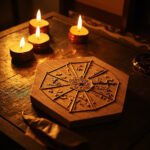
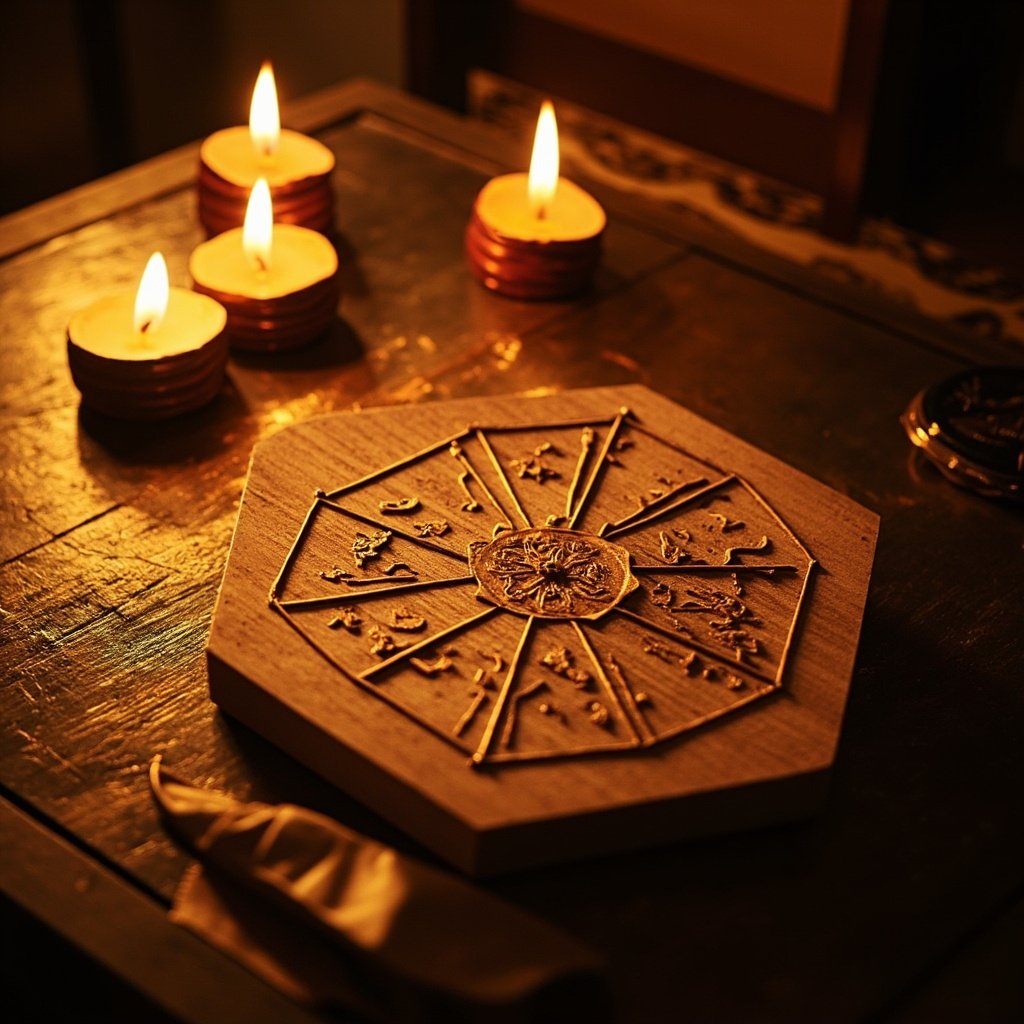
The word bagua is usually translated as “eight trigrams.” Each trigram is a stack of three lines, either solid (yang) or broken (yin), and the sequence of those lines encodes a quality of energy. Arranged in a circle, the eight trigrams form the Later Heaven sequence used in compass-school feng shui, the same arrangement you find engraved on a traditional luopan compass.
In the classical family correspondence, the bagua represents a household with two parents and six children: three sons and three daughters. This is not a literal census of your home. It is an energetic model, a way of describing how different qualities of chi move through a space and how they relate to one another.
The Eight Trigrams and Their Family Members
Here is the core mapping, listed with the direction each gua occupies in the Later Heaven arrangement.
- Qian (Heaven), northwest — the Father. The trigram of three solid lines represents authority, leadership, and clear decisions. It governs the family’s sense of direction.
- Kun (Earth), southwest — the Mother. Three broken lines represent receptivity, nurturing, and support. This gua holds the emotional foundation of the household.
- Zhen (Thunder), east — the Eldest Son. A single yang line at the base signals initiative and forward motion. It rules new beginnings and taking action.
- Xun (Wind), southeast — the Eldest Daughter. Gentle, penetrating wind describes steady influence rather than force. It governs growth, wealth, and gradual accumulation.
- Kan (Water), north — the Middle Son. Water flows through obstacles without breaking. This gua relates to career, persistence, and emotional depth.
- Li (Fire), south — the Middle Daughter. Fire gives clarity and visibility. It rules recognition, reputation, and being seen for what you do.
- Gen (Mountain), northeast — the Youngest Son. Stillness and boundaries. This gua supports study, contemplation, and knowing when to stop.
- Dui (Lake), west — the Youngest Daughter. Open water reflects joy, speech, and pleasure. It governs communication and the lighter, social side of life.
Two additional sectors sit at the center of the map. The center itself, sometimes called the Tai Chi, represents health, unity, and the balance among all eight directions. Treat it as the hub that connects the rest.
How to Apply the Bagua Family Map at Home
Start by orienting your floor plan. Stand at the front door facing into the home, or use a compass app to find true north. Mark the eight sectors radiating from the center, then walk the space with the family list in mind and note what you actually see in each zone.
- Check the northwest first if authority is strained. A cluttered, dark, or broken-down Qian sector often coincides with unclear leadership, stalled decisions, or a father figure who is absent or drained.
- Look at the southwest for household harmony. The Kun sector carries the emotional tone of the home. Heavy storage, unfinished repairs, or total neglect here can show up as resentment or exhaustion among caretakers.
- Read the east and southeast for momentum. Zhen and Xun govern action and growth. If a new project keeps stalling, inspect the east; if money arrives but never accumulates, inspect the southeast.
- Match the gua to the person, not the gender. A daughter who leads the family business may resonate more strongly with Qian than with Dui. Use the list as a lens on qualities, not as a cage.
Simple Remedies for Each Sector
Once you have identified a weak or cluttered sector, remedies follow the logic of the five elements. Strengthen the northwest with metal tones, white and grey, and rounded stone or brass objects. Support the southwest with earthy ceramics, warm yellows, and paired objects that suggest partnership. Give the east living wood: a healthy plant, green textiles, or a small wooden object. Encourage the southeast with water and wood together, such as a small fountain beside a leafy plant.
Cool the north with water features and dark blues to steady career energy, and brighten the south with light, candles, and red or orange accents for visibility. Anchor the northeast with stone, crystals, and a quiet reading corner. Open the west with metal, white flowers, and space for conversation.
Common Mistakes to Avoid
- Treating the bagua family list as a strict floor plan that must literally contain one room per relative.
- Placing heavy remedies, such as a large water fountain, in a sector already dominated by that element.
- Ignoring the center of the home while fussing over the eight outer sectors.
- Buying objects before understanding the diagnosis, then wondering why nothing changed.
The Deeper Purpose of the Family Map
The bagua’s real value is not that it predicts events. It gives you a shared vocabulary for describing how a household actually functions, where support flows easily and where it snags. When you tidy the northwest, you are not magically summoning authority. You are removing friction from the part of the home that represents clear direction, and the people living there feel that shift.
Read the map, walk your home, and make one honest change in the sector that needs it most. That single adjustment, done with attention, is worth more than a shelf full of ornaments placed without understanding.