Blog

Chinese Tea Pet: Feng Shui Meaning of the Tea Tray Companion
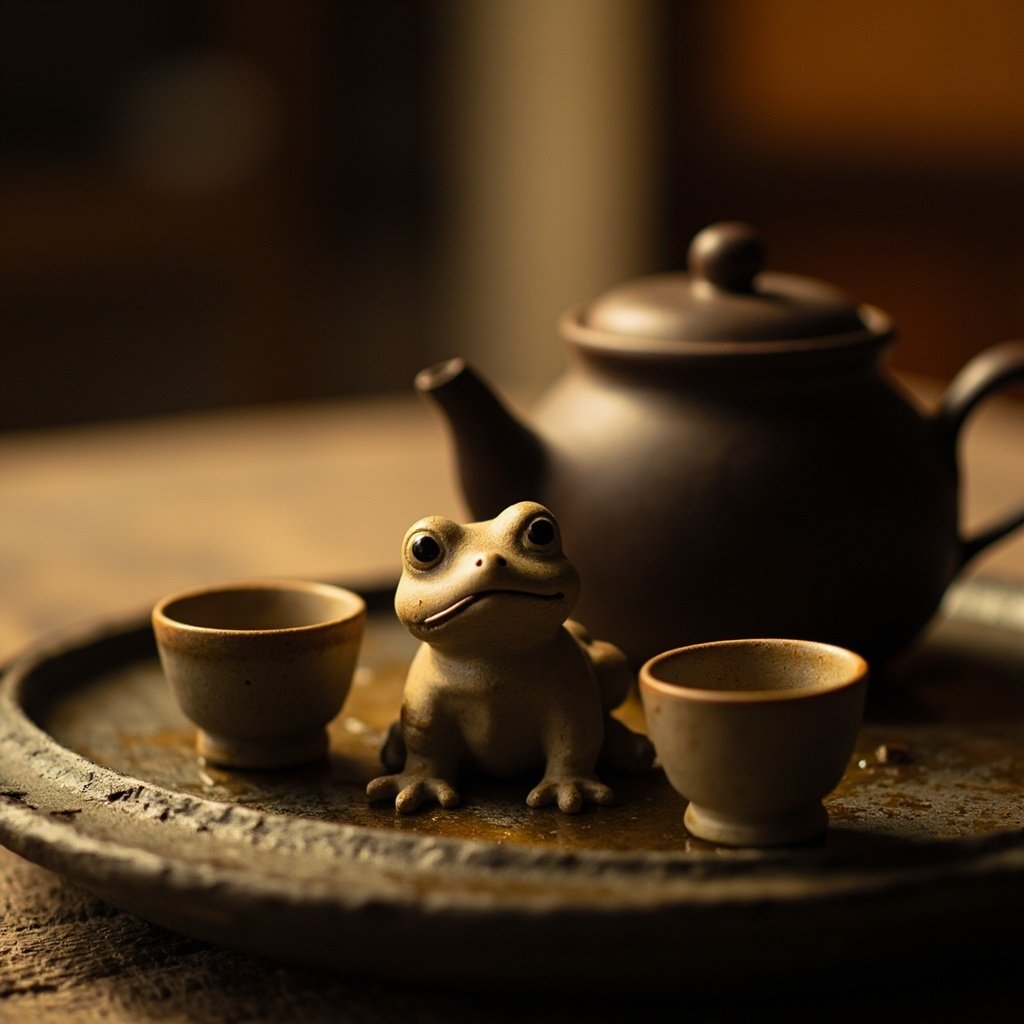
On almost every traditional Chinese tea tray sits a small figure: a clay toad with a coin in its mouth, a reclining water buffalo, a laughing bald man, a squat pig. Visitors often mistake it for decoration. It is a tea pet, and in Chinese metaphysics it is one of the few objects whose power is not assigned by a compass reading but accumulated by repetition.
What a Tea Pet Actually Is
A tea pet, transliterated as a cha chong, is a small unglazed clay figurine kept on the tea tray and wetted with tea during the session. It is not a statue of a deity, not an ancestral object, and not a charm bought to solve a problem. It has no liturgy, no consecration and no fixed promise. What it has is porous clay, a place on the tray, and a daily relationship with hot tea.
The practice grew out of the gongfu tea tradition of southern China, where the tray was wet by design and the first rinse of the leaves had to go somewhere. A clay animal absorbed that runoff, dried between sessions, and slowly changed colour, until it looked like something owned rather than bought. That slow change is the entire point.
Repetition, Not Placement
Most feng shui advice is spatial. You analyse a room, find the commanding position, correct a corner, and the work is done. The tea pet inverts this logic: no compass method assigns it a mountain or a star. Its influence is temporal. It rewards the person who returns to the same seat day after day, and stays inert for the person who buys one and leaves it on a shelf.
This makes it a useful corrective in a house full of purchased remedies. A crystal can be placed once and forgotten. A tea pet cannot, and the attention, not the clay, is what changes the room. The figurine becomes a marker of a settled habit, which is what most households are missing when they call their home restless.
The Patina and What It Records
Chinese collectors call the finish on a well-kept tea pet its bao jiang, a soft lustre that sits in the clay rather than on top of it. It cannot be faked. Oil produces an even, dead shine; decades of tea produce a patchy glow that follows where the water ran.
The patina also records consistency. A figure with twenty years of colour represents twenty years of sitting down, and testifies to a rhythm of rest the household may not notice. In symbolic terms the tea pet is a yang object: warm, wet, renewed daily, never sealed away. Its opposite is the display piece behind glass.
Choosing the Creature
The choice of animal is personal, but not arbitrary. Each traditional form carries an association and an element; the useful approach is to choose what the room is short of rather than what looks best in a shop.
- Three-legged toad — wealth and returning money; usually paired with a coin. Sit it facing inward, never toward the front door.
- Pig — comfort, rest and plentiful food. A gentle choice for a family kitchen or a dining tray.
- Water buffalo — patience and steady labour. Water element, and the most calming of the common forms.
- Dragon turtle — longevity and quiet protection. Traditional in a study or a home office tray.
- Pi xiu — a wealth guardian from older folklore, more assertive than the toad and often chosen by shopkeepers.
- Laughing figure — joy and ease; the least symbolic and most sociable of the group.
One figure is enough for a household tray. Nine animals on one board read as retail display, and each piece competes for the same small quantity of attention.
Why Unglazed Clay Matters
The material is functional, not decorative. Unglazed zisha clay from the Yixing region is porous, so tea seeps into the body and the colour develops from within. Glazed porcelain, resin and lacquered wood look sharp but never change, which removes the one mechanism the object depends on.
Clay also holds heat, which suits a tray where water is poured constantly. The practical test is simple: an unglazed piece feels faintly rough and drinks a drop of water within seconds; a sealed piece lets it stand on the surface.
Placement on the Tea Tray
Keep the figure on the tray, near the pot but clear of the spout, and low enough that it never blocks a guest reaching for a cup. Facing the drinkers is friendly; facing the door turns it into a guard it was never meant to be. Place it on the side you pour from. Never put it on the floor, on a windowsill, or in a cabinet with the good porcelain.
If the tray also holds a fairness cup, a strainer and six cups, the figure belongs at the outer edge where it will not be knocked. Proportion matters more than count; an oversized toad looks like a paperweight.
Care: The Four Rules
- Use tea, not water. Pour the hot rinse over the figure during the session. Cold water darkens the clay unevenly and does nothing for the finish.
- Keep it to one family of tea. Green tea, oolong and ripe pu-erh all stain differently. Mixing them produces a muddy colour that never settles.
- Never use soap, detergent or a scouring pad. A soft brush and clean water are the whole maintenance routine. Scrubbing removes years in minutes.
- Dry it in shade. Leave the figure on the tray to air dry after the session. Direct sun and radiator heat crack thin clay.
Beyond that, the traditional habit is to pour the first cup over the pet before anyone drinks. It costs nothing, keeps the object wet, and turns an ordinary pour into a small ritual of beginning.
Common Mistakes and Honest Limits
The usual errors are buying several figures at once, soaking a new piece in a bowl of tea to speed the colour, and treating the pet as a substitute for actual feng shui work. A tea pet does not correct a missing commanding position, does not cleanse a room, and carries no fixed doctrinal meaning. It is not a talisman, and a seller who promises that a clay toad will bring money is selling superstition. What the object does is smaller: it makes a daily practice visible, and gives a household one warm, wet, living-looking thing to return to.
Conclusion
The tea pet is the most modest object in the tea tradition and one of the most honest. It asks for no compass, no auspicious date and no particular corner of the house. It asks only to be poured on, dried, and left where it can be reached tomorrow. Choose one creature that answers a real quality missing from the room, and let the clay record the rest. In a practice full of adjustments and remedies, that patience is worth more than any single placement.