Blog

Peking Opera Mask Feng Shui Meaning: Colors, Characters, and Placement
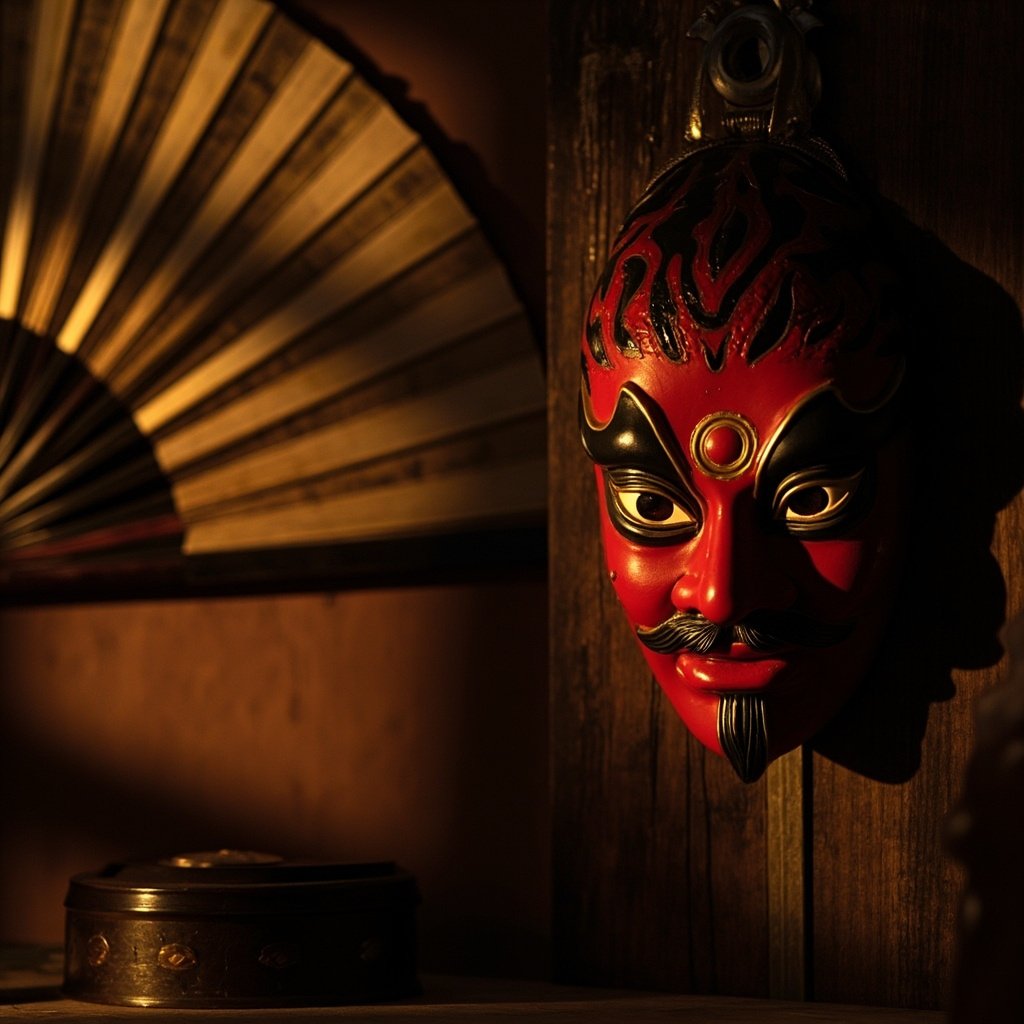
A lacquered face hangs on a wall, brows lifted into flame shapes, eyes ringed in black. It is the most theatrical object in Chinese material culture and one of the most precise. In Peking opera the painted face was never a disguise. It was a declaration: before the actor sang a single note, the audience already knew whether the character was loyal or treacherous, a general or a ghost. That habit of reading a face for its inner nature is the same habit feng shui asks of a room, which is why the mask carries more meaning than decoration.
What a Peking Opera Mask Actually Is
The Chinese term is lianpu, literally a face score. Historically it was painted directly onto the performer with greasepaint, layer over layer, in fixed conventions that varied by role and by regional troupe. The object sold today is a replica of that painted face, shaped over a mould and finished by hand. Because the design is a signature rather than a portrait, every line is deliberate: a hooked brow means cunning, a full round eye means openness, a cracked pattern across the nose means a broken nature. A mask is a face frozen at the moment of maximum clarity.
The Face as a Map of Qi
Traditional face reading divides the face into zones: the forehead as the hall of impression, the brows as the palace of siblings, the eyes as the seat of spirit, the mouth as the gate of speech. A painted opera face exaggerates exactly those zones. Brows rise into blades, eye sockets are ringed to hold the gaze, the mouth is drawn wide enough to be read from the back row of a courtyard theatre. That is why a mask feels like energy rather than costume. It is a diagram of qi made visible, and a good one keeps you looking at it longer than you intended to.
Colors as Elemental Signatures
Each color works as an elemental signature, and the mapping is consistent enough that collectors can read a stranger mask at a glance:
- Red belongs to fire and marks loyalty, courage, and upright force. Guan Yu, the sworn brother of legend, is the archetype.
- Black belongs to water and signals blunt integrity, the honest official who will not be bought.
- White belongs to metal and marks the schemer, the pale calculating face of a usurper.
- Blue and green belong to wood and read as wildness, rebellion, forest spirits, and outlaws.
- Yellow belongs to earth and compresses ferocity into authority, a tiger tamed into a general.
- Gold and silver stand outside the human order entirely and belong to gods, demons, and the dead.
Read together, the palette is a five element chart worn on a head. Red over black, fire above water, is the oldest combination in the repertoire and still the most legible.
Characters, Not Just Colors
The four role types of the form are the scholar or official, the female role, the painted face, and the clown. The painted face type carries the mask logic at full strength. The clown offers the quietest lesson: he wears a small white patch at the bridge of the nose, exactly where the spirit is said to sit, and places his joke in that spot. Even comedy in this tradition is anatomically precise.
Why a Fierce Face Protects
China has never been shy about scary faces at a boundary. Door gods glare from either side of a gate, guardian lions snarl from a plinth, and the ancient taotie motif eats its own jaw on bronze vessels. A fierce face at a threshold is not an invitation to aggression. It is a signal that the boundary is watched. In feng shui terms a bold painted face is dense, outward facing, and yang, and it can hold a doorway that would otherwise leak attention. That is the honest reason a mask belongs near an entry and not above a place of rest.
Five Element Balance at Home
Choose by element instead of by looks. A red and black pair reads as discipline and suits a home office where decisions are made. Blue-green masks carry the wood element of growth and sit well in a study or a child room. Gold and silver are strong and should be placed where they can be seen rather than lived under. Yellow and earth tones stabilize a dining room or the center of a floor plan. A single strong color at distance always beats four colors packed together.
Placement Rules That Actually Work
- Hang the face inside the hall so it looks toward the entrance, greeting and guarding at once.
- Set the eyes at your own eye level or a hand above it; a face below the eye line loses authority.
- Never hang one over a headboard. Sleeping beneath a watching face fragments rest.
- Keep one face per wall with empty space around it, or give a group a deliberate grid.
- Place a mask on the wall behind your chair as backing, the same logic as a mountain behind a house.
Materials, Care, and What to Look For
Good masks are built from papier-mache over a clay mould, layered with silk or gauze, painted in mineral pigment, then sealed with lacquer. Smell one before buying: a sharp chemical odor means it was sealed recently and needs to air out for a week before it enters a bedroom or a small room. Look for a jaw that warps, hairline cracks along the brow, and eyes painted slightly unevenly, which is usually the difference between a hand finished piece and a copy. Dust with a soft dry brush and never a wet cloth, because water lifts pigment. Keep the face out of direct sun, where red fades first.
Common Misunderstandings
- A frightening face brings bad luck. A fierce face is a guard, not a curse, and the tradition has placed them at doors for centuries.
- White always means death. In opera white is the color of cunning, while mourning white is a separate domestic custom.
- More colors mean more power. A single color reads clearly across a room; four colors become visual noise.
- Any souvenir will do. Mass market masks lose the proportions that let the face be read, and a face that cannot be read carries no chi.
A Face That Holds Attention
A mask on a wall is a small daily discipline. It asks you to look at an expression and decide whether you are willing to meet it every morning. Choose one whose character you respect rather than one that merely matches the sofa, hang it where its gaze has a job to do, and let it remind the household that character is visible long before it speaks.