Blog

Chinese Abacus Feng Shui Meaning: The Suan Pan as a Wealth Symbol
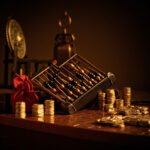
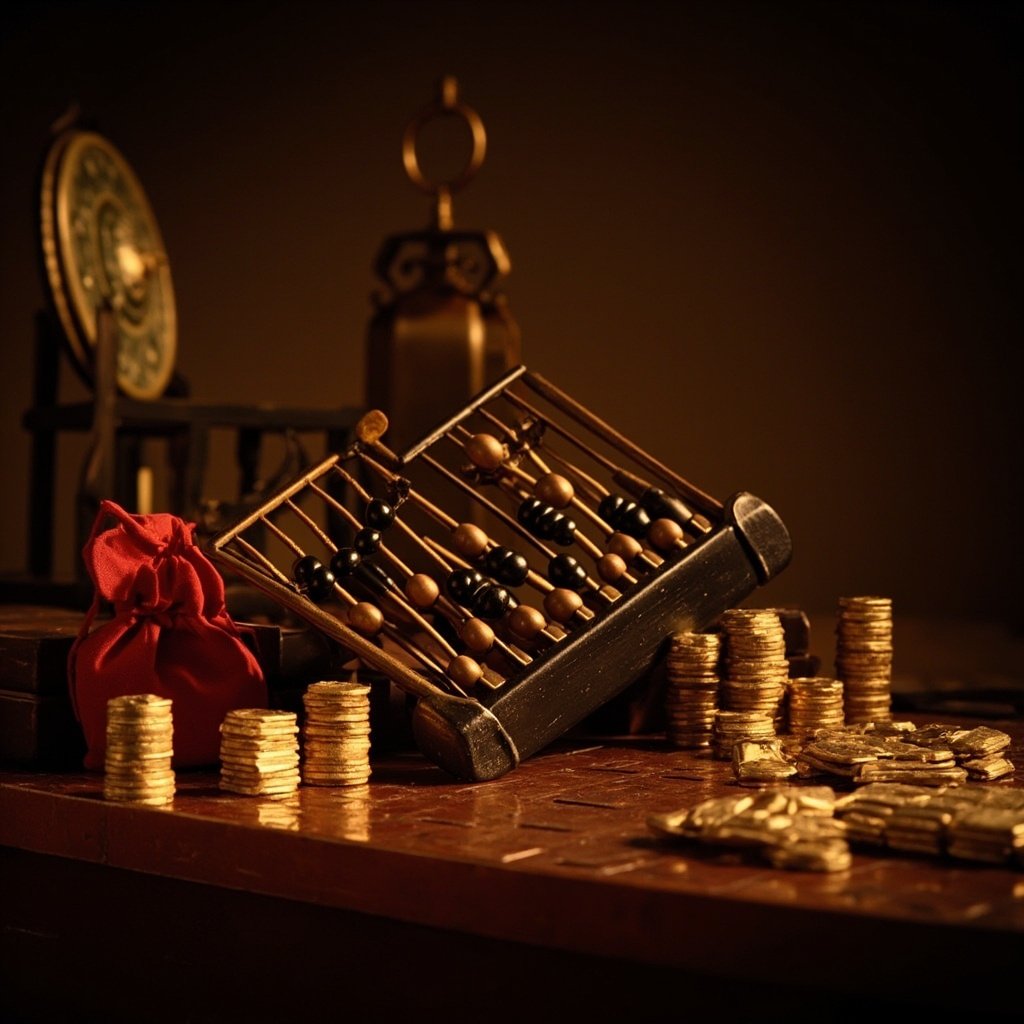
Walk into an old Chinese merchant house and you may find a wooden abacus resting on the counter, its dark beads worn smooth by decades of handling. It is not there as a curiosity. The Chinese abacus, known as the suan pan, has served for centuries as both a working tool and a feng shui emblem of wealth, foresight, and orderly gain. Understanding its meaning opens a practical doorway into Chinese prosperity culture.
What Is a Suan Pan?
The suan pan is a traditional calculating frame built from a rectangular wooden body divided by a horizontal beam. Beads slide along vertical rods, with two beads above the beam and five below on the classic Chinese form. Skilled operators could total columns of figures faster than a mechanical calculator, which is why the instrument anchored commerce across East Asia for hundreds of years.
Its design carries more meaning than its arithmetic. The beam separates a realm above from a realm below, echoing the separation of heaven and earth in Chinese cosmology. Each rod becomes a small vertical axis where upper and lower forces meet and are balanced by the hand of the operator.
Why the Abacus Became a Symbol of Wealth
In Chinese culture, tools that create abundance are treated as living symbols rather than neutral objects. The abacus earned its reputation because it governs the act of counting money, and counting money is the first step toward keeping it. A household that tracks its resources carefully is believed to attract more of them, while careless spending lets fortune slip away.
The abacus also represents accuracy and honest accounting. Merchants displayed one openly to signal that their books were clean. In a culture that links personal fortune to moral conduct, a well-used abacus quietly announces integrity, which in turn is understood to sustain prosperity across generations rather than a single lucky season.
The Deep Symbolism Behind the Beads
Every part of the abacus invites interpretation:
- The frame stands for structure and limits, reminding the household that wealth grows inside boundaries, not outside them.
- The rods represent the channels through which resources move, each one a path that must stay clear.
- The beads symbolize individual units of fortune, small and identical in appearance yet powerful in accumulation.
- Movement of the beads reflects the flow of qi through a household, where energy that circulates freely produces gain.
Together these elements turn a simple instrument into a compact diagram of how prosperity is built: one deliberate movement at a time, sustained over years.
Abacus Placement for Wealth in the Home
Where you place an abacus matters as much as whether you own one. The object is active, so it belongs in areas connected to money, planning, and livelihood.
- The wealth corner. The far left corner of the home, viewed from the front door, is traditionally associated with prosperity. An abacus placed there is understood to multiply what the household stores.
- The home office or study. Placing the abacus on a desk supports disciplined thinking, careful budgeting, and steady career progress.
- The shop counter. Retailers keep an abacus near the till so that income is counted and retained rather than scattered.
- Avoid bedrooms. An abacus in a sleeping area introduces the restless energy of commerce into a space meant for rest, which can disturb sleep and family calm.
How to Choose and Care for an Abacus
Traditional abacuses were carved from rosewood, boxwood, or other dense timbers, with beads polished to a soft sheen. The material matters less than the condition. Choose a frame whose beads still slide smoothly, because a stuck bead suggests blocked fortune. Keep the surface free of dust and avoid stacking clutter on or around it.
Some households place a small gold ingot or a few coins beside the abacus to reinforce the wealth intention. Others prefer a single clean object with nothing around it, allowing the symbolism to stand without competition for attention. Either approach works if the arrangement stays tidy and deliberate.
Abacus vs Other Wealth Symbols
The abacus occupies a distinct role among Chinese prosperity symbols. A money toad, or jin chan, draws wealth toward the household and suits entryways and reception areas. The abacus, by contrast, retains and organizes wealth. It is a tool of stewardship rather than attraction, which makes it especially appropriate for people who manage businesses, budgets, or family finances.
Used together, the two symbols describe a complete cycle: fortune arrives through one, and is kept in order through the other. A home that honors only attraction without stewardship is understood to gain quickly and lose just as fast.
Bringing the Symbol into Modern Life
Overseas buyers are drawn to the abacus for the same reasons Chinese merchants prized it: it represents competence, patience, and the quiet discipline that turns modest resources into lasting security. Many people now keep a small abacus on a desk as a working ornament, using it to hold the intention of careful management rather than as a display of superstition.
Feng shui practitioners often recommend introducing one during a period of career change or financial planning, when the household most needs the qualities the abacus embodies. Placed thoughtfully and kept clean, it becomes a daily reminder that prosperity is a practice rather than an event.
Frequently Asked Questions
Does an abacus have to be antique to work as a feng shui symbol?
No. A newly carved abacus carries the same meaning. What matters is that it is well made, undamaged, and placed with clear intent.
Should the beads be positioned in any particular way?
Some practitioners clear the frame so all beads rest at the bottom, representing potential waiting to be activated. Others leave a few beads raised to suggest ongoing work. Consistency of intention is more important than the exact configuration.
Can an abacus be given as a gift?
Yes, and it is considered a thoughtful one. Giving an abacus expresses a wish that the recipient manage resources wisely and enjoy steady, well-earned prosperity.
The Abacus as a Philosophy of Prosperity
The suan pan endures because it teaches a truth that transcends arithmetic. Fortune responds to attention. By placing an abacus in your home or workspace, you adopt a symbol that rewards discipline, clarity, and the patient accumulation of small gains into something lasting. It is not a promise of sudden riches, but a reminder of the method by which wealth is genuinely built.