Blog

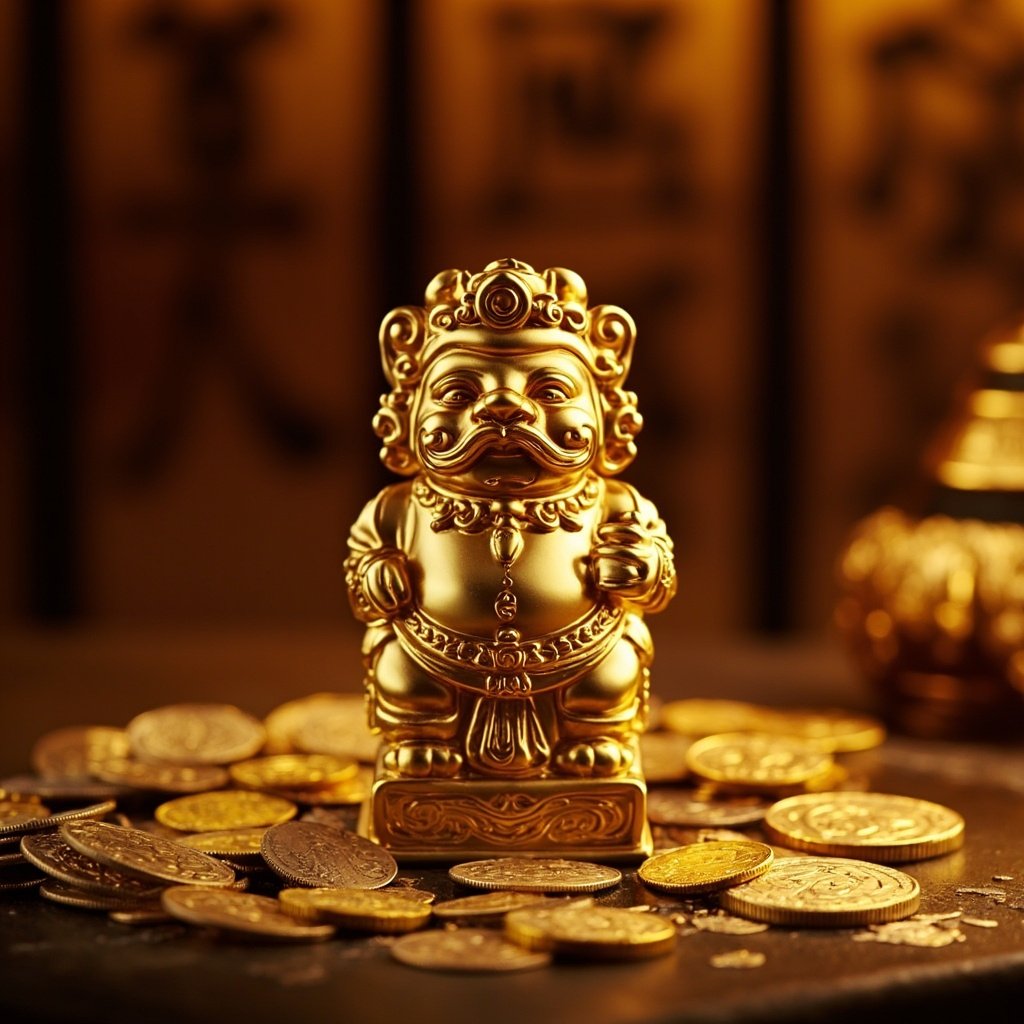
Three-Legged Money Toad Feng Shui Guide: The Jin Chan Wealth Symbol
Few feng shui symbols carry as much instant recognition as the three-legged money toad. Known in Chinese tradition as the Jin Chan, this squatting frog with a coin in its mouth appears on shop counters, in office lobbies, and on home altars across Asia. For Western practitioners, it offers one of the most direct and affordable ways to anchor wealth energy in a space. This guide explains what the money toad represents, how to place it correctly, and the mistakes that quietly neutralize its power.
What Is the Three-Legged Money Toad?
The money toad is a creature from Chinese folk mythology. According to legend, a Taoist adept named Liu Hai subdued a mischievous toad demon. In exchange for its life, the toad agreed to spit out gold coins wherever it went. Over centuries, the story fused with feng shui practice: the toad became a symbol of money that arrives, accumulates, and returns again.
Its three legs distinguish it from any ordinary frog. In Chinese numerology, three represents the harmony of heaven, earth, and humanity, and it also suggests the steady rhythm of income, growth, and retention. Most toads sit on a bed of coins or a stack of ingots, clutching a coin string in their mouth. In Taoist practice, the coin string is interpreted as a channel of wealth that never fully closes.
Unlike the dragon turtle, which protects, the money toad attracts. Its energy is active, forward-facing, and slightly restless. That is precisely why placement for the toad matters more than placement for nearly any other wealth symbol.
What the Money Toad Means in Feng Shui
In classical feng shui, the toad governs the movement of money rather than the storage of it. Think of a wealth corner filled with amethyst or citrine as a reservoir, and the toad as the pipe that fills it. When you place a toad, you are not asking for passive abundance; you are inviting continuous circulation.
Three functions are traditionally attributed to it:
- Attracting new income, especially income that arrives from outside the household or business.
- Returning spent money, or softening the financial impact of recurring outflows.
- Sharpening financial instinct, helping the occupant notice opportunities they would otherwise miss.
The toad works best when paired with a genuine desire for financial health. It is a symbol that rewards clarity: those who know what they are saving for tend to report stronger results than those who place it vaguely.
Where to Place the Money Toad
Placement is the single largest factor in whether a money toad feels effective. The rules below come from classical practice and hold up well in modern interiors.
Best Positions
- The wealth corner. From your front door, locate the far-left corner of the house or of a main room. This is the traditional wealth position and a natural home for a toad.
- Near the entrance, facing inward. A toad by the door, angled toward the interior of the home, invites money to come inside and stay.
- On a shop or business counter. Facing outward toward the street, the toad pulls customers and revenue in from the public realm.
- In the office, near the workspace. A small toad on a desk facing you supports focused, profitable work.
- Beside a cash box or safe. Placing a toad near where money is kept reinforces circulation between storage and use.
Directions to Avoid
- Never face a toad toward a door or window opening outward. This sends wealth away rather than drawing it in.
- Avoid bathrooms, laundry rooms, and kitchens. Water and fire areas destabilize the toad’s concentrated wealth energy.
- Do not place it in bedrooms. The toad’s active energy is stimulating and can disturb rest.
- Skip it in the center of a hallway or under stairs. Foot traffic disrupts its focus.
Materials and Choosing a Toad
Money toads come in several materials, each with a slightly different emphasis. Choose based on the element that best supports your space.
| Material | Element | Best For |
|---|---|---|
| Jade or green stone | Wood | Steady, organic growth and long-term income |
| Gold or brass | Metal | Direct wealth attraction and business revenue |
| Citrine or yellow crystal | Earth | Business prosperity and personal confidence |
| Black obsidian | Water | Protection of assets and deflecting loss |
A toad with a coin in its mouth is considered the most potent, because the coin represents value already in motion. Toads without coins still function, but they emphasize potential rather than arrival.
How to Activate a New Money Toad
A toad purchased and set down without ceremony rarely feels connected to its purpose. Classical practice includes a short activation sequence, and the ritual is as much psychological as spiritual.
- Clean the toad with clear water and dry it with a soft cloth.
- Choose a fixed date or day, ideally one that feels significant to you.
- Place the toad in its chosen position and orient it correctly.
- Speak a clear, specific intention over it, naming the financial goal it supports.
- Tap the coin gently as a signal that the flow is open.
- Revisit the toad periodically, dusting it and restating your intention.
The final step is the one most people skip. A toad left untouched for months fades into decor. A toad that receives attention two or three times a month remains an active part of your practice.
Pairing the Toad With Other Wealth Symbols
The money toad is most powerful as part of a small, deliberate grouping rather than as a solitary object. Consider these combinations:
- With citrine or amethyst in the wealth corner to build a reservoir the toad can fill.
- With a bowl of water near the entrance, since water carries both chi and coin energy.
- With a wealth bowl holding coins, semiprecious stones, and a small piece of tiger’s eye.
- With the five emperor coins for protection, so new income is not offset by unexpected loss.
Keep the grouping simple. Three well-chosen symbols, placed with care, outperform a shelf crowded with well-meaning clutter.
Common Mistakes That Weaken a Money Toad
Most disappointing results trace back to a handful of errors:
- Facing the toad away from the room or toward an exit.
- Placing it in a bathroom or on a kitchen countertop.
- Setting it on the floor or in a place where it is regularly kicked or bumped.
- Buying several toads and scattering them, diluting focus.
- Treating it as decoration and never engaging with it again.
Final Thoughts
The three-legged money toad is one of the most accessible tools in the feng shui toolkit. It is inexpensive, easy to place, and rooted in a centuries-old story about wealth that keeps returning. Place it facing inward, keep it clean, name your intention aloud, and let it serve as a daily reminder that prosperity is something you actively circulate rather than merely hope for. Handled with care, this small guardian of abundance earns its place in any home or business.