The Feng Shui Treasure Bowl: Gathering Wealth With the Ju Bao Pen
Among the objects I inherited from my teacher in the Tian Xing lineage, one of the humblest carried the greatest weight: a shallow brass bowl, its rim worn smooth from decades of handling. It was not carved from jade, nor set with stones, nor inscribed with any grand talisman. It was simply a vessel, and that was precisely the point. In twenty-seven generations of practice, I have learned that wealth is rarely summoned by spectacle. It is accumulated by containers — and the feng shui treasure bowl, known in the classical tradition as the ju bao pen, is the most literal expression of that principle.
What Is a Treasure Bowl in Feng Shui?
The ju bao pen translates roughly as the “bowl that gathers treasure.” Its function follows directly from its shape. A bowl is an open container with a solid floor and no drainage. In the language of feng shui, that geometry communicates one instruction to the environment: hold. Where a fountain circulates and a wind chime disperses, the treasure bowl accumulates. It is the material counterpart to the wealth corner itself — a physical anchor for the intention of saving rather than spending.
The tradition treats the bowl as a living object, not a static ornament. It is filled, tended, and occasionally renewed. An empty treasure bowl is considered a contradiction in terms, a vessel advertising scarcity instead of abundance. What matters is not the monetary value of its contents but the regularity with which a household returns to it.
The Classical Contents of a Treasure Bowl
Different lineages compose the bowl differently, but the logic is consistent: each item contributes a specific quality of abundance. A traditional arrangement includes:
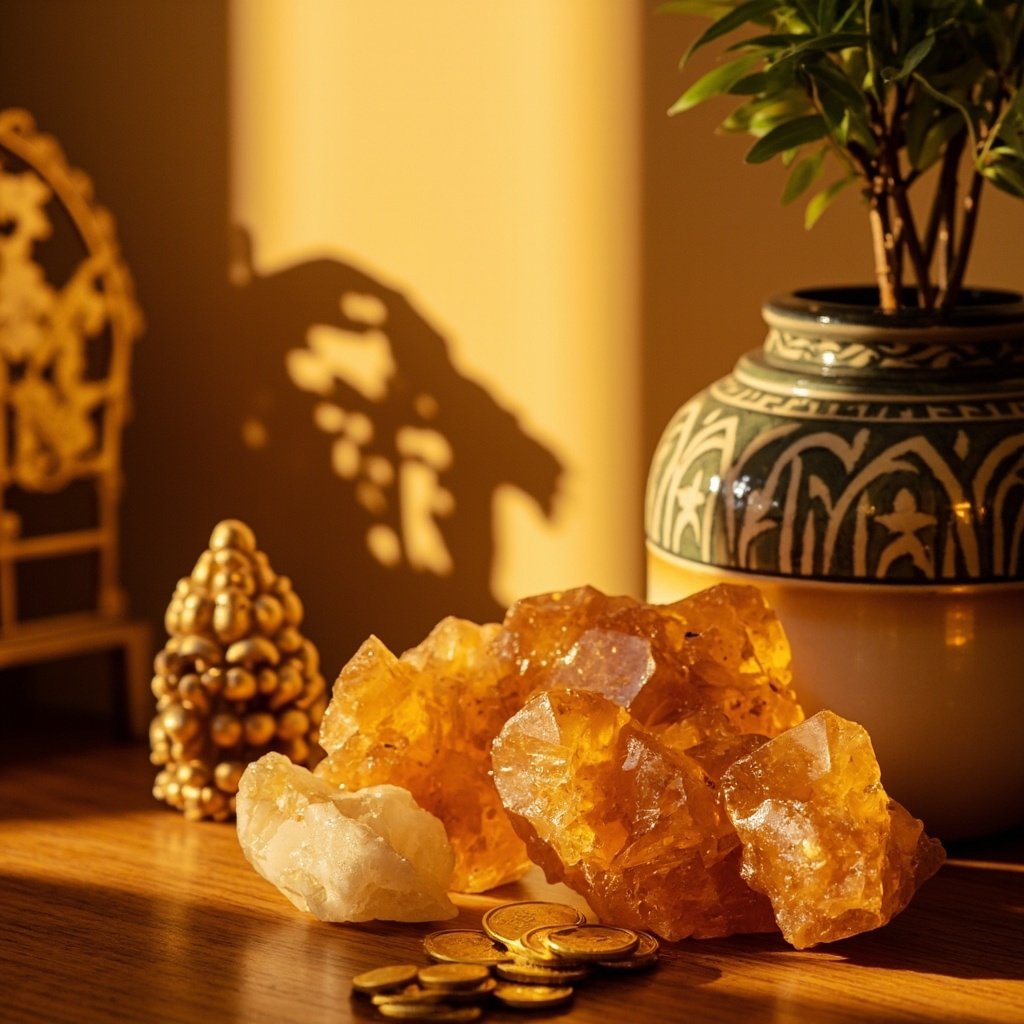
- Coins or ingots — the base layer, representing stored wealth. Five Emperor coins are especially favored for their protective heritage.
- Citrine or yellow crystal — the stone of the wealth star, amplifying the bowl’s accumulation energy.
- Rice or grain — the oldest symbol of sufficiency, ensuring that abundance never comes at the cost of nourishment.
- Red thread or ribbon — binding the contents together so that prosperity does not scatter.
- A small note of intention — a written aspiration, folded and placed beneath the coins.
I advise clients to begin modestly. A bowl overfilled on the first day becomes a display piece; a bowl assembled gradually becomes a practice. The act of adding one coin each week carries more energetic weight than a single extravagant purchase, because it establishes a rhythm of return.
Where to Place the Treasure Bowl
Placement determines whether the bowl collects or merely sits. In Tian Xing practice, the primary position is the wealth sector of the home — the far-left corner of the living space as you enter from the main door, or the sector identified as the wealth star’s residence in the current annual chart.
Three rules govern placement:
- Anchor it low and stable. The bowl belongs on a solid shelf, side table, or cabinet base — never on the floor, which invites the energy of being trampled, and never on a high floating ledge, which suggests wealth that cannot be reached.
- Keep it out of sightlines to the door. Wealth placed in direct line with the entrance tends to leave through that same entrance. Angle the bowl so it faces the interior of the room.
- Pair it with stillness. Avoid positioning the bowl near televisions, speakers, or heavy appliances whose constant motion disperses accumulated qi.
For households with a dedicated wealth altar, the treasure bowl sits to the left of the main image, mirroring the position of the dragon on the guardian side. In commercial settings, a second bowl may be placed near the cash register or accounts desk, where it reinforces the intention of retention over turnover.
Activating and Maintaining the Bowl
A treasure bowl is activated through attention rather than elaborate ceremony. On the day you assemble it, clean the container with salt water, dry it fully, and hold it briefly while stating your intention aloud. Speak plainly. The tradition values clarity over poetry.
Once active, the bowl asks only for consistency. Add a coin weekly. Wipe the rim monthly. Refresh the rice or grain at each lunar cycle, and replace faded notes with new ones. If the household experiences a windfall — a bonus, a settled debt, an unexpected opportunity — offer a small portion back to the bowl before spending the remainder. This is not superstition but accounting: a visible reminder that abundance flows toward those who acknowledge it.
Two signs suggest the bowl requires attention. If its surface gathers visible dust, the household’s attention has drifted from its finances. If coins are removed and never replaced, the pattern of depletion is already underway. Neither requires alarm — both are correctable on any given morning.
The Deeper Principle
I have watched clients purchase elaborate wealth cures while their accounts continued to empty, and I have watched a shopkeeper with a single brass bowl quietly build a business across two decades. The difference was never the object. It was the habit the object demanded.
The ju bao pen works because it converts an abstract intention into a weekly physical act. It teaches the household to notice, to return, and to gather. In the Tian Xing view, that is the whole of wealth feng shui — not the acquisition of luck, but the cultivation of a container strong enough to hold it.
Those beginning this practice may find a properly composed treasure bowl in the wealth collection at yihui.store, where each piece is selected with the traditional contents and proportions in mind. Begin with one bowl, one intention, and one weekly coin. The rest, as my teacher liked to say, is simply time doing its work.