Blog

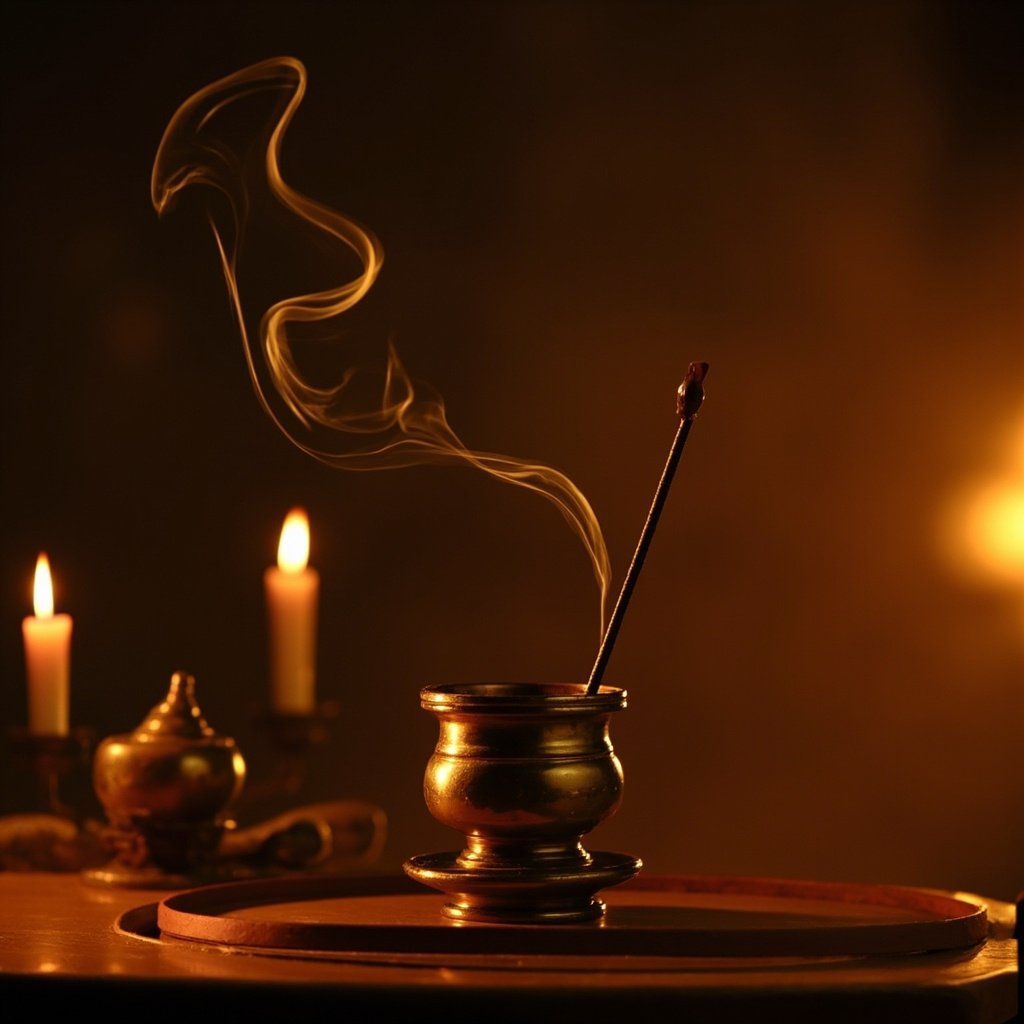
Censer Feng Shui Meaning: The Chinese Incense Burner as a Vessel of Prayer
Walk into any traditional Chinese home with an altar and you will find one object standing slightly forward of everything else: the censer, a small bowl that holds burning incense and turns ordinary smoke into something the household treats as a message. In Chinese it is the xiang lu, literally the incense vessel, and it has held the same role for more than two thousand years. For students of feng shui, the censer is not decoration. It is a tool for moving and refining chi, and the way it is placed, filled, and cleaned says a great deal about how a home understands its own energy. This guide covers what the censer means, why smoke matters, where it belongs, and the mistakes that quietly spoil the practice.
What a Censer Actually Is
The censer belongs to the same family as the bronze ding, the three legged ritual cauldron used in ancient Chinese ceremonial life. The two are often confused abroad. The ding was a vessel of authority and grain offering, cast in heavy bronze and inscribed with lineage, while the censer is a working vessel built to hold ash and embers and to release fragrance upward. The censer became the everyday ritual object, one an ordinary family could own and use daily, which is why it survived long after the great bronze cauldrons moved into museums.
Why Smoke Matters in Feng Shui
Feng shui treats air as the medium of chi, and smoke is the most visible form of air in motion. A censer gives a household a controlled way to move energy in one direction: upward and outward. When incense burns in a still room, the plume rises, folds, and eventually disperses, and that slow rise is read as chi being lifted out of a stagnant layer near the floor and released. Practitioners also burn incense to clear a space after an argument, illness, or a period of neglect, letting smoke carry away what they call sha chi, the heavy energy that settles in corners and unused rooms.
The Meaning of the Shape
Censer design is not arbitrary. The round bowl represents heaven, the square or flat base represents earth, and the three legs are read as heaven, earth, and humanity standing in balance. A censer with a pierced lid is the most complete form of the symbolism, because the lid gathers the smoke before releasing it in fine streams, an image of energy that is concentrated before it is shared. Some censers carry the eight trigrams, the dragon, or the lotus around the body; these are secondary layers of meaning. The essential structure is always the bowl, the base, and the three supports.
Where to Place a Censer
The Ancestor Altar
The classic position is the center of an altar table, slightly forward of any images, with the censer closest to the household and the offerings behind it. The censer sits at the front because it is the mouth of the altar: the place where the family speaks. A small cup of clean water beside it and a dish of fruit behind it complete the arrangement.
The Living Area
In homes without an altar, a censer can stand at the center of the living room or in the wealth corner, but only where it can breathe. A censer set on a shelf crowded with objects produces smoke that curls back on itself, which is read as chi that cannot move.
Places to Avoid
- The bedroom, where rising smoke and fire energy disturb sleep and settle into fabric.
- Bathrooms and toilets, where the smoke meets draining water energy and the offering is considered lost.
- Directly beneath a smoke detector, an air vent, or a ceiling fan that scatters the plume before it rises.
- An empty or unmoved corner used for storage, where stagnant chi only thickens.
The Five Elements in One Object
A working censer is unusual because it holds all five elements at the same time, which is why it functions as a small portable feng shui remedy:
- Metal or ceramic forms the vessel itself and gives the practice its container.
- Ash represents earth, insulating the bowl and holding the stick upright.
- Incense wood or resin brings the wood element and its rising, living quality.
- Fire appears at the tip of the ember and transforms the offering.
- Moisture in the air, and often a cup of water nearby, completes the set with water.
Choosing a Material
Bronze and brass censers age well and carry a dense metal energy that suits formal altars and studies. Ceramic and porcelain censers are gentler and are the usual choice for bedrooms used as meditation rooms or for tea tables, where a heavy bronze vessel would feel aggressive. Size should match the room: one too large for its table dominates the space, and one too small reads as an afterthought.
Everyday Care and Etiquette
Ash should be kept level and never allowed to spill over the rim, because a messy censer is read as a neglected altar. Remove spent stubs before they accumulate, and replace the ash when it darkens and compacts, since old ash holds the smell of every past session. Empty a censer completely only when you are resetting the practice, not every week. Clean the bowl with a dry cloth rather than water, and keep the lid holes clear so the smoke can leave in even streams.
Common Misunderstandings
The most common mistake is volume. Burning three sticks instead of one does not multiply the benefit; in feng shui terms it simply fills the room with smoke that has nowhere to go, and the chi becomes heavy again. The second mistake is synthetic incense, which produces a sharp, clinging smell that most practitioners consider the opposite of purification. Natural wood, sandalwood, or resin is the standard. The third is treating the censer as a permanent ornament and never lighting it, which leaves a vessel whose entire function is unused.
A Small Vessel With a Long Memory
The censer endures because it does something no other object on an altar does: it converts a solid offering into movement. A home that keeps one clean, filled with fresh ash, and placed where the smoke can rise undisturbed has a simple and reliable way to refresh the air of a room and the mood of the people in it. Start with a single censer, one natural incense, and a position that lets the plume climb freely, and the practice will teach you the rest.