Blog

Lantern Feng Shui Meaning: Red Light and Guidance
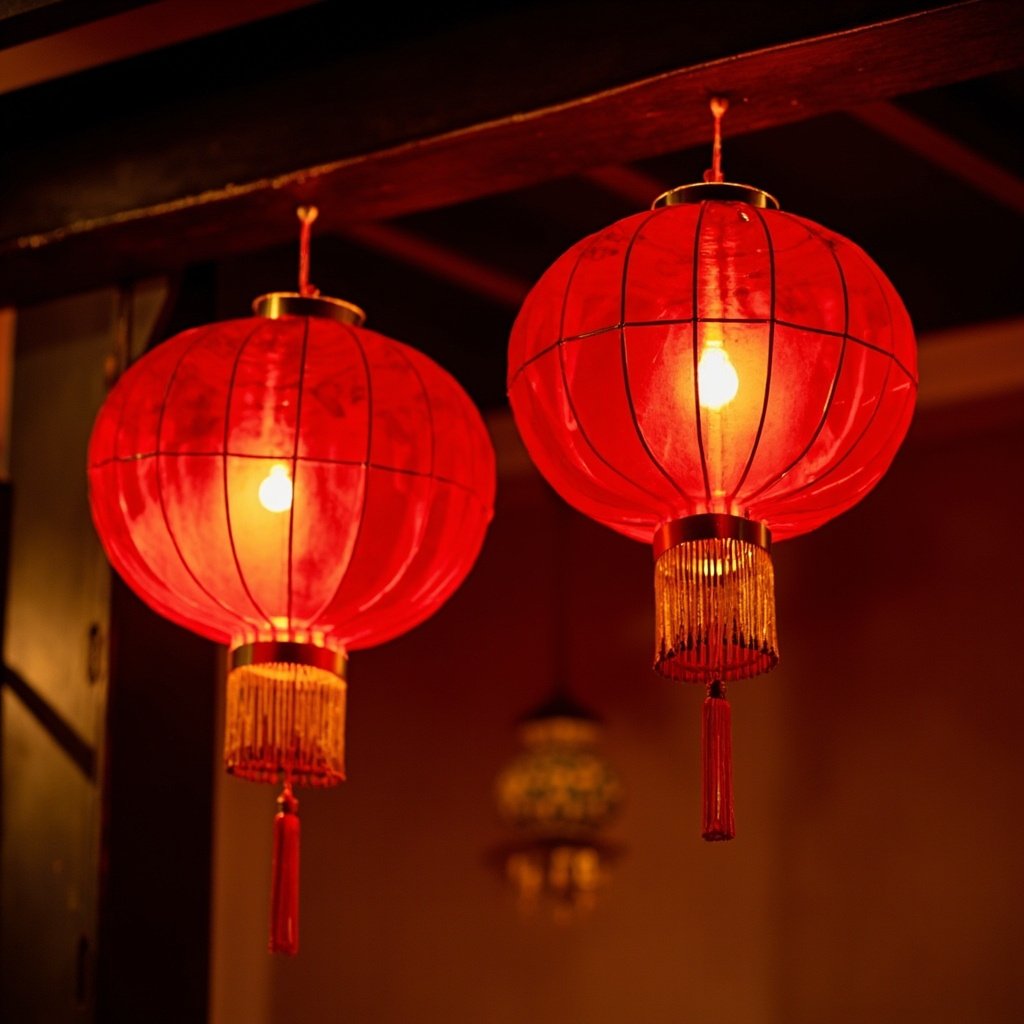
A red lantern at a doorway is one of the most widely recognised images in Chinese culture, and one of the least examined by anyone who has not stood beneath one. To an outside visitor it is colour, decoration, and a signal that something festive is happening inside. To a feng shui reader it is a working instrument made of light, colour, position, and timing.
Why Red Is the Auspicious Colour
Red is the most charged colour in Chinese culture, and in feng shui it is read directly as fire element. Fire governs the south, the season of summer, the color red, and the quality of visibility. It is the element of energy that is seen rather than felt: recognition, reputation, and being present in the world.
Red is auspicious because of what it has historically signalled. In imperial China red was the color of the ruler and of celebration. It marked weddings, the new year, openings, and the return of good fortune. A red cloth tied over a gate signalled that a household was glad to receive you. That association with happiness and vital heat became so strong it survived every change of dynasty and material.
Light as Yang and the Power of Darkness
The character for lantern in Chinese combines the radical for fire with a phonetic element, which is a reminder that light itself, not the cloth, is the active ingredient. In the yin and yang framework, light is yang: active, warm, outward moving, and associated with clarity.
That gives a lantern a specific feng shui function after sunset. A home that is completely dark in the evening creates what practitioners call a gap, a stretch of the day with no yang presence at all. The result is described as stagnant: no active outlet, no invitation inward, no visible focus for the eye. Lighting the entry and the main living space restores that presence.
There is also a classical objection to a single bright lamp in a dark room. The contrast creates a sharp light and dark boundary, and the remedy is not one harsh source but several soft ones distributed through the space. Lanterns, with their diffused glow and paper or gauze walls, do exactly that by nature. They were lighting technology before they were anything else, and they answer negative influence by dispersing what gathers in unlit space. The red governs the emotional register; the light governs the movement.
Where Lanterns Are Hung
Position does most of the work. The classic placement is a pair of lanterns at the front of a building, one on each side of the door, because the entrance is where the house most needs guidance and welcome.
- At the door and door lintel. Lanterns on either side of the entrance, or beneath the lintel, mark the threshold as lit. This is the position with the strongest traditional claim, and the one most visible to arriving guests.
- Under the eaves. Lanterns hung along a covered walkway or beneath a roof line bring light to the path between buildings, which in a courtyard house is where the household actually moves.
- In the hall or the center of the home. The center is the tai chi position, the pivot of the whole plan. A lantern here works like a heart in the body of the house, and it is more effective as a steady, low, warm source than as a festive object.
- Inside the front hall. One lantern just inside the door draws chi inward instead of letting it pass through.
Height, Symmetry, and the Middle Palace
Three rules govern the details, and they matter more than most buyers expect.
- Height. A lantern hung too high sends its light above the level of the people below and loses the invitation. Hanging it so the lower edge sits roughly at or slightly above head height keeps it in conversation with the space. It should never hang low enough to obstruct sightlines.
- Symmetry. A single lantern on one side of a door tips the composition and leaves one side of the entrance unsupported. Pairs are the correct form for doorways, and the two lanterns should match in size, color, and height.
- The center. In the central hall of a home, keep the arrangement balanced around the middle axis. A cluster off to one side pushes the energy of the room off center, which is the opposite of what the middle palace is for.
The New Year and Festival Custom
Hanging lanterns is one of the oldest year customs in China. Red lanterns are lit at the approach of the lunar new year and remain lit through the first days of the festival. Their light keeps the darkness of the longest nights at bay, and their red announces that the year ahead will be governed by auspiciousness.
They also carry the story of the lantern festival, which falls on the fifteenth day of the first lunar month, the night of the full moon. That is the night when the lanterns were historically set adrift on rivers, and when the first emperor of the Han dynasty is said to have lit palace lanterns for his court to read from them. The festival is the reason the round lantern, with its shape of the full moon, became the most common form of the object. The custom survives outside China in the form of lanterns hung during the new year in Chinatowns, at temple fairs, and at restaurants.
Materials and Shapes
The lantern form varies, and each material carries its own character.
- Red silk. The most formal and most durable. Silk drapes well, holds color deeply, and takes a carved frame without complaint.
- Paper. The classic festival material, especially in the north, where paper lanterns are lit with a candle. Paper takes ink beautifully, which is why calligraphic lanterns with a blessing or a family name are so common.
- Gauze and rice paper over a bamboo frame. The light comes through evenly and softly, which makes this the best material for the feng shui function of diffused light rather than a bright point source.
- Wood and metal frames. A frame in wood or metal grounds the fire element and gives the form weight, which suits larger pieces and commercial premises.