Blog

Turquoise Feng Shui: The Sky Stone of Protection and Calm Energy
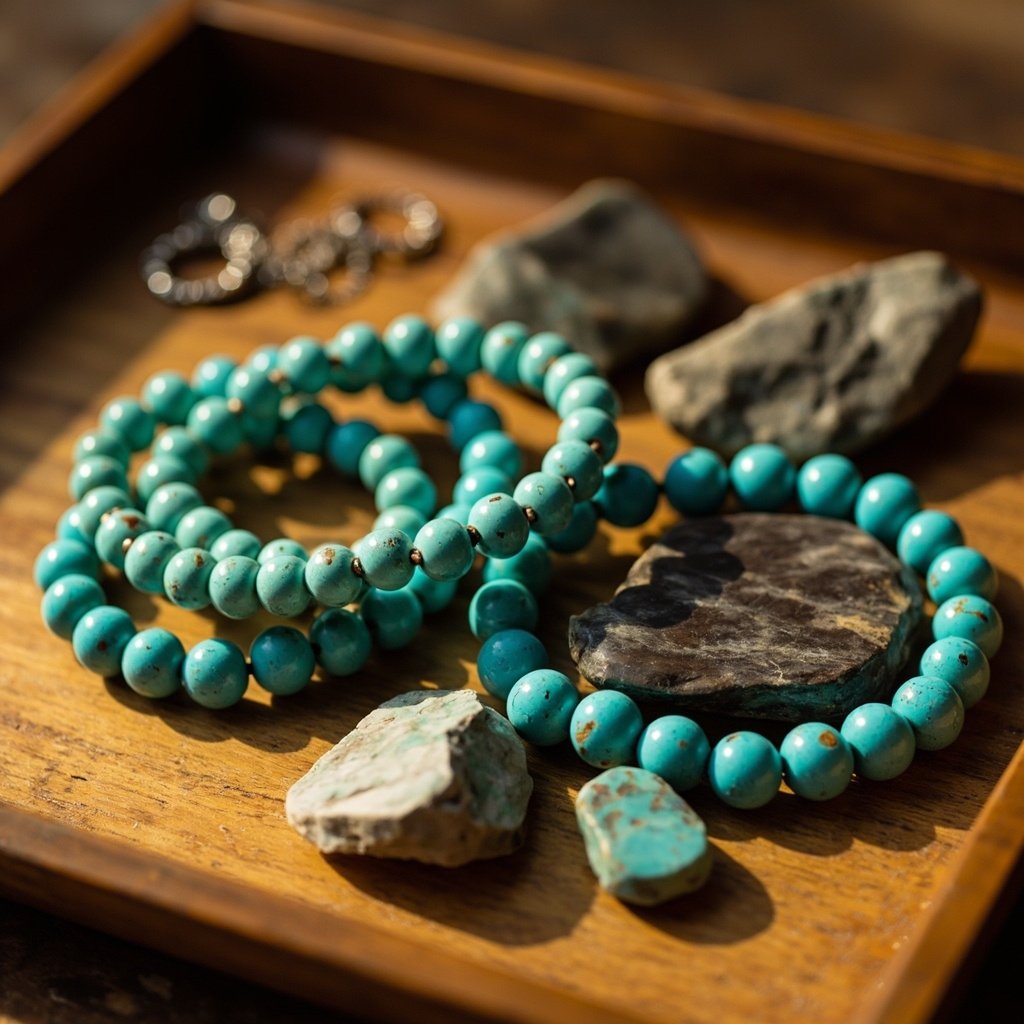
Few stones carry as much quiet authority as turquoise. Long before it became a fashionable gemstone, turquoise feng shui tradition treated it as a piece of the sky itself — a fragment of heaven brought down to earth and worn close to the skin. Across Chinese, Tibetan and Persian cultures, this blue-green stone was set into jewelry and ritual objects for one consistent purpose: to protect the person who carried it and to steady the mind that guided them.
In classical Chinese metaphysics, turquoise reads as the midpoint between the blue of deep water and the green of new growth — two forces feng shui treats as complementary rather than opposed. A stone holding both at once is considered unusually stable, because it does not tip the energy of a room toward expansion or contraction alone. That is why it appears so often in talismanic jewelry, and why it is not a stone of dramatic transformation but of quiet, enduring guardianship.
Why Turquoise Is Called the Sky Stone
The Chinese name for turquoise historically connected it to the heavens and to the westward trade routes, where it traveled alongside jade and silver. This lineage of travel and exchange is why the stone is so often recommended for entryways. The entry is the mouth of chi, the point where outside energy enters and is either welcomed or deflected. A turquoise object placed near the door is understood to filter that incoming current, slowing the arrival of harsh or rushed energy while allowing steady, nourishing flow to continue inward.
The Protective Function in Feng Shui Practice
Protection in feng shui is rarely about force. It is about composure — the ability to remain unshaken when circumstances press in. Turquoise is prized precisely for this quality.
- Against sha chi. Where a sharp corner, a long corridor or a mirror faces a seating area, turquoise softens the aggressive current before it reaches the body.
- During travel. A turquoise pendant or a small tumbled stone carried in a bag is a traditional safeguard for journeys, echoing the stone’s long association with safe passage.
- In rooms of decision. Studies, consultation rooms and home offices benefit from turquoise because it supports articulate speech and unhurried judgment.
- For emotional steadiness. Those prone to anxiety or sudden irritation often find turquoise easier to wear daily than louder protective stones like obsidian or black tourmaline.
Notice the pattern: every one of these applications is defensive but gentle. Turquoise does not repel; it regulates, which makes it far more livable than many of its more aggressive cousins.
Where to Place Turquoise in the Home
Because turquoise governs clarity and calm communication, its best placements follow the areas of the home where words and decisions matter most.
- The entry or foyer. A small bowl of tumbled turquoise, or a bracelet kept on a tray by the door, settles the energy of everyone who walks in.
- The study or home office. Place it on the desk toward the left-hand side, the side associated with the Wood element and with the active, planning aspect of the mind.
- The living room. Keep turquoise near the seating cluster rather than on a distant shelf, so that it works on the energy where the family actually gathers.
- The bedroom. A single piece on a nightstand is enough. Turquoise is calm enough for sleeping spaces, unlike fire-heavy stones that can leave the mind overactive.
- The health corner. In the east sector, which governs growth and vitality, turquoise reinforces the Wood element’s natural affinity for renewal.
One caution belongs here. Turquoise should not be crowded. Its virtue is clarity, and a cluttered surface defeats that virtue.
Turquoise, the Wood Element and Honest Speech
Traditional Chinese thought links the Wood element to the Liver, and the Liver to the capacity for planning and for straightforward expression. When Wood energy is balanced, a person speaks plainly and decides without hesitation. When it is congested, the same person becomes indecisive or sharp-tongued.
Turquoise is therefore associated with integrity in speech — the old idea that a person who wears it cannot easily lie, because the stone encourages the tongue to match the heart. Whether one reads that literally or as pastoral wisdom, the intent is useful: turquoise is a reminder to communicate plainly, especially in families where unspoken grievances build up.
Pairing Turquoise with Other Stones
Turquoise blends well in the feng shui toolkit.
- With jade. Jade carries enduring luck and steady growth; turquoise adds protection and articulation. Together they form a balanced traditional pairing.
- With malachite. Malachite governs the Heart and emotional healing. Combined with turquoise, it addresses both the feeling and the expression of emotion, which is why the pairing suits periods of transition.
- With clear quartz. Quartz amplifies whatever intention it is given. Set beside turquoise, it strengthens the protective function without changing its character.
- With citrine or gold tones. Where protection must also support prosperity, a warm stone balances turquoise’s cooler register.
Caring for a Turquoise Piece
Turquoise is relatively soft and porous, and deserves gentler handling than quartz or agate. Keep it away from household cleaners, perfumes and prolonged direct sun, all of which can fade the surface. Clean it with a soft dry cloth rather than soaking it, and store it separately from harder stones that could scratch it.
Traditionally, a turquoise piece is cleansed by moonlight rather than a long water soak. Place it on a windowsill overnight during a full moon, or pass it briefly through the smoke of sandalwood. This is the same purification rhythm described in our guide to crystal cleansing and charging — gentle, cyclical, and never rushed.
Charging Turquoise with Intention
A consecrated turquoise piece carries considerably more presence than a decorative one. The ritual is simple: hold the stone in both hands, state a single clear intention, and let that intention be protective rather than ambitious. Turquoise answers best to words like steady, clear, and safe — not to demands for sudden gain.
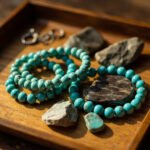
If you would rather have the work done formally, the store’s Turquoise blessing ritual for protection and prosperity is performed with exactly this framing, and the more wearable healing turquoise double wrap bracelet is consecrated for daily use.
Common Questions
Is turquoise a good stone for beginners?
Yes. Its effect is gentle and its logic is easy to grasp, which makes it forgiving for someone new to feng shui work.
Should turquoise be worn on a particular side?
Tradition places protective stones on the left wrist, the receiving side, and expressive stones on the right. Turquoise is usually worn on the left.
Does the stone need to be natural?
Natural, untreated turquoise holds the character practitioners look for. Heavily stabilized or dyed material looks similar but does not carry the same texture, and the tradition is built on the stone’s material honesty.
Closing Thoughts
Turquoise rewards patience. It will not announce itself the way a dramatic crystal might, and it will not promise overnight wealth. What it offers is steadiness — a calm, watchful presence that helps a household speak plainly, decide clearly, and move through difficult seasons without losing its footing.