Blog

Jade Peace Buckle Feng Shui Meaning: The Ping An Kou Protection Charm Explained
Few Chinese ornaments carry a quieter power than the jade peace buckle. A simple disc of polished stone with a hole at its centre, it holds no carved dragon and no engraved character — and that restraint is the point. In feng shui and Chinese folk tradition, the peace buckle, known in Mandarin as ping an kou (literally “safe and sound button”), is worn to keep a person whole: healthy in body, steady in temperament, and shielded from harm.
This guide explains what the peace buckle means, why its shape matters, which materials are traditional, and how to wear and gift one.
What Is a Peace Buckle?
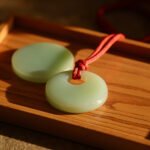
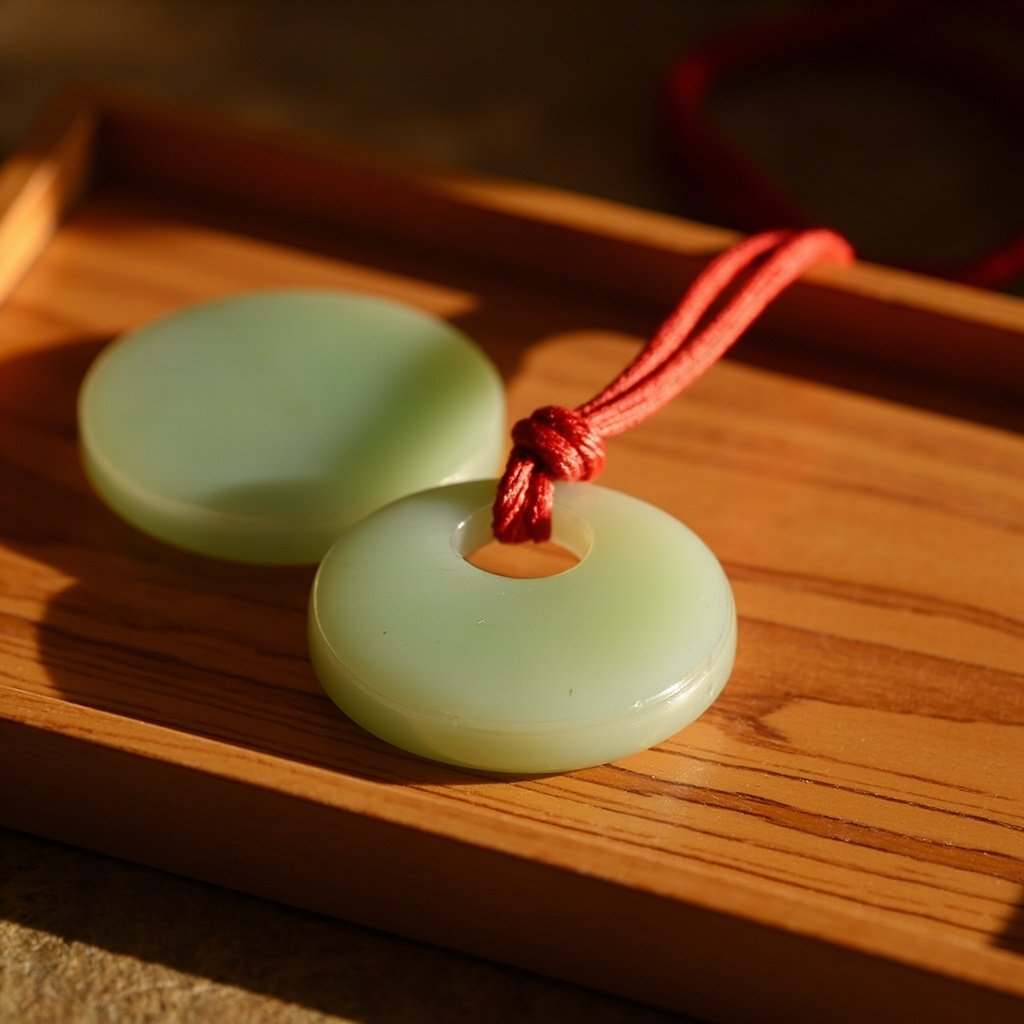
A peace buckle is a flat, round disc with a circular hole bored through the centre, threaded onto a cord and worn as a pendant, bracelet charm, or anklet bead. The silhouette is instantly recognisable to Chinese eyes and almost anonymous to Western ones, which is why it travels so well as a gift.
Its lineage reaches back to the ancient bi disc, a ritual jade form produced in China for several thousand years. Court and temple jade bi were ceremonial objects associated with heaven and with the authority of the wearer. Over centuries, that disc simplified into the small personal peace buckle — a shift from ritual object to everyday amulet.
Why the Round Shape Carries the Meaning
Feng shui reads form as function; a shape states how energy moves. The peace buckle’s geometry carries three layers of meaning at once.
- The outer circle represents heaven — the great cycle of seasons, stars, and fate that no person controls.
- The inner hole represents the still point — the calm centre a person returns to when the outer world is loud. The cord passes through it, meaning the wearer is held by that stillness.
- The unbroken ring of stone represents continuity — smooth and endless, with no gap for misfortune to enter.
Because the disc has no sharp edge and no carved symbol that could be misread, it is one of the most universally safe feng shui items. Some objects must be matched to a birth chart or compass direction. The peace buckle does not: it suits any person, any age, any home.
Traditional Materials and What They Signal
The stone matters, because in Chinese practice different materials carry different qualities.
Jade and Nephrite
Jade is the classic choice. Chinese culture treats jade as a living stone — warm to the touch, slow to change, and believed to absorb and deflect negative influence. A jade peace buckle is the traditional gift for a child, a traveller, or a new couple, because jade is thought to take the hit on the wearer’s behalf. Many families hold that if a jade piece cracks while worn, it has done its work.
Cinnabar
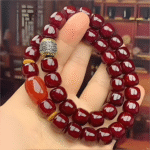
Cinnabar, the deep vermilion mineral long used in Taoist protective arts, gives the peace buckle a stronger, more active character. Its red tone is tied to vitality and to the deflection of sha chi, the harsh energy that gathers around corners, clutter, and conflict. It is often chosen for someone facing a demanding year.
Other Stones
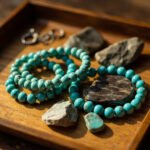
Agate and jadeite are common alternatives, prized for durability and clear colour. The principle stays the same: a dense, smooth, natural stone is preferred over a hollow or synthetic one.
How to Wear a Peace Buckle
Placement follows simple, practical logic: think about where protection is useful and where weight is comfortable.
- Necklace at chest height. The most traditional placement. Anchored over the heart, the disc sits at the body’s emotional centre. A red silk cord is customary, though neutral cords are acceptable.
- As a bracelet or anklet charm. Common for children and for people who dislike pendants. An anklet placement is associated with steady movement and safe travel, which is why it is often given before a long journey.
- On a bag or in a pocket. A discreet option for those who cannot wear jewellery at work. The intention — keeping a protective object near the body — is unchanged.
- Paired with another charm. A peace buckle combines well with a red string bracelet or a personal talisman; its neutrality means it does not compete with other symbols.
Where to Place a Peace Buckle at Home
The buckle is a personal object first, but it can also anchor a home. Effective placements include the entryway, where it calibrates energy crossing the threshold; the bedroom, where it supports restful sleep; and a study desk, where it encourages a settled mind. Keep it visible and clean, but not crowded — a peace buckle buried in a drawer of tangled odds and ends has lost the clarity that gives it meaning.
Caring for Your Peace Buckle
Jade and similar stones respond well to gentle, regular contact. Wipe the piece with a soft dry cloth, and occasionally rinse it under cool running water, then dry it fully. Avoid prolonged direct sun, harsh cleaners, and ultrasonic baths, all of which can dull a natural stone. Some practitioners set the piece in moonlight overnight during a full moon to refresh it without ritual complexity.
If the cord frays, replace it rather than wearing the disc loose. The cord links the object to the person; a secure cord is part of the charm’s integrity.
Choosing a Peace Buckle as a Gift
The peace buckle is one of the safest and most thoughtful gifts in the Chinese tradition, because its message is not about wealth or status but about wellbeing. It suits a new baby, a student leaving home, a friend moving abroad, a partner beginning a difficult project, or a parent whose health is on your mind. When you give one, say plainly what you intend it to carry: safety, health, a settled heart. Spoken intention is part of how the object is understood.
If you want a piece with a consecration or blessing ritual attached, our handmade cinnabar peace buckle charm is prepared for exactly the protective, steadying purpose described here, and it can be worn as a bracelet or anklet depending on your preference.
Frequently Asked Questions
Is a peace buckle the same as a bagua mirror?
No. A bagua mirror is a household tool positioned to redirect incoming energy at a doorway. A peace buckle is a personal worn object, meant to accompany a person rather than guard a fixed space.
Does it have to be jade?
Jade is traditional, but cinnabar, agate, and jadeite are also well established. What matters is that the material feels solid and natural and that the cord is secure.
Bringing It Back to the Centre
The peace buckle endures because it asks for nothing dramatic. It is a circle around a still point: heaven around, calm within, continuity throughout. Worn on a cord or kept near the body, it is a daily reminder that protection is not only about deflecting what is difficult, but about staying settled in the middle of it. For anyone seeking a feng shui object that is beautiful, portable, and quiet in its meaning, the ping an kou remains one of the finest choices in the tradition.