Blog

The Five Elements (Wu Xing): A Practical Guide to Balancing Your Daily Life
For more than two thousand years, Chinese metaphysics has rested on a deceptively simple idea: that all of existence flows from the interplay of five fundamental energies. Known in Mandarin as wu xing — often translated as the Five Elements or Five Phases — Wood, Fire, Earth, Metal, and Water form the backbone of Taoist thought, traditional medicine, and feng shui. Far from a dry academic system, the Five Elements offer a living framework for understanding your health, your home, your relationships, and the rhythm of your decisions.
What Are the Five Elements in Taoist Philosophy?
The Chinese word xing carries a sense of movement and transformation, which is why many scholars prefer “Five Phases” over “Five Elements.” Unlike the static substances of Western alchemy, these energies are always in motion, nourishing one another in a creative cycle and moderating one another in a controlling cycle. When these cycles run smoothly, life feels balanced and effortless. When they are disrupted, you may notice discord in your body, your home, or your career.
The Creative Cycle of Mutual Support
The core of the system is the generating cycle, in which each element nurtures the next:
- Wood feeds Fire — growing trees become fuel for flames.
- Fire creates Earth — ash and heat give rise to soil.
- Earth bears Metal — minerals form within the ground.
- Metal gathers Water — condensation forms on cool surfaces.
- Water nourishes Wood — rainfall sustains new growth.
This cycle is the reason Taoist practitioners speak of “supporting” an element that is weak. If your diet, home, or energy seems depleted, strengthening the element that precedes it can restore momentum naturally.
The Controlling Cycle of Balance
Equally important is the restraining cycle, which prevents any single energy from becoming excessive:
- Wood parts Earth — roots break through soil.
- Earth dams Water — banks control flooding.
- Water extinguishes Fire — moisture calms flame.
- Fire melts Metal — heat shapes ore.
- Metal cuts Wood — blades prune growth.
Balance, in this tradition, is never static. It is a continuous dance of support and restraint, much like the ebb and flow of the seasons.
Identifying Your Dominant Element
Before you can harmonize your environment, you need to know which energies are strongest in your chart. Practitioners typically use two lenses: the birth year in the Chinese zodiac and the Ba Zi Four Pillars, which map the year, month, day, and hour of your birth against the five phases and the yin-yang principle.
While a full Ba Zi reading is best conducted by an experienced master, a simple starting point is your zodiac animal’s associated element cycle. The system is layered, however, and your tangible personality often reflects the element of your day pillar rather than your year alone. For this reason, many Western students begin by considering which elemental traits resonate most strongly with their temperament.
Traits of Each Element
- Wood people are growth-oriented, ambitious, and compassionate. They thrive on new projects, movement, and purpose. When imbalanced, they can become stubborn or impulsive.
- Fire personalities radiate warmth, charisma, and enthusiasm. They inspire those around them but may struggle with restlessness or emotional extremes when their energy runs unchecked.
- Earth individuals are grounded, reliable, and nurturing. They excel at building stability and caring for others, yet can lapse into over-caution or worry.
- Metal temperaments value precision, discipline, and quality. They are natural organizers and judges, though an excess can appear rigid or critical.
- Water souls are intuitive, wise, and adaptable. They navigate complexity with ease but may retreat into secrecy or indecision when out of balance.
Rather than boxing yourself in, treat these traits as a diagnostic tool. A pattern of chronic fatigue, scattered focus, or restless sleep often points to one energy crying out for support.
Applying the Five Elements to Your Home and Decisions
The real power of Taoist metaphysics lies in practical application. Here is how you can bring the balance of the Five Elements into your daily routine and living space.
Color and Material in Feng Shui
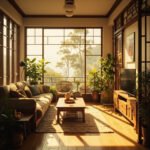
In feng shui, colors and materials speak the language of the elements. Wood resonates with greens and tall plants. Fire appears in reds, candles, and bright lighting. Earth is represented by ochre tones, ceramics, and square shapes. Metal shows itself in whites, grays, and metallic finishes. Water flows through blues, blacks, glass, and organic curves.
To introduce a missing element, add a few deliberate items rather than redecorating entirely. A small wooden bowl, a ceramic vase, a piece of white metal jewelry, or a tabletop fountain can quietly shift the energy of a room.
Decision-Making Through the Creative Lens
The Five Elements also refine how you approach problems. A decision that feels blocked often reflects a missing phase in your process. If you tend to rush into action, you may be Fire-dominant and need the patience of Earth before committing. If you overanalyze and delay, a touch of Wood-inspired momentum can break the stagnation. By naming which element your next step requires, you can move with intention instead of reaction.
Crystals and Taoist Energy Products
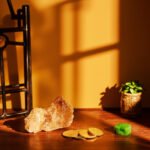
Many practitioners amplify their intention with natural materials, particularly crystals associated with each element. Green jade and malachite carry Wood energy, while citrine and carnelian resonate with Fire. Smoky quartz grounds Earth, and pyrite or white jade reflect Metal. Amethyst and black obsidian connect to Water and stillness.
When selecting a stone, trust both its traditional correspondence and your personal resonance. A crystal that feels soothing in your hand is often the one your energy needs most. Place it in alignment with the bagua area of your home that corresponds to the life domain you wish to support.
Honoring the Rhythm of the Seasons
Finally, remember that the Five Elements are not fixed labels but rhythms. Spring belongs to Wood, summer to Fire, and the harvest season to Earth. Autumn expresses Metal, while winter retreats into Water. Aligning your activities with the seasons — planting in spring, resting in winter, consolidating in autumn — keeps you in step with the natural world rather than fighting it.
Whether you are new to Chinese metaphysics or deepening an established practice, the Five Elements offer a gentle, holistic path toward greater harmony. Start with one small change: identify your dominant element, add a supportive color or crystal to your space, and observe how your energy responds over the coming weeks.
Further Guidance and Products
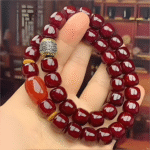
If you would like to explore this tradition further, authentic Taoist energy products — from carefully chosen crystals and bagua tools to prayer beads and meditation aids — can support your practice. Look for items sourced with care and grounded in genuine feng shui principles, and allow your intuition to guide the final choice. Balance, after all, is as much an art as it is a science.