The Power of Cinnabar: Ancient Chinese Protection Symbol Explained
In a world where ancient wisdom meets modern uncertainty, few symbols carry as much weight as cinnabar—a vibrant red mineral that has been revered for millennia as a powerful protection talisman. Whether you’re seeking to shield your home from negative energy or attract prosperity, the cinnabar amulet stands as a timeless guardian. As a 7th-generation Tianxing Feng Shui inheritor, I have witnessed firsthand how this sacred stone transforms lives when properly blessed and worn.
What Is Cinnabar? A Historical and Cultural Perspective
Cinnabar, known as zhusha (朱砂) in Chinese, is a mercury sulfide mineral that has been mined in China for over 5,000 years. Its brilliant red hue—the color of life, vitality, and imperial power—made it a cornerstone of ancient Chinese culture. The earliest records of cinnabar use date back to the Shang Dynasty (1600–1046 BCE), where it was ground into pigment for oracle bones and ceremonial vessels.
In Taoist tradition, cinnabar is considered a “yang” substance, embodying the fire element and the energy of the sun. It was used in alchemy to create the legendary “elixir of immortality,” though today we understand its true power lies in spiritual protection. The mineral’s association with the Red Bird of the South (Zhuque) in Chinese cosmology cements its role as a ancient Chinese protection symbol, warding off evil spirits and negative influences.
The Science and Symbolism Behind Cinnabar’s Protective Power
From a scientific standpoint, cinnabar contains mercury, which in its natural, stable state is non-toxic. However, its protective properties extend beyond chemistry. In Feng Shui, cinnabar is believed to emit a strong, stabilizing energy field that repels sha qi (negative energy). This aligns with the Taoist principle that red is the most auspicious color, capable of neutralizing harm.
The symbolism is equally profound: cinnabar represents the heart chakra in Chinese metaphysics, connecting wearers to courage, passion, and divine protection. When carved into a cinnabar pendant, it becomes a portable shield, especially effective for those who travel frequently or work in high-stress environments. Our lineage teaches that genuine cinnabar amulets should be sourced from natural deposits and blessed by a Taoist master to activate their full potential.
How Cinnabar Has Been Used in Taoist Blessing Rituals
In my family’s 800-year tradition, cinnabar is not merely a stone—it is a conduit for ling (spiritual efficacy). Taoist blessings involve several steps:
- **Selection**: Only pure, unprocessed cinnabar is chosen, often from the Wuling Mountains in Hunan.
- **Cleansing**: The stone is bathed in saltwater and exposed to moonlight for three nights.
- **Inscription**: A master carves sacred symbols, such as the Bagua (Eight Trigrams) or the *fu* (talismanic script), onto the surface.
- **Empowerment**: During a ritual, the amulet is placed on an altar, chanted over with Taoist mantras, and infused with the energy of the five elements.
This process transforms a simple mineral into a Taoist blessing tool. Historically, such amulets were worn by emperors, scholars, and warriors to ensure victory, wisdom, and longevity. Today, they serve the same purpose for modern individuals navigating life’s challenges.
Choosing an Authentic Cinnabar Amulet: A Buyer’s Guide
With the rise of synthetic cinnabar and fakes, discerning authenticity is crucial. Here are tips from my lineage:
- **Color**: Natural cinnabar has a deep, rich red with subtle black or silver streaks. Fake versions are often bright orange or uniformly red.
- **Weight**: Genuine cinnabar is dense and heavy for its size. If it feels light, it may be resin or plastic.
- **Texture**: Real cinnabar is slightly rough and cool to the touch, while synthetics feel warm and smooth.
- **Source**: Reputable sellers, like [yihui.store](https://yihui.store), provide certificates of authenticity and details about the blessing ritual.
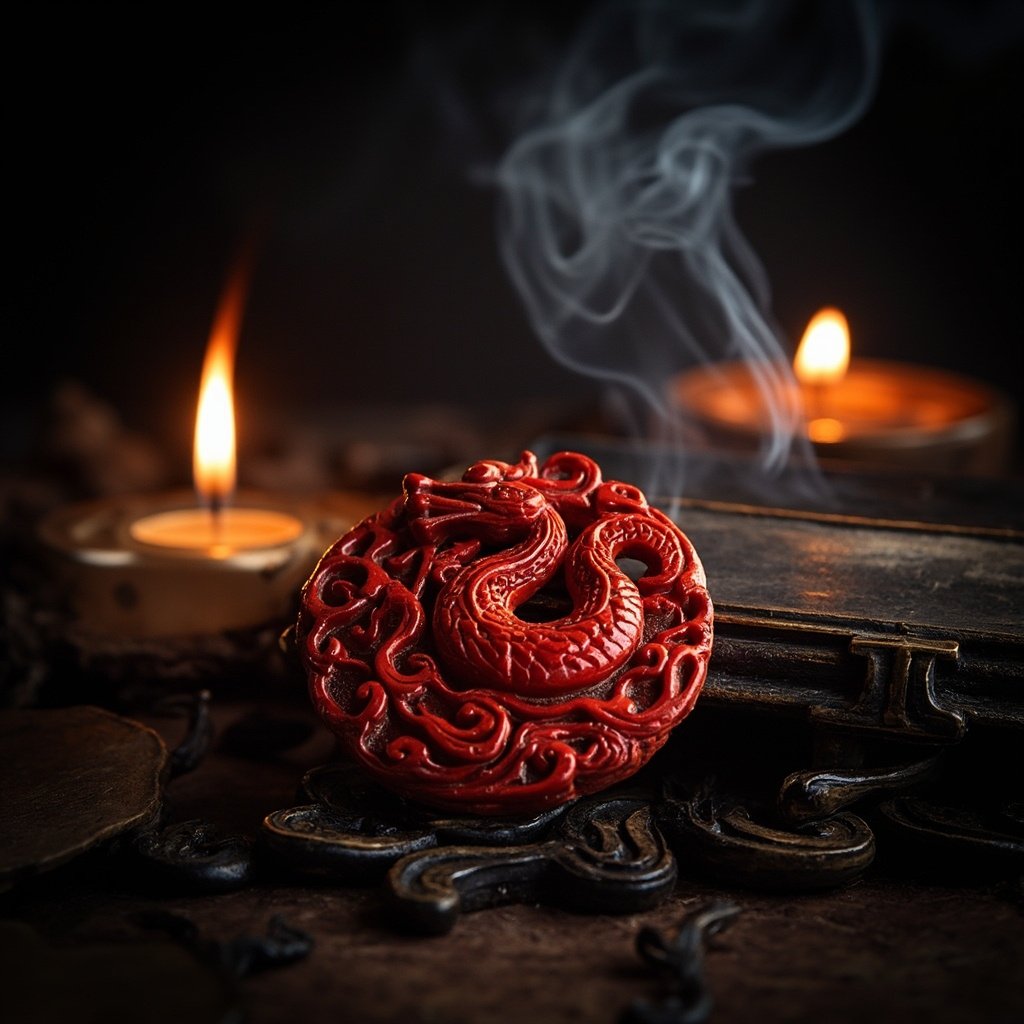
Our Natural Cinnabar Amulet Pendant – Taoist Blessing Protection Talisman is hand-selected from trusted mines and blessed by a 7th-generation master. Each piece is unique, carrying the energy of centuries of tradition.
How to Wear and Care for Your Cinnabar Talisman
To maximize your protection talisman‘s power, follow these guidelines:
- **Wearing**: Hang the pendant near your heart or wear it as a necklace. For home protection, place it near the main entrance or in the wealth corner (southeast).
- **Cleaning**: Gently wipe with a soft, dry cloth. Avoid water, as it can dull the surface. Once a month, leave it under sunlight for 10 minutes to recharge.
- **Avoid**: Do not expose cinnabar to extreme heat or chemicals, as this may release mercury. Keep it away from infants and pets.
Remember, the amulet’s power is enhanced by your intention. Treat it with respect, and it will serve as a loyal guardian.
Conclusion: Embrace Ancient Protection in Modern Times
Cinnabar is more than a mineral—it is a bridge between the physical and spiritual worlds. Whether you seek to shield yourself from negativity, enhance your Feng Shui practice, or connect with Taoist heritage, a cinnabar amulet offers profound benefits. In my 40 years of practice, I have seen clients report improved sleep, reduced anxiety, and unexpected opportunities after wearing these blessed pendants.
Ready to invite this ancient protection into your life? Visit yihui.store to explore our collection of authentic, Taoist-blessed cinnabar amulets. Each piece comes with a lineage guarantee and a free consultation.
🌐 yihui.store
💬 Free consultation: WeChat 8613807250767
Master Zhao, 7th-generation Tianxing Feng Shui inheritor
🌐 Shop: yihui.store
💬 Free consultation: WeChat 8613807250767