Blog
Taoist Energy Products for Meditation: A Practitioner’s Guide to Deepening Your Practice

Taoist Energy Products for Meditation: A Practitioner’s Guide to Deepening Your Practice
Meditation is the quiet gateway through which most modern practitioners first encounter Taoist wisdom. Yet many find that a still mind is easier to desire than to achieve: distractions crowd in, the body grows restless, and the breath resists discipline. Over two thousand years of practice has produced a sophisticated answer that does not rely on willpower alone — the wise use of Taoist energy products, designed to anchor attention and steady the mind as inner cultivation unfolds.
This guide explores how thoughtfully chosen Taoist energy items can support a meditation practice and how to select pieces that serve you honestly, not as mere decoration.
What Makes a Meditation Object a Taoist Energy Product
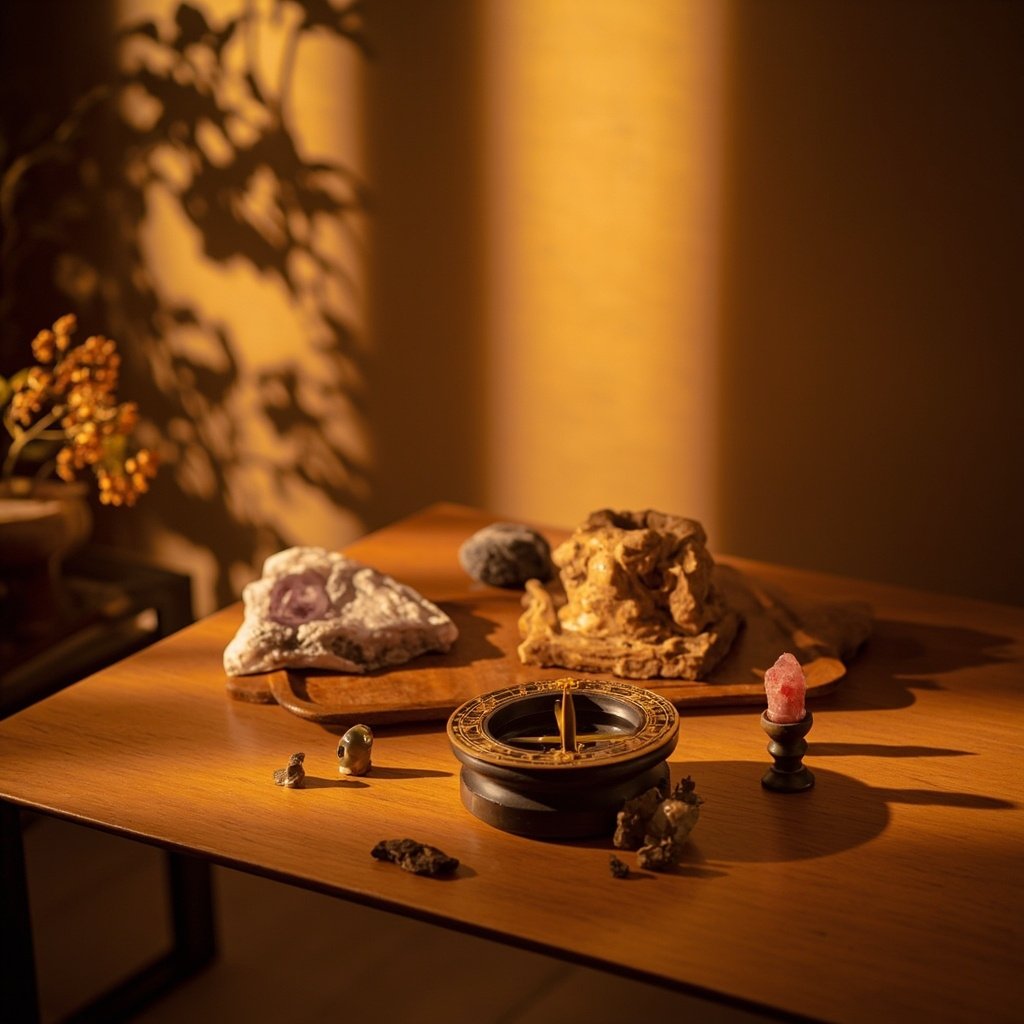
Not every incense burner or prayer bead qualifies. Authentic Taoist items are distinguished by three qualities: correct material, ritual intention, and placement. The material must resonate with energies of calm and protection; the intention behind the piece — cultivated through consecration, chanting, or breath work — gives it a focused purpose; and the placement determines how its energy reaches the practitioner.
Taoist thought holds that the body is a small heaven and the cosmos a great body. Objects used in meditation are bridges between the two, carrying the stability of earth, the clarity of metal, or the fluidity of water into practice. Chosen wisely, they harmonize the practitioner before the first sitting begins.
The Core Principle of Qi Cultivation
At the heart of Taoist meditation lies qi, the vital life force flowing through every living thing. A quiet mind is one through which qi moves evenly, and Taoist energy products encourage precisely that flow. Zitan beads in the hands draw restless attention back to the present; a lingzhi pendant at the chest offers the eyes a focal point during breath work. This is applied energetic design, refined across generations — the practitioner who uses these tools well wins half the battle before a single breath is counted.
Categories of Taoist Energy Products for Meditation
The most effective collections draw from five categories, each serving a distinct purpose. Understanding them lets you build a set that truly supports your practice.
Prayer Beads and Zitan Leisures
Zitan beads — known as red sandalwood in Western catalogues — are among the most respected meditation companions in Taoist tradition. The dense, fragrant wood steadies a wandering mind. Holding the beads during counting keeps the hands occupied, freeing the breath to find its rhythm, while the woody scent anchors the senses and creates a still point from which the mind can observe without grasping.
Choose beads with smooth surfaces and a comfortable weight; a traditional set of 108 provides a complete cycle of counting. Place them on a cloth before sitting or hold them in one hand throughout — the repeated sliding of bead over bead becomes a rhythm the nervous system comes to trust.
The Lingzhi Pendant: Longevity and Clarity
The lingzhi, or reishi mushroom, has been venerated for millennia as a symbol of longevity, vitality, and spiritual attainment. As a pendant worn at the chest it serves a double purpose: positioned over the heart it reminds the practitioner to meet inner work with compassion, and its sweeping form offers the eyes a resting place for open-eye meditation. Many find that touching the pendant becomes an instant cue to return to the breath.
Copper Talismans and Seals of Protection
Meditation opens the inner landscape — and an open door swings both ways. Taoist tradition therefore pairs inner cultivation with outer protection. Copper talismans, engraved with classical characters and auspicious symbols, hold a focused intention of shelter; placed near the mat or above the altar, they keep the energetic perimeter clear and safe. Yet a talisman’s value rests in the intention behind it, not the metal alone. Choose pieces from craftspeople who take consecration seriously and treat the talisman as a working tool; used with sincerity, it promises that your practice space remains your own.
Incense and Its Role in Stillness
Incense has served Taoist meditation for longer than written records survive. The ascending smoke draws the vision upward, releasing the mind from daily worry, while the warm scent of sandalwood or agarwood signals that it is time to settle. Lighting a single stick becomes a ritual of transition — a conscious marker between the world of activity and the world of stillness.
Choose natural, high-quality incense and burn it sparingly; one stick rarely lasts the session. Those sensitive to smoke can use a small electric warmer for wood chips, offering the same support without the emission.
Altar Stones and Weighted Objects
A small weight can work wonders for a restless body. Practitioners often place a smooth stone, a small bronze bell, or a carved jade disc on the altar before the mat, giving the downward gaze an anchor and the hands a fixed, weighty object. In breath-counting, the object can be set down at each cycle’s completion, turning an abstract count into a physical rhythm. Weight matters more than ornament: choose an object with real heft, a pleasant surface, and no sharp edges, and it will quickly become indispensable.
How to Choose Authentic, Honest Taoist Items
The market is crowded with items that look Taoist but carry none of the craft behind them. Attend to four practical signals.
- Source transparency. Reputable sellers state the material, region of origin, and workshop.
- Material honesty. Genuine zitan is dense and heavy; imitation is light and often painted.
- Ritual intention. Consecrated or ceremonially prepared pieces are described as such — ask directly.
- Reasonable pricing. Honest craft costs real money; extremely low prices signal substitutes or mass production.
Begin with one or two well-chosen pieces rather than a hurried collection; a single honest zitan bracelet serves far better than ten trinkets that carry no energy.
Building a Simple Meditation Ritual Around Your Taoist Items
Objects become allies through use. Here is a simple structure for introducing your pieces into daily practice.
- Place your talisman at the edge of the mat and light a stick of incense; if you wear a pendant, settle it at the chest.
- Sit with your spine fairly upright, take your beads or altar stone in hand, and let your eyes rest softly on a single point.
- Count the breath in cycles, moving a bead or settling the stone at each completion.
- When the mind wanders, return gently to the weight in your hands and the scent in the air.
- Close by returning the objects to a dedicated place, honoring the cycle of use and rest.
Consistency matters more than duration. Ten mindful minutes a day, supported by well-chosen Taoist energy products, deepens awareness more reliably than an intermittent hour. Stillness is a cultivated, protected garden of the spirit.
The Taoist path does not ask you to struggle alone against a restless mind; it offers tools that carry two thousand years of tested wisdom. Chosen with honesty and used with sincerity, a zitan bracelet, a lingzhi pendant, a copper talisman, and a wisp of incense become companions on the quiet road inward — steadying the hand, anchoring the breath, and opening the door to a deeper, more peaceful practice.