Blog

How to Read the Feng Shui Compass (Luo Pan): Finding Your Auspicious Directions the Tian Xing Way
Every serious practitioner of celestial feng shui reaches for a single tool more often than any crystal, talisman, or ritual object: the feng shui compass, known in classical Chinese as the luo pan. Where decorative feng shui relies on intuition and placement rules, Tian Xing feng shui (the “Heavenly Stars” school) insists that genuine results come from measurable direction, precise degree, and correct timing. The luo pan is the instrument that ties all three together.
This guide explains how a feng shui compass works, how to take a reliable home or personal reading, and how to apply those readings to choose auspicious directions, working hours, and supporting elements. By the end you will understand why this modest brass instrument is called the “mother of all feng shui tools” — and how to use one with confidence.
What Is a Luo Pan?
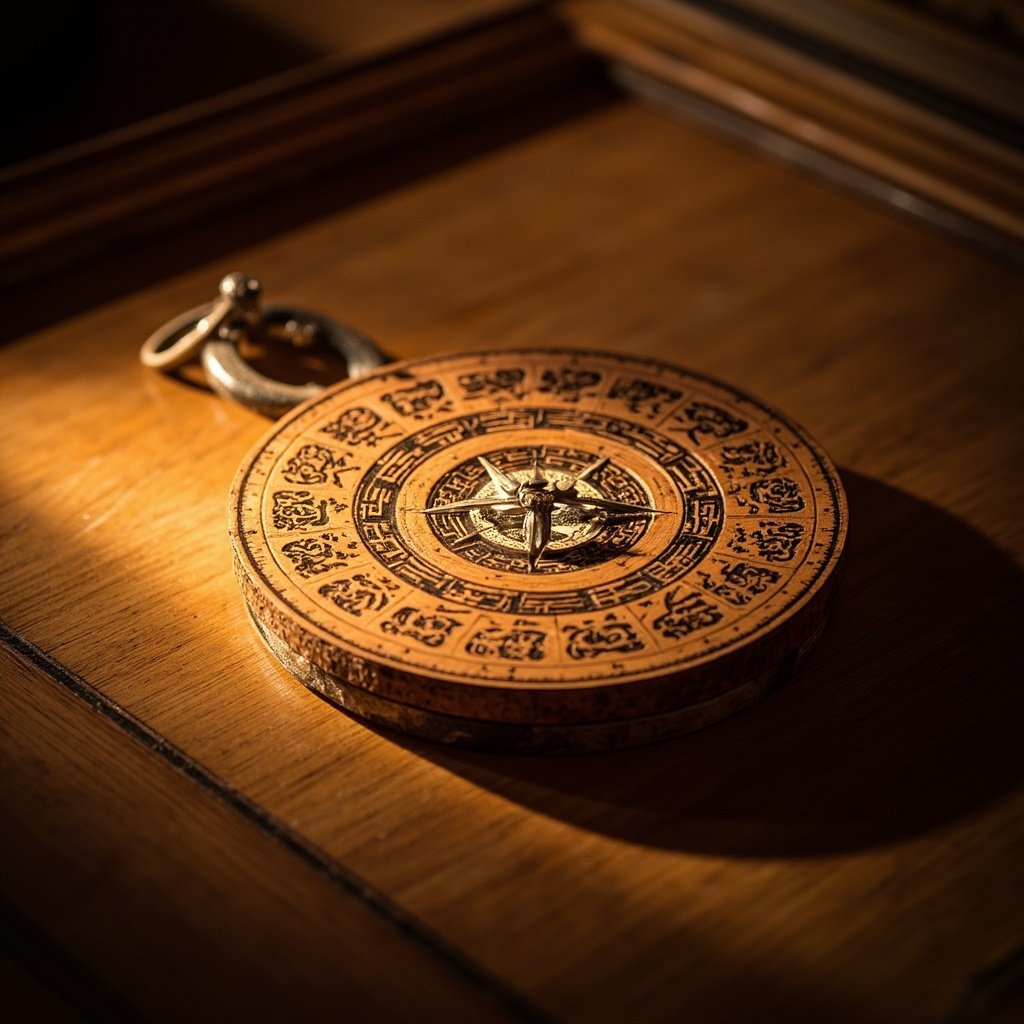
The luo pan looks like an ordinary magnetic compass at first glance, but it is far richer. Concentric rings called rings surround a central needle pool, and each ring encodes a layer of classical knowledge: the eight cardinal directions, the twenty-four mountain positions, the sixty heavenly combinations, and — in advanced models — the twenty-eight lunar mansions used in Tian Xing practice. Skilled readers rotate an outer disc called the heaven plate (tian pan) to align with the magnetic needle, then read the meaningful ring that answers the question at hand.
Western visitors are often surprised that traditional luo pan readings respect the magnetic north needle yet think in terms of energy sectors rather than simple north-south geography. That is because a feng shui compass is less a navigation device and more a reference chart for arranging life around celestial influences.
The Three Essential Plates
While basic models have a single plate, classical instruments carry three stacked assemblies:
- Earth plate (di pan): the fixed base used for reading the home’s facing and sitting directions — the foundation of almost every structural feng shui decision.
- Human plate (ren pan): a rotated layer that corrects for the solar position, used mainly for water and door alignments.
- Heaven plate (tian pan): the rotating layer most relevant to Tian Xing work, used to match directional energy to the heavens and to time-sensitive placements.
Why Direction Matters More Than Placement
Casual feng shui advice tells you to “place a wealth symbol in the wealth area.” Tian Xing feng shui asks a harder question: which direction is the wealth area for you, and when is it activated? Because your personal natal chart assigns you specific favourable and unfavourable directions, a symbol that helps one family can be neutral or even counterproductive for another. The luo pan removes the guesswork by telling you the exact degree you are facing or sitting, so you can apply the correct remedy rather than a generic one.
Personal versus Structural Readings
- Structural reading: stand at the centre of the room or home’s main door, hold the luo pan level, and record the facing degree. This gives the building’s “sitting” and “facing” directions, the foundation for room-by-room guidance.
- Personal reading: combine your birth year and a simple calculation to identify the four directions that support you and the four to avoid. This is where the compass connects to your own energy field.
Taking Your First Accurate Reading
A luo pan is only as good as the reading taken with it. Follow these steps for a dependable result:
- Find a clear spot: stand at least two metres away from metal objects, walls with iron studs, electrical panels, and large appliances, all of which deflect magnetic north.
- Hold it level: keep the pan at waist height, flat and steady, so the needle floats freely rather than pressing against its pool.
- Let the needle settle: rotate yourself slowly until the red end of the needle aligns with the marking for true north, then note which mountain and degree the facing line crosses.
- Take three readings: step, take a reading, step again, and average the degrees. A single glance is rarely reliable.
- Record the degree: write down both the directional name and the degree (for example, northeast at 41 degrees) so you can match it against a chart.
Applying the Reading with Tian Xing Timing
Once you know your facing direction, Tian Xing practice adds a second, often-overlooked layer: time. Classical readers match an activity to both an auspicious direction and an auspicious hour chosen from the heavenly stems and earthly branches that rule the day. Three practical applications are common:
- Desk and bed placement: point your desk chair or your bed headboard toward one of your personal favourable directions, so your body rests toward supportive energy during work and sleep.
- Main entrance harmony: if a home’s front door faces an unfavourable direction, place a bagua mirror, a wealth vase, or a protective image at the threshold rather than moving the entire structure.
- Sponsored rituals: schedule important first actions — starting a job, signing a contract, launching a business — in an auspicious hour aligned with your favourable direction.
Choosing a Feng Shui Compass
If you are ready to begin, quality matters more than decoration. A reliable luo pan should include the twenty-four mountain ring at minimum, a smooth rotating heaven plate, a damped needle that settles quickly, and clear engraved markings. Smaller hand-held models are ideal for beginners; full-size brass instruments are useful for professional readings but require practice to hold steady. Many readers also pair the compass with a Taoist energy product — such as a cinnabar seal, peach wood carving, or protective talisman — to reinforce the intentions they set once an auspicious direction is found.
Final Thoughts
The feng shui compass transforms feng shui from an art of vague suggestion into a discipline of measurable precision. By mastering the luo pan, learning the three plates, taking disciplined readings, and adding Tian Xing timing, you move from decorating with symbols to aligning your daily life with the heavens. Start with a modest instrument, practise your readings, and keep a small log of every facing degree you record. Over time you will see patterns emerge — and you will understand exactly why, for millennia, readers have trusted this remarkable tool above all others.