Blog

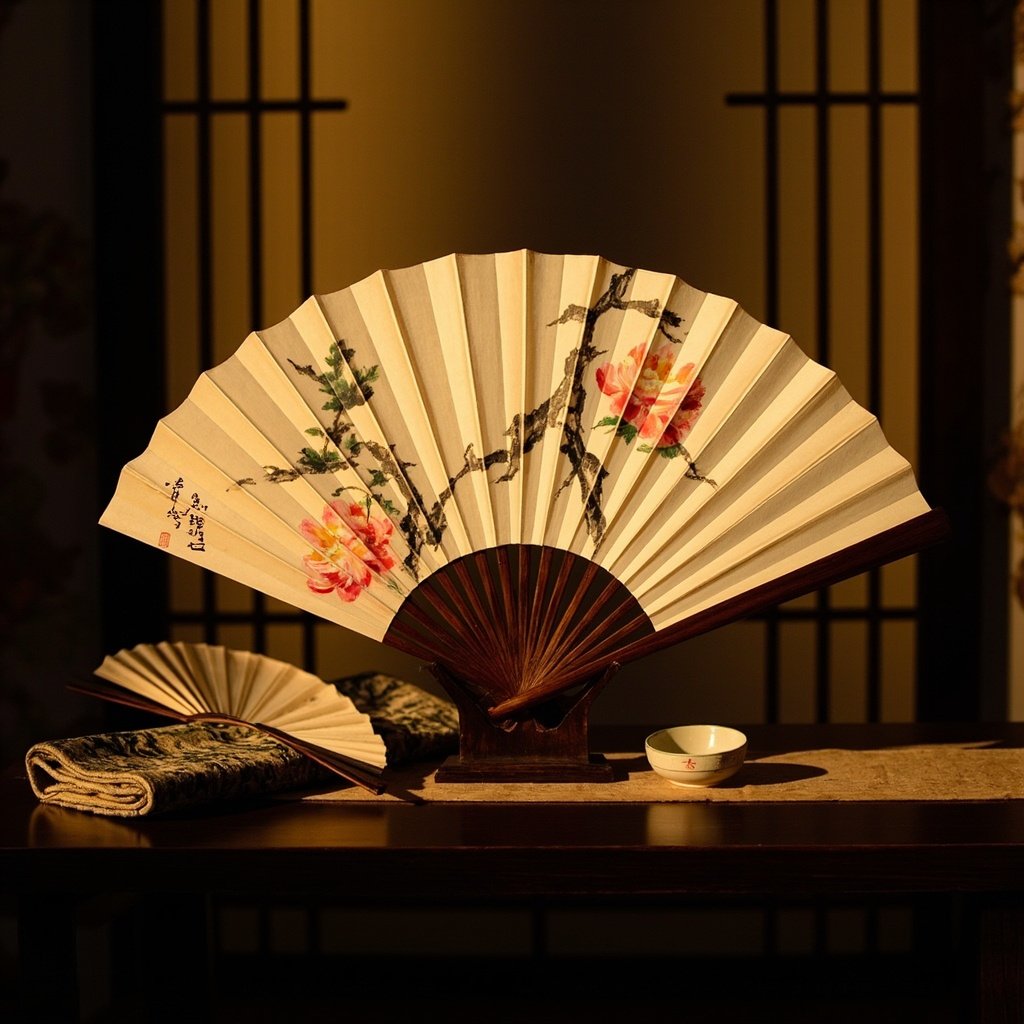
Chinese Silk Fan Feng Shui Meaning: Shan, Chi and the Art of Graceful Placement
Few objects carry as much quiet authority as a Chinese silk fan. It appears in court paintings, in opera, in the hands of scholars. Western readers usually file it under decoration or costume history. In the Chinese metaphysical tradition, however, the fan is a working instrument: it shapes air, and air is the medium through which chi travels.
What the Chinese Fan Actually Is
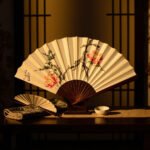
Two objects share the name. The older is the rigid round fan, a stiff silk face stretched over a bamboo or lacquered frame with a single central handle, belonging to the Han and Tang world. The folding fan arrived in China around the tenth century through exchange with Korea and Japan, and Chinese literati turned its blank panels into portable paintings. The folding form became the socially important one: a scholar’s fan was a signature, its painted subject and inscribed poem speaking for the owner before he said a word. That history matters here because the object enters a home already loaded with associations of scholarship, refinement and considered speech.
Why a Fan Moves Chi
Classical feng shui treats still air as stagnation and moving air as life, provided the movement is gentle. Wind that rushes is called sha chi, cutting energy, and is considered harmful; wind that circulates is welcomed. A hand fan sits in that middle register. It does not blast a room, it stirs it. Held and swept deliberately, it gathers and redistributes what has settled. Practitioners therefore treat the fan as a portable remedy: a heavy corner, a doorway where conversation turns tense, a desk that produces only fatigue, each can be tested before anything is bought. Sweep slowly from the centre outward, then notice whether the room feels lighter. The fan is not doing magic; it reveals where the air already wanted to go.
The Taoist and Symbolic Layer
The fan carries mythological weight that makes it a favourite in Taoist iconography. The most famous is the banana leaf fan of the Iron Fan Princess, capable of raising a gale strong enough to extinguish mountain fires. Immortals and wandering sages are often painted holding fans, and the feather fan of the strategist Zhuge Liang became the emblem of a mind that wins battles without lifting a sword. In each case the fan represents control of circumstance rather than force. Language adds a second layer: the word for fan sounds close to a word meaning to scatter, which is exactly its use in remedy work, and near the word for goodness. A gift of a fan therefore carries a wish, that what is stagnant leaves and what is good remains.
Silk, Bamboo and Elemental Character
Material choice is not cosmetic in this tradition. Each material leans toward one of the five elements, so the balance of a room can be adjusted simply by choosing a different fan.
- Silk face: reads as wood in its living quality, though deep red or crimson silk pushes strongly toward fire.
- Bamboo ribs: the clearest wood expression, associated with growth, flexibility and scholar virtue.
- Sandalwood ribs: also wood, with a warm settling scent that suits meditation spaces.
- Black lacquer frame: leans to water and produces a quieter, more contemplative object.
- Gold leaf or brass fittings: introduce metal, useful where a room needs definition.
A plain ivory silk fan with pale bamboo ribs is close to neutral and can go almost anywhere. A crimson fan with gold detailing is a fire object and belongs where energy needs lifting.
Where a Silk Fan Belongs in the Home
Placement follows function. Ask what the room needs the fan to do, then choose the wall.
- Study or home office: hang it opened beside the desk, where it reads as support rather than supervision.
- Living room: one opened fan breaks a long empty wall without adding noise.
- Entryway: a closed fan standing in a tall vase near the door turns incoming energy rather than stopping it.
- Dining room: a symmetrical pair above the table supports balanced exchange.
- Stairwell or corridor: a fan mid-run interrupts a fast straight line of chi, one of the few places where a decorative object does measurable remedial work.
Two rooms are generally left alone. The bedroom is for rest, and an opened fan above a bed is traditionally read as a blade or divider over sleeping bodies. The kitchen, already dominated by fire, rarely benefits from an object that adds movement and heat.
Display Rules That Actually Matter
Orientation is the detail most often missed. An opened fan should face into the room with its arc presenting outward, so the object appears to offer rather than shield. Hung too high it loses its relationship to the people below; the centre of the fan usually sits at or slightly above eye level.
Condition matters more than age. A fan with torn silk, snapped ribs or water staining carries the visual language of neglect, and feng shui reasoning follows the eye. Repair it, frame it behind glass as an artifact, or retire it, but never leave a broken fan in a position of honour. Grouped in threes and fours, fans begin to look like a shop display; one strong fan with space around it does more than six competing for attention.
Common Misunderstandings
- That more fans mean more chi. Movement has a point of diminishing return; past it the room simply feels busy.
- That an antique is automatically better. Provenance does not compensate for damage or for a size that overwhelms the wall.
- That a fan can fix a structural problem. It softens and redirects; it does not substitute for correcting a bad layout.
Choosing a Fan with Integrity
Buy slowly. Open and close a folding fan a few times; a well-made one moves with even resistance and settles without a wobble. Check that the ribs are matched in colour and that the silk is taut rather than drum-tight, which usually means it is about to split. Hold it at arm’s length and ask whether the object feels calm. In this tradition that question is not sentimental; it is the test applied to every furnishing in a home.
A Small Object, Held Deliberately
The silk fan survives in modern homes because it does two things at once. It cools a room and it slows a person down, a combination difficult to find in an object that also happens to be beautiful. Treat it as a working tool with a long memory, place it where it can actually move air and sightlines, keep it whole, and it will do more for a space than most expensive remedies sold to anxious homeowners.