Blog

Chinese Shadow Puppets: Feng Shui Meaning and the Art of Moving Light
A Chinese shadow puppet is made almost entirely of contrast. A translucent hide figure, a single lamp behind it, a white cloth in front, and a character walks across a wall. For a thousand years this was village entertainment, temple storytelling, and quiet metaphysics at once. In feng shui terms it is a teaching object: light and shade depend on each other, and a home must hold both. This guide covers what a piying figure is, what it symbolizes, and where to place one.
What a Chinese Shadow Puppet Actually Is
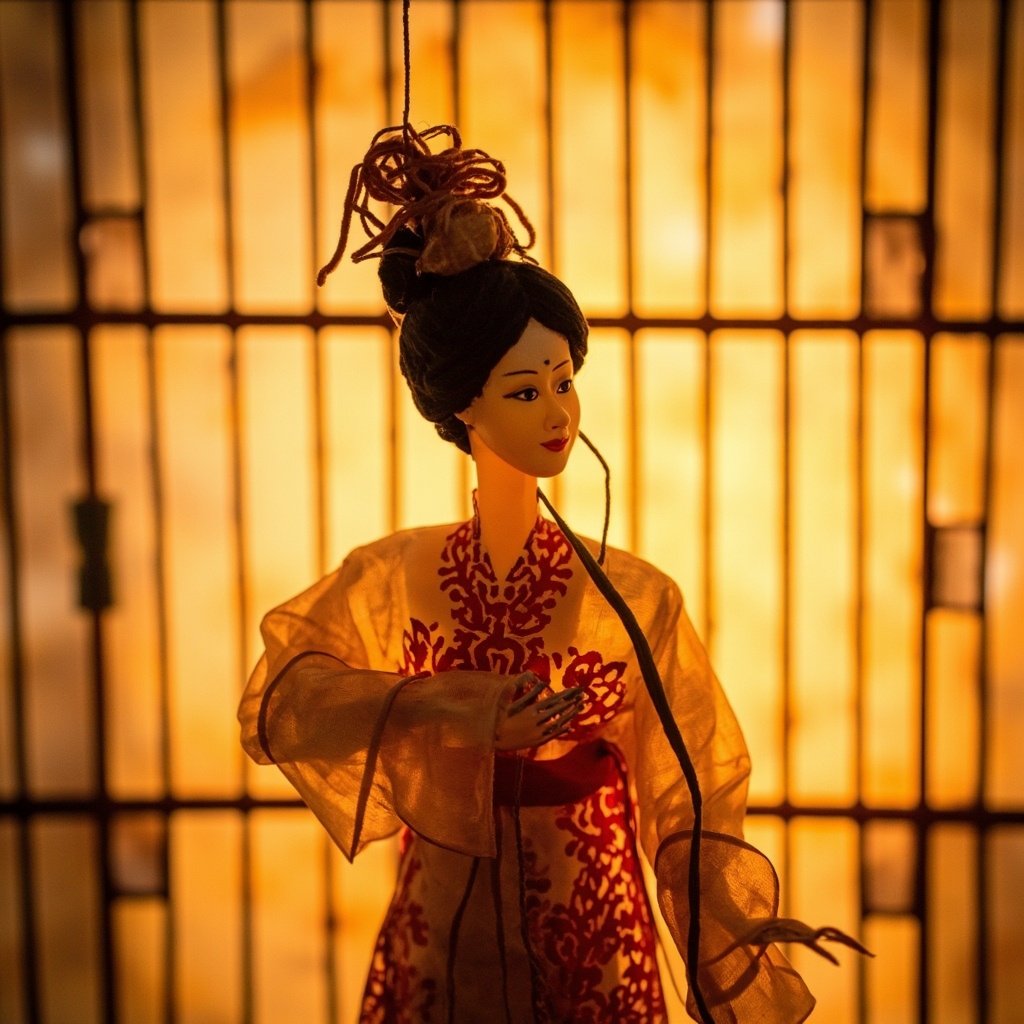
The art is called piying, usually translated as shadow play. A figure is cut from donkey, ox, or sheep hide, then scraped thin enough to be semi-transparent. The carver punches thousands of small holes that read as clothing, armor, scales, or feathers, then dyes each piece with mineral pigments and articulates the neck, wrists, and waist on thin bamboo rods. A single hero may need several joined pieces to walk, bow, and fight.
Performances happen behind a lit cotton screen. The audience sees only the flat, glowing silhouette and its colors, never the puppeteer. That separation is the heart of the form and the reason it reads as a symbol.
The Yin Yang of Light and Shadow
Feng shui studies complementary forces, and nothing demonstrates that more literally than a shadow play. The screen is yang: bright, exposed, forward-facing. The puppeteer is yin: hidden, still, in the dark. Neither produces the show alone. Remove the lamp and the screen goes blank; remove the screen and the light has nothing to catch.
This is the classic warning about homes that chase brightness without rest. A room blasted with overhead light all evening has strong yang and no shade, which leaves people restless rather than energized. A shadow puppet on a shelf reminds you that contrast is a design requirement, not a flaw. Practical feng shui treats it as layering: bright light near activity, softer light near rest.
The Five Elements Inside a Shadow Play
Almost every object can be read through the five elements, and a shadow puppet is unusually complete because a performance needs all of them:
- Fire is the lamp or oil wick that makes the figure appear.
- Earth is the hide itself, once living, now dry and stable.
- Wood is the bamboo control rods and the frame that holds the screen.
- Metal is the carving awl that opens thousands of holes.
- Water is the dye and the movement, the flowing line of a walking figure.
Because the fire component is real rather than symbolic, a shadow puppet display feels warm and active. That suits spaces needing gentle stimulation, and works poorly in a bedroom that already struggles with sleep.
What a Shadow Puppet Symbolizes
Figures are drawn from opera and folklore, so symbolism follows character type. A scholar in a tall hat points to study and examination luck. A general in armor with a banner is protection and command. A court lady with a fan is grace and social ease. A monkey king is cleverness, disruption, and the ability to talk out of trouble. Dragon and phoenix pairs carry the classic blessing meanings.
Beyond character, the art carries one more idea: what is hidden is not absent. The puppet you cannot see is the one doing the work, a useful corrective to the assumption that only visible objects matter.
Where a Shadow Puppet Belongs in Your Home
Treat the figure as art with a warm charge, and place it deliberately:
- The study or home office suits scholar figures and examination symbolism. Hang the frame on a side wall, not directly behind your chair.
- The living room display shelf works for general or opera figures, ideally on a light wall so the silhouette reads clearly in daylight.
- The entryway can host a guardian or general figure, provided the frame is not crowded by shoes and bags.
- Children and creativity spaces benefit from animal and monkey figures, which carry movement rather than authority.
Keep shadow puppets out of bedrooms, bathrooms, and any wall you face while trying to rest. The fire element and theatrical energy are stimulating, and a figure staring at a bed from a dark corner is not calming. If you display one in a dark hallway, add a small picture light so the piece reads clearly rather than gloomily.
Materials, Care, and What to Look For
Authentic pieces are hand-carved hide. Machine-printed paper look-alikes are common and cheap, but they fade and lose translucency. When choosing, check a few things:
- Translucency. Hold it toward a window. Good hide glows amber and shows the cut pattern through the body.
- Color depth. Mineral dyes sit in the material rather than on top of it.
- Joint condition. Old thread and wire rust are normal; brittle, cracking hide is not. Avoid pieces stored in damp rooms.
- Frame quality. A proper shadow box keeps the figure off the glass and away from direct sun, which bleaches dye within a season.
Display behind glass, away from strong afternoon sun, and dust with a dry soft brush rather than a damp cloth. Never soak hide. Humidity above roughly sixty percent invites mold, so a dehumidifier is more useful than any ritual.
Common Misunderstandings
Three ideas come up repeatedly. The first is that shadow puppets are dark objects because they involve shadow; in practice they belong to fire, not to the yin-heavy category of mirrors and dark stone. The second is that an old puppet carries bad luck from a travelling troupe. Age is not a feng shui defect; neglect, mold, and breakage are. The third is that a puppet must face a specific compass direction. Character figures are decorative symbols, not directional remedies, and the compass school treats them as art rather than a cure for a bad sector.
A Living Art, Not a Dead Curio
Shadow theatre is still performed, though the tradition is thin compared with a century ago. Recognized as intangible cultural heritage in China, it survives through small troupes, museum programs, and craftspeople who still carve by hand. Buying a hand-cut figure rather than a printed souvenir keeps a skill in demand and gives you something a poster cannot: a surface that changes with the light.
Bringing Shadow Into Your Space
A shadow puppet asks very little of a room: a light wall, a frame, and distance from glare. In return it delivers one of the oldest visual lessons in Chinese culture, that the visible and the hidden are halves of the same performance, and a space honoring both feels settled rather than flat. Choose a figure whose story you like, place it where light can reach it, and let the shadow do the rest.