Blog

Chinese Longevity Lock Feng Shui Meaning: The Silver Padlock Amulet
Walk through an older Chinese neighbourhood and you may still see a small child wearing a silver padlock on a red cord. It is not jewellery in the decorative sense, and it is not a toy. It is a longevity lock, one of the oldest protective amulets in Chinese folk and Taoist practice, and it carries a single, serious intention: to keep a life safely closed against loss. Understanding why a padlock became a symbol of long life reveals how traditional Chinese culture thinks about protection, family and fate.
What a Longevity Lock Actually Is
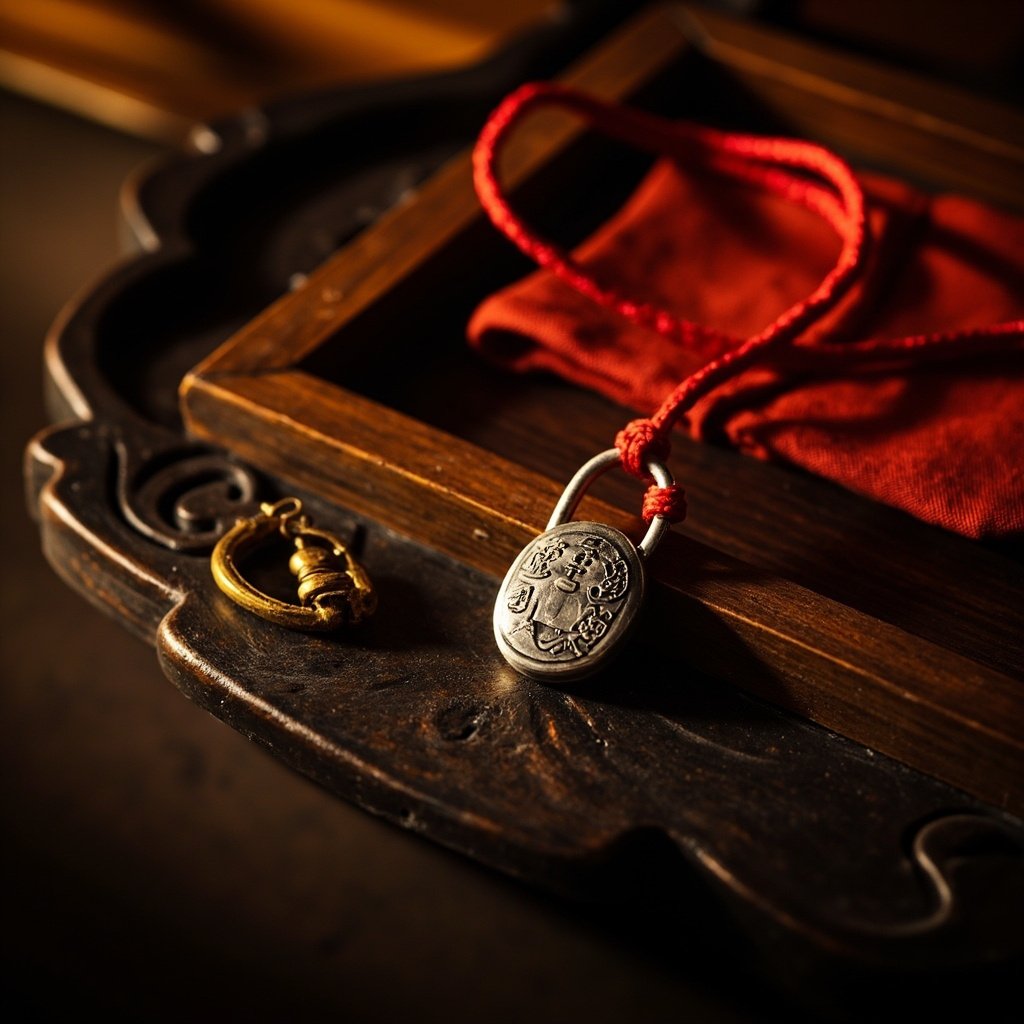
The longevity lock is known in Mandarin as the chang ming suo, literally the lock of long life. It is a pendant shaped like a padlock, usually made of silver, and traditionally hung around a child’s neck on a red silk cord. Some are flat and engraved, others hollow and rounded, and many hang with small bells or a tassel beneath the lock body.
The form matters more than the ornamentation. A padlock has one function: it holds a door shut. Applied to a person, the logic runs that a life which is locked cannot be taken away, and whatever is sealed inside stays inside. The amulet is therefore a boundary marker rather than a charm for ordinary good fortune. It protects what already exists.
The Symbolic Logic of the Lock and the Key
Traditional Chinese symbolism rarely works by a single association. The lock gathers several meanings at once, and each one reinforces the others.
- Closure. A locked gate keeps out what should not enter. In feng shui terms, the amulet reinforces the body’s own protective boundary, the same way a screen or a threshold protects a home.
- Retention. What is locked in cannot leak. Applied to vitality, the lock is understood to hold life force in place rather than letting it drain away.
- Permanence. A lock is meant to stay closed. The amulet expresses a wish for a bond, a life or a household that endures without interruption.
- Responsibility. The person who holds the key is the one who takes care. In the traditional setting, that is the parent, grandparent or godparent who commissioned the piece.
This is why the lock is rarely a casual gift: it marks obligation as much as affection.
The Hundred Family Lock and the Shared Blessing
One of the most distinctive customs surrounding the longevity lock is the hundred family lock. Rather than a single family buying the amulet, neighbours and relatives each contribute a small amount of silver, which is melted down and worked into one lock. The finished piece is understood to carry the goodwill of a hundred households rather than one.
The practice reflects an old idea: blessing accumulates when shared. A child protected by a whole community is considered safer than one protected by parents alone, and the amulet becomes a record of that wider network. Similar customs exist for the hundred family quilt and the hundred family rice, all built on the same premise.
Materials and What They Signal
Material choice is not arbitrary. Each metal or stone carries its own traditional association, and the pairing with the lock shape changes the emphasis.
- Silver is the classic choice. It is associated with purity and with the ability to draw out impurity, which is why silver is used so widely in Chinese protective jewellery.
- Jade adds the dimension of gentleness and moral steadiness. A jade lock is quieter in tone and is often chosen for a child who is considered delicate.
- Cinnabar brings a strong yang quality and is traditionally used where protection against disturbance is the main concern.
- Brass or gilded metal is common in household versions, where the lock functions as a decorative protection piece rather than something worn.
Where a Longevity Lock Belongs in a Home
Although the amulet originated as something worn, many households now keep a longevity lock as a static protection piece. Placement follows ordinary feng shui reasoning about boundaries and rest.
- A child’s room, near the bed but not above the head. The intention is a calm perimeter around sleep, not an ornament to be looked at.
- The bedside table of an elderly parent. This is the most common modern use, where the emphasis shifts from childhood protection to health and steadiness in later years.
- The entry area, on a hook or small tray. Here the lock reads as a boundary object, reinforcing the threshold between the household and the street.
- A small altar or shelf with other consecrated items. Locks are often grouped with gourds, bells and blessing cords rather than displayed alone.
Two placements are best avoided. Hanging a lock directly over a bed can feel heavy or confining to the people sleeping beneath it, and placing one in a bathroom or laundry area places a symbol of retention in a room associated with drainage.
The Lock, the Five Blessings and Personal Timing
The longevity lock belongs to the wider family of Chinese blessing symbols that cluster around the five blessings: long life, wealth, health, virtue and a peaceful end. Of these, the lock speaks most directly to long life and health, which is why it is gifted at birth, at the first full year, and sometimes at a grandparent’s significant birthday.
In the more formal traditions of Tian Xing feng shui, the timing of a gift like this is sometimes matched to the recipient’s own chart, so that the piece supports a weak element rather than adding to one already in excess. A metal lock, for example, is a natural fit for someone whose chart runs low on metal, and less suitable for a person already carrying a heavy metal signature. This is where a folk amulet becomes a considered tool, not a generic present.
Choosing and Caring for a Longevity Lock
- Choose the material by intention, not by price. Silver for general protection, jade for steadiness, cinnabar for stronger protective emphasis.
- Check the cord and clasp. A worn red cord undermines the whole idea of the piece; replace it as soon as it frays.
- Keep it clean and dry. Silver tarnishes and cinnabar dislikes moisture. A soft cloth and a dry box are enough.
- Handle it with intention. Traditional practice treats consecrated objects as something to be touched deliberately rather than casually handled by guests.
- Retire it respectfully. When a piece is no longer worn, wrap it in cloth and store it rather than discarding it.
A Symbol of Care, Not a Guarantee
The longevity lock is best understood as an expression of attention. It does not replace medical care, safe surroundings or good judgement. What it does is give a family a physical object around which to gather a clear intention: that this person should be protected, that this life should run its full length, and that the household will hold the boundary on their behalf. In a tradition that has always treated objects and intentions as connected, that is considered a real form of support, and it is why a small silver padlock has survived for centuries.