Blog
Cinnabar Feng Shui Meaning: Vermillion Talisman Protection and Yang Energy Guide

Cinnabar Feng Shui Meaning: Vermillion Talisman Protection and Yang Energy Guide
Cinnabar, the fiery red mineral long known in the West as vermillion, holds a central place in Taoist practice as a yang energy talisman for spiritual protection. For more than two thousand years Daoist priests and ordinary households across East Asia have used cinnabar to write fu charms, seal talismans, paint door guardians, and craft personal amulets. The deep scarlet color is not chosen for decoration. It is chosen because the hue itself is believed to carry the full strength of pure yang fire, the most active and protective force in classical Chinese cosmology.
This guide explains the feng shui meaning of cinnabar, the role of vermillion in Taoist ritual, and the practical rules for placing an amulet in the home.
What Is Cinnabar in Taoist Practice
In Chinese the mineral is called zhu sha, meaning vermillion sand. In its natural form it is bright scarlet mercuric sulfide, and after grinding and washing it becomes the fine pigment Daoist priests use to brush seals, charms, and sacred script. Because the color is so vivid and stable, cinnabar ink has been the standard medium for any talisman that must hold yang authority for a long time. Even a small touch of cinnabar on yellow paper is said to raise the protective charge of that talisman far above ordinary ink, and the pigment is therefore treated as a ritual tool, not a dye.
The Symbolism of Vermillion in Taoist Tradition
Vermillion is the color of the southern direction, the fire element, the heart, and the midday sun at full strength. In the five elements cycle fire controls metal, melts ice, and burns away what is hidden or stale. Daoist iconography assigns vermillion to anything that must remain uncorrupted by yin decay or wandering negative qi. The gate guardians painted on Lunar New Year, the seal stamped on an exorcism charm, and the red dot on a child forehead during a temple blessing all draw on this same fire meaning. The word vermillion is also used in older translations as cinnabar red, and in modern English copy you will most often see cinnabar, vermillion, and Taoist talisman grouped together, all pointing to the same mineral and the same yang symbolism.
Yang Energy and Spiritual Protection
Yang energy is the active, bright, rising, and outward half of qi. Yin is the quiet, dark, sinking, inward half. A healthy home needs a balance of both, but in modern apartments built of concrete and lit by cool light, yin tends to grow heavy. Cinnabar amulets are used to bring yang back to the surface of the environment and complement a clean, orderly space. When worn close to the body, a cinnabar amulet is said to create a small moving field of yang qi that travels with the wearer. Many practitioners report feeling more centered in crowded places, on long commutes, or in rooms where the air feels emotionally heavy.
Common Forms of Cinnabar Amulets
- Painted fu paper charms hung on walls or above doorways.
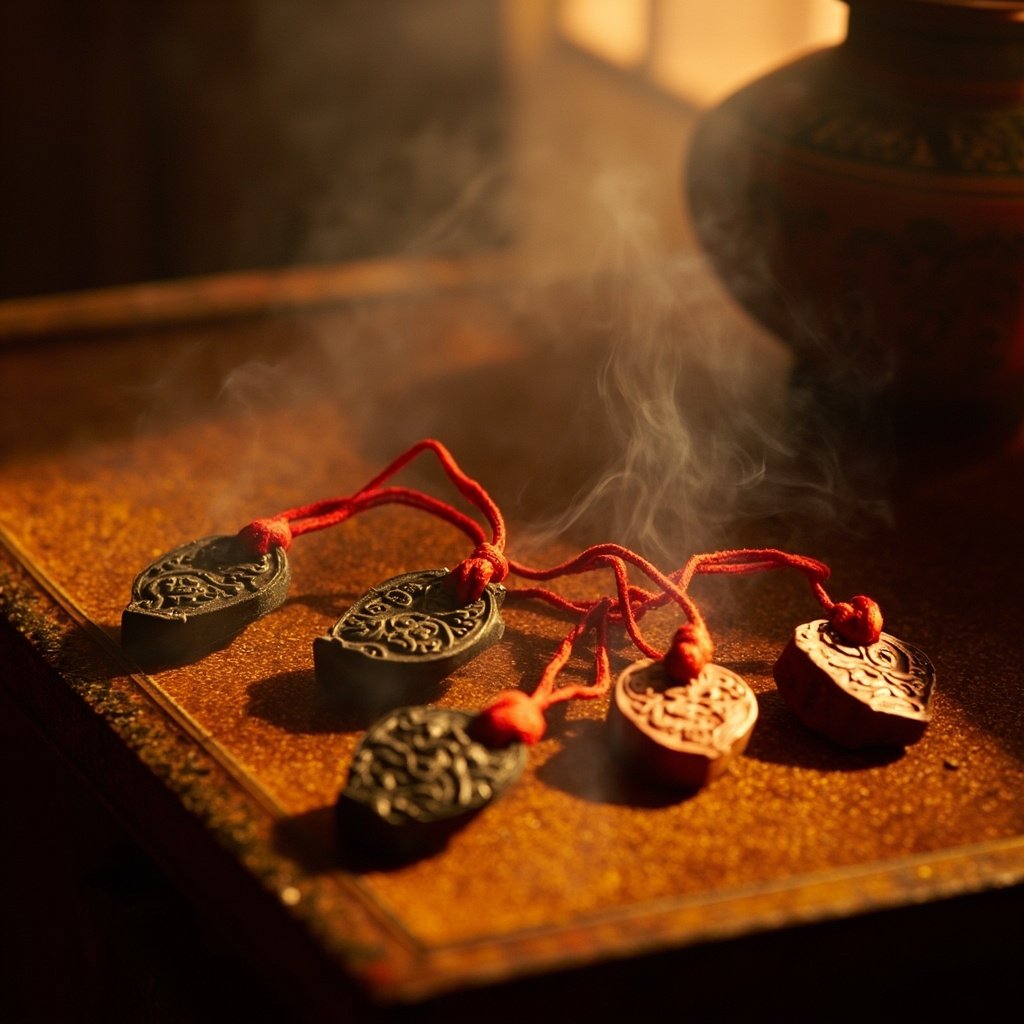
- Carved cinnabar beads strung into bracelets or necklaces.
- Cinnabar seal stamps pressed into red wax on envelopes and doors.
- Small cinnabar pendants set in silver or gold settings.
Each form carries a similar yang charge. The painted fu paper is the most traditional, and the carved bead amulet is the most practical for daily wear.
Where to Place a Cinnabar Amulet in Your Home
Placement matters more than the size of the amulet. A large cinnabar charm in the wrong sector of the home can over activate fire, while a small one in the right spot will steady the whole house.
- Hang a vermillion fu charm on the inside of the front door, eye level, facing in.
- Place a small cinnabar amulet in the center of the home, the tai ji position, on a high shelf.
- Set a cinnabar bead bracelet or pendant on your desk if you work from home, on the right hand side.
For apartments that feel cold or damp, a single cinnabar fu above the bedroom door is often enough. Avoid placing cinnabar amulets directly on the floor, in the kitchen near an open flame, or in the bathroom, where the yang fire is weakened or washed away.
Carrying a Cinnabar Amulet on the Body
If you carry cinnabar daily, treat the amulet as a small sacred object. Keep it in a clean pouch, do not lend it to others, and avoid dropping it on the ground. Many practitioners remove the charm before sleep, before entering a funeral home, and before a hospital visit.
- Wear on the left wrist or as a pendant over the heart for general yang support.
- Keep a small fu paper charm in the inner pocket of a briefcase when traveling.
- Store a backup cinnabar bead in a red envelope inside the home altar drawer.
Cleansing and Caring for a Vermillion Talisman
Cinnabar amulets absorb the qi of the space around them and benefit from a gentle monthly reset. The goal is to clear stale yin without damaging the painted surface.
- Hold the amulet over a small dish of coarse sea salt for one night at the start of each lunar month.
- Pass the talisman briefly through the smoke of sandalwood or agarwood incense.
- Rest it on a windowsill under morning sun for a short time, never long enough to heat the stone.
- Return it to its red pouch and place it back in its usual position in the home or on the body.
Never wash a painted fu paper charm with water, because the cinnabar ink is sealed on the surface and water will lift it. For bead and pendant forms a soft dry cloth is enough for regular care.
Who Should and Should Not Wear Cinnabar
Cinnabar is strong fire energy. For most healthy adults it is safe and supportive, but a few cases need care.
- People with high blood pressure should consult a practitioner before long term daily wear.
- Pregnant women in the first trimester are advised to carry cinnabar only occasionally.
- Children under seven should not sleep with a cinnabar amulet on the body.
Frequently Asked Questions About Cinnabar Amulets
Is cinnabar the same as vermillion in modern use?
Yes. Cinnabar is the mineral, vermillion is the pigment ground from it, and in English the two words are near synonyms in Taoist and feng shui writing.
Can I sleep with a cinnabar amulet on my wrist?
It is gentler to remove the amulet before sleep. The body rests in a yin state at night, and constant fire contact can lead to vivid dreams or restless sleep.
How often should I replace a painted cinnabar fu charm?
Once a year, around the Lunar New Year, is the classical rhythm. If the paper darkens or fades before then, replace it on the first suitable day of the new lunar month.
Does a cinnabar amulet need to be activated by a priest?
For a basic protective charm, no. A clean intention and correct placement is enough. For a stronger ritual talisman, a Daoist priest can open the seal with a short ceremony.