Blog

Guanyin Feng Shui Meaning: The Compassion Goddess Guide
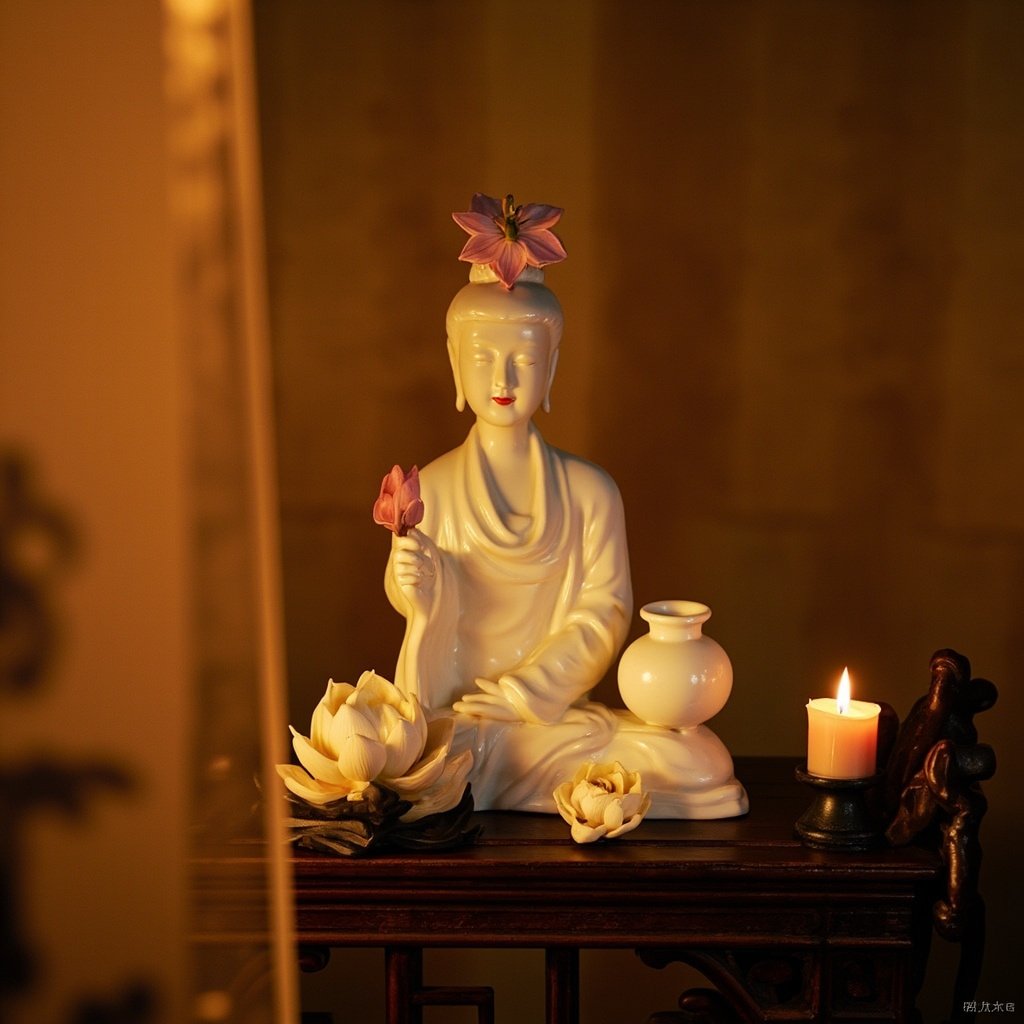
Few symbols in Chinese spiritual culture carry as much quiet power as Guanyin, the Goddess of Mercy. Walk into a Chinese home, a teahouse, or a temple courtyard and you will likely meet her image, seated on a lotus with a small vase in hand, her face calm and unhurried. In feng shui, a Guanyin statue or pendant is never mere decoration. It is a deliberate anchor for compassion, protection, and emotional steadiness.
Who Is Guanyin, the Goddess of Mercy?
Guanyin is the Chinese name for the bodhisattva of compassion, known in the Sanskrit tradition as Avalokiteshvara and in Cantonese communities as Kwan Yin. Classical texts describe her as the one who hears the sounds of the world: every cry, every sorrow, every silent worry. Across centuries of Chinese devotion that figure merged with local stories of a compassionate princess, with Taoist ideas of merciful energy, and with the lotus imagery of Buddhist practice.
For a modern reader, her function matters most. Guanyin does not reward ambition. She settles the heart. That single distinction explains why her presence behaves so differently from wealth symbols such as the pixiu or the three-legged toad.
The Core Guanyin Feng Shui Meaning
At its simplest, the Guanyin feng shui meaning is protective compassion. She represents the kind of energy that softens conflict, absorbs grief, and restores a sense of safety. Practitioners of Tian Xing Feng Shui treat her as a stabilising influence rather than an activating one.
- Protection — invoked for safe journeys, safe childbirth, and support during illness.
- Compassion — her presence discourages harsh speech and impulsive anger.
- Emotional healing — she belongs where grief, anxiety, or sleeplessness lingers.
- Family harmony — the gentle, non-confrontational energy that keeps a household calm.
Guanyin in Taoist and Folk Practice
The image of Guanyin was absorbed into Chinese folk religion so completely that countless households treat her as a household guardian. In Taoist-influenced practice she sits beside other benevolent figures on a family altar, receiving simple offerings of clean water, fruit, and incense. She is also a familiar figure in Chinese diaspora homes, where her image often travels with a family across generations.
You will see her in several classical forms. The standing Guanyin with a vase pours out compassionate energy over the world. The seated Guanyin on a lotus signals serenity and inner cultivation. The thousand-armed form expresses her willingness to help in every direction at once. Each form carries the same core message, so choose the one that speaks to you rather than the one that looks most elaborate.
Where to Place a Guanyin Statue
Placement follows one rule: honour and calm. Choose a position that is respectful, clean, and easy to keep tidy.
- A quiet living room or meditation corner. A raised shelf or small altar away from foot traffic works beautifully.
- A dedicated altar shelf. If your family keeps an altar, Guanyin belongs there at a slightly elevated level.
- A study or reading nook. Her calming presence suits rooms used for reflection and study.
- A bedside area for emotional support. A small statue facing the room, never directly at the sleeper, is acceptable.
Keep her away from bathrooms, kitchen stoves, laundry areas, and anywhere she would face a toilet or a rubbish bin. Do not place her on the floor or beneath a staircase. If you wear a Guanyin pendant, let it rest against the chest or the collarbone rather than swinging loose.
Materials and Colours That Suit Guanyin
Traditional materials carry their own symbolic weight. Jade and white porcelain express purity, sandalwood and rosewood bring warmth and devotion, and cinnabar or red cord adds protective strength. Blue enamel work, common in devotional jewelry, echoes the calm of clear water. Silver and gold accents are acceptable, though they should remain restrained rather than showy.
Colour choices follow the same logic. White, pale jade green, soft blue, and warm wood tones all suit her energy. Loud metallics and aggressive reds belong with wealth or protection symbols, not with the Goddess of Mercy.
Guanyin, Lotus, and Bodhi: Reading the Symbols
- The lotus — purity rising out of muddy water, the classic image of spiritual growth.
- The vase — the vessel of compassionate nectar poured out for all beings.
- The willow branch — gentle healing, the soft touch that soothes fever and grief.
- Bodhi beads — the mala used for mantra recitation and steadying the mind.
- The child — the well-known theme of granting the blessing of children.
Simple Daily Rituals
Guanyin practice is deliberately low-key. A small glass of clean water changed each morning, a stick of natural incense, a bowl of fresh fruit, and a few minutes of quiet breathing are enough. Many households recite a short mantra or simply speak a sincere wish. What matters is consistency and sincerity, not expense.
If you keep a mala, a white jade or bodhi strand works well. Roll the beads slowly, one breath per bead, and let the rhythm settle your attention.
Common Mistakes to Avoid
Three mistakes show up again and again. The first is clutter: a dusty, crowded altar shelf undermines the calm she represents. The second is positioning her as a wealth display, surrounded by coins and ingots. The third is neglect: once placed, the image should be dusted and honoured rather than treated as forgotten decor.
Guanyin and Other Compassion Remedies
Guanyin is often combined with other gentle remedies. A carved lotus, a jade peace buckle, or a bodhi mala sits alongside her without conflict. Where a home carries heavy conflict, practitioners add a small bowl of clean water and a soft light, since the water represents the flow of compassion. Avoid aggressive protection symbols such as a coin sword in the same small space, since the two energies pull in opposite directions.
Bringing Compassion Home
The Guanyin feng shui meaning is ultimately about atmosphere. She asks for a clean corner, a little water, an occasional candle, and a softer tone of voice in the house. Households that keep her well often report that she gives back exactly what she represents: a place where arguments cool faster, where grief has somewhere to rest, and where the family simply feels safer coming home.
If you are drawn to Guanyin, begin with a single figure or a consecrated pendant rather than a full arrangement. Live with it for a season. In Chinese practice, a symbol earns its place through attention, and Guanyin rewards attention with a calm that spreads quietly through the whole home.