Blog

Taoist Incense and Aromatherapy: Sacred Scents for Feng Shui Energy Clearing
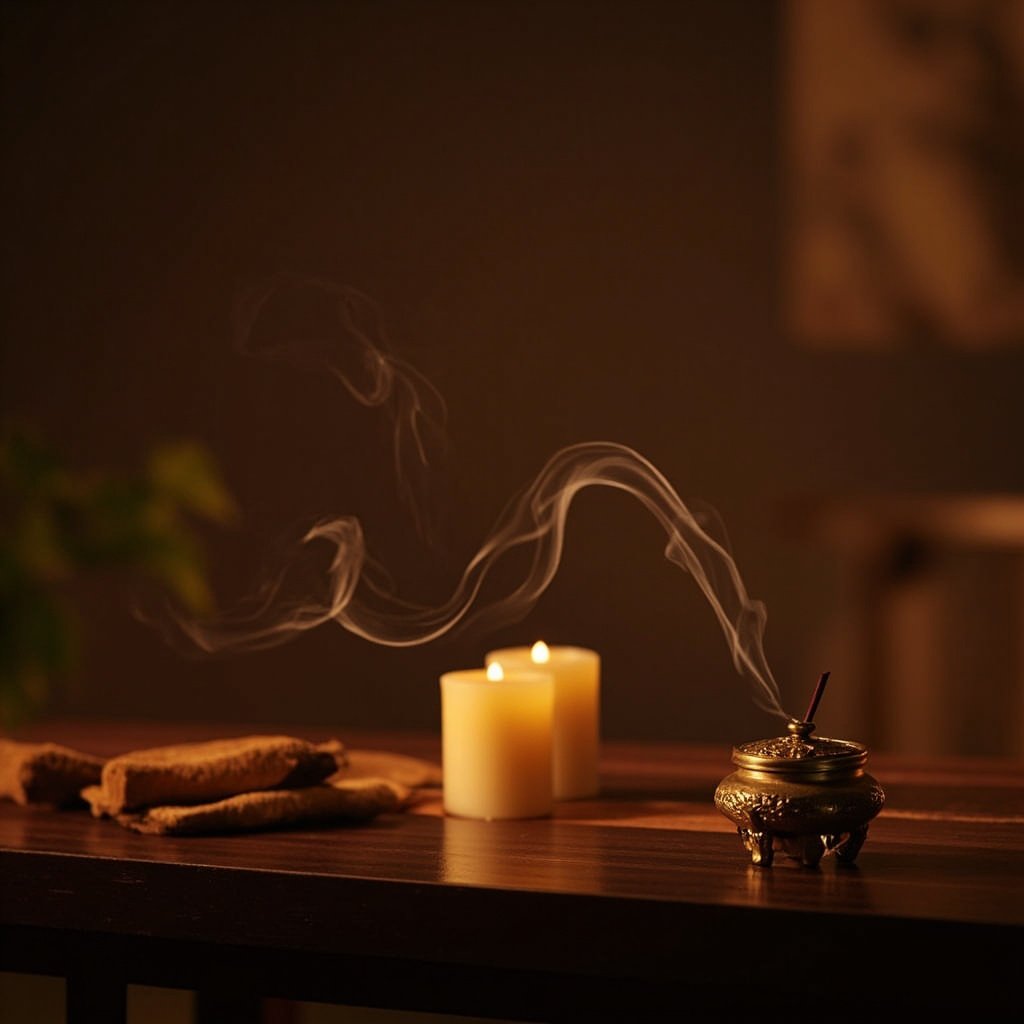
Long before aromatherapy became a modern wellness trend, Taoist practitioners understood that scent is a direct channel to the subtle body. Incense has burned on Chinese altars for more than two thousand years, not as decoration but as a working tool. In Taoist practice, smoke carries intention upward, dissolves stagnant chi, and prepares a space to receive clearer energy. For anyone who practices feng shui at home, incense is one of the simplest and most underrated ways to shift the atmosphere of a room.
This guide explains the role of incense in Taoist tradition, how it relates to feng shui energy clearing, and how to choose and place sacred scents in a modern home.
Why Scent Matters in Taoist Practice
Taoist cosmology describes the human being as a layered system of energies. Alongside the physical body sit subtler layers, and the breath is treated as the bridge between them. Because scent enters through the breath, it bypasses ordinary mental resistance and reaches the body’s energy field quickly. This is why incense opens nearly every Taoist ritual: it settles the mind, quiets the room, and signals that ordinary time has been set aside.
The three classic offerings in Taoist practice are incense, light, and water. Incense comes first. A single stick lit with attention is considered a complete act of respect, which is why even the smallest home altar begins with a burner and one clean flame.
How Incense Supports Feng Shui Energy Clearing
Feng shui works on the movement of chi, the life energy that circulates through a home. When chi moves smoothly, rooms feel light and rooms feel rested. When chi stalls, the same rooms feel heavy, restless, or oddly tense. Incense addresses stagnation at the level of air and attention at once.
Smoke rises and drifts. It reveals where air actually travels in a room, tracing the paths that chi follows. Burning a stick of incense near a corner that feels dull will often show you that the air there never moves. That single observation can point to a feng shui remedy as simple as a small fan, a plant, or a rearranged chair.
The ritual itself also matters. Lighting incense is a deliberate pause. In feng shui terms, that pause resets the room’s energetic tone; in practical terms, it clears the mental clutter that makes a space feel unfinished.
The Core Sacred Scents and Their Uses
Traditional Taoist and Chinese households rely on a small family of aromatic materials, each with a distinct character.
- Sandalwood (tan xiang). Warm, grounding, and steady. Used for meditation, grounding practice, and rooms that need calm rather than uplift. Excellent in bedrooms and study areas.
- Agarwood (chen xiang). Deep, resinous, and precious. Traditionally associated with purification and spiritual focus. Often reserved for altars and quiet practice spaces.
- Frankincense. Bright and clarifying. Popular for entryways and living rooms where chi should move freely and guests should feel welcome.
- Mugwort (ai cao). Sharp and medicinal. Burned as a purifying smoke to clear a room after illness, argument, or a period of heavy emotion.
- Citrus peel and dried orange. Light and lifting. Used to refresh stale rooms, especially kitchens and bathrooms where dampness gathers.
- Cedar and cypress. Cool and steadying. Frequently paired with the western and northwestern sectors in feng shui practice.
Choosing Incense: Stick, Cone, Coil, or Resin
The form matters less than the quality, but each form suits a different use.
- Sticks. The everyday choice. Easy to control, short burn time, ideal for a brief daily clearing before work or after guests leave.
- Cones. Denser smoke, stronger presence. Useful for a room that needs a decisive reset.
- Coils. Long burn times measured in hours. Traditional for temples and for days dedicated to extended practice.
- Loose resin on charcoal. The most traditional method. Requires more care but produces the richest, most ceremonial scent.
For feng shui purposes, avoid synthetic fragrance oils and perfumed sprays. They add scent but not the clean, moving quality that smoke provides. Natural materials cost more and are worth it.
Where to Burn Incense in the Home
Placement follows the same logic as any feng shui adjustment: work with the flow of chi rather than against it.
- Entryway. A single stick near the front door clears incoming energy and marks the threshold between outside and inside.
- Living room. Light incense before guests arrive and after they leave. It lifts the room and clears the residue of conversation.
- Altar or practice space. Always the first stick of the day, often the last of the night.
- Study or home office. Sandalwood supports concentration and is traditionally favored for work that requires sustained focus.
- Bedroom. Keep it light and finish burning well before sleep. Ventilation matters more here than anywhere else.
- After disruption. Use mugwort or cedar following an argument, a move, or a difficult season to restore a neutral baseline.
Practical Safety and Courtesy
Incense is fire, and smoke is smoke. Keep burners on stable, heat-resistant surfaces away from curtains and paper. Never leave a burning stick unattended. Open a window or run a fan so the room exchanges air rather than simply filling with it. In shared buildings, respect neighbors and housemates, and choose lighter scents in small, sealed rooms.
If you live with asthma or sensitivity to smoke, the same principles can be honored with a warmed essential oil diffuser used with intention. The ritual and the placement remain the same; only the delivery changes.
Making Incense a Daily Feng Shui Habit
The value of incense in feng shui does not come from a single dramatic ceremony. It comes from repetition. A stick lit each morning at the entry, a moment of quiet before work, and a short clearing at the end of the day build a rhythm that keeps a home’s energy moving.
Start simply. Choose one natural scent you genuinely enjoy, one safe burner, and one consistent time of day. Within a few weeks, the act itself becomes the cue: the room settles, the mind settles, and the practice sustains itself. That is the quiet power of Taoist incense. It asks for almost nothing and gives a home back its clarity.