Blog

Your Nine Star Destiny: Finding Your Personal Star in Tian Xing Feng Shui
Most people first encounter feng shui through the arrangement of furniture, mirrors, and crystals in their homes. Yet the most personal and often overlooked layer of this ancient art is the sky itself. Tian Xing Feng Shui, the celestial school of wind and water, reads the influence of the stars on human life. Among its most practical gifts is the Nine Star system, an elegant method that assigns every person a “natal star” based on their year of birth. That star reveals the natural rhythm of your energy, your strengths, your challenges, and the directions that best support you. Understand it, and you can begin to decorate, work, and rest in harmony with your own celestial signature.
What Is the Nine Star System in Tian Xing Feng Shui?
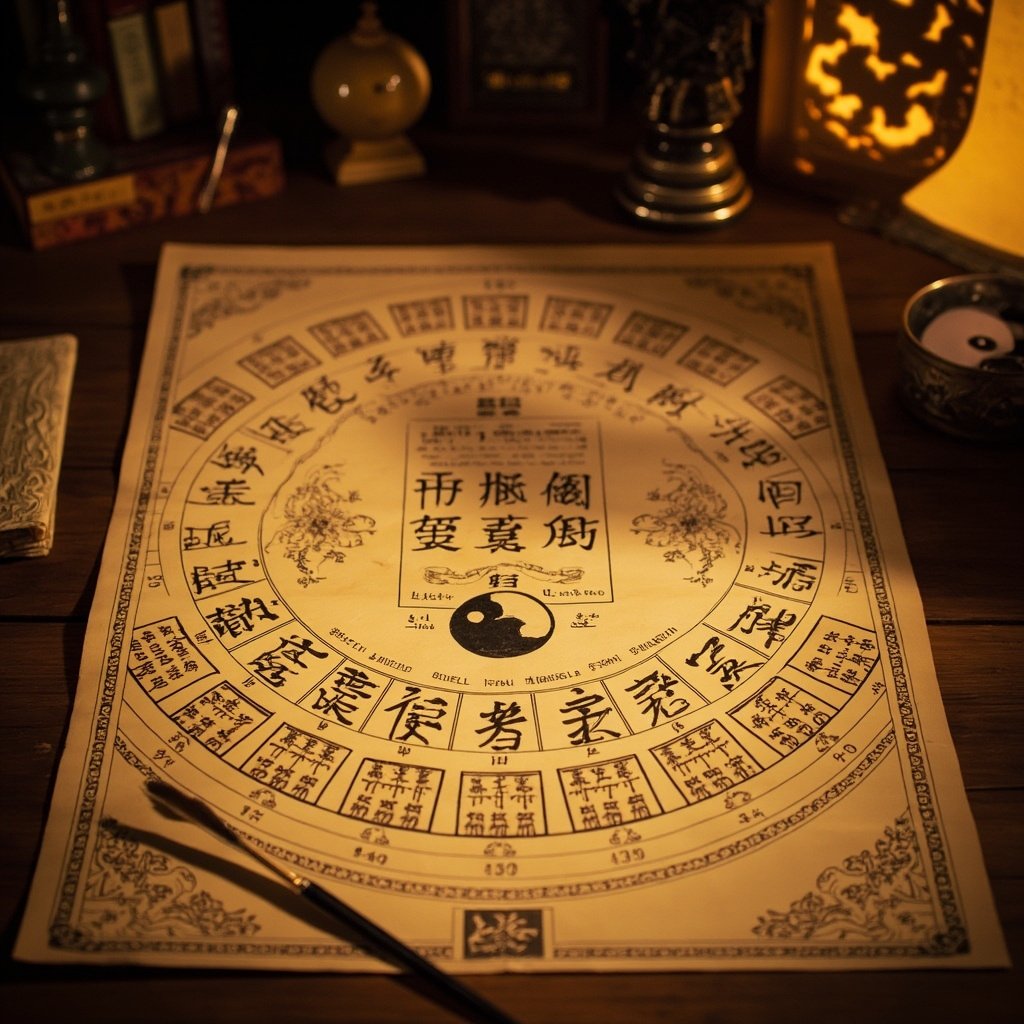
The Nine Stars are nine celestial bodies mapped onto a traditional grid known as the Lo Shu square. Each star carries a number from one to nine, a direction, an element, and a set of qualities. Together they describe the flow of chi as it moves through time and space. When you are born, the configuration of these stars stamps into your chart a year star that colors your character and fortune.
- One White, the water star, governs intelligence, sensitivity, and clear perception.
- Two Black, an earth star, is associated with family, patience, and the challenges of relationship.
- Three Jade, a wood star, is the star of ambition, action, and uprightness.
- Four Green, another wood star, rules scholarship, romance, and the arts.
- Five Yellow, the earth center, is the notorious “ill star” that cautions against confrontation.
- Six White, a metal star, embodies authority, discipline, and leadership.
- Seven Red, a metal star, is linked to eloquence, rivalry, and strategic thinking.
- Eight White, an earth star, is the star of accumulating wealth and long-term prosperity.
- Nine Purple, a fire star, represents recognition, celebration, and public success.
Each of these stars rotates across the grid year by year, which is why some years feel bright and others heavy. Your natal star, however, stays fixed for life. Knowing it gives you a stable reference point in an ever-shifting celestial calendar.
How to Find Your Personal Star
Traditional masters compute the natal star with the lunar calendar and the moving year chi, a calculation best left to a trained practitioner for full precision. For a beginner, a simple shortcut uses the Western birth year. For those born before the lunar new year, the previous year applies, so consult a lunar calendar to confirm. The result hands you a number from one to nine that becomes your personal star.
Rather than memorizing formulas, use your number as a lens. If you are a One White, you may be quick, analytical, and sensitive to noise, so a quiet study and gentle blue accents support you. An Eight White person thrives with earth tones, storage that feels grounded, and monuments to steady effort. A Nine Purple person lights up with warm colors, celebratory displays, and visible recognition of achievement. In every case, the star indicates the environment in which your energy flows most freely.
Aligning Your Home with Your Natal Star
The classic approach pairs your personal number with the favorable directions of the Eight Directions chart, a compass-reading practice that is best confirmed by an experienced consultant. Even without professional gear, you can align intuitively. Place your desk so you face one of your star’s lucky directions. Position your bed so your head rests in a supportive sector. Give your front door a clear, uncluttered approach that welcomes beneficial chi rather than scattering it.
Taoist energy products magnify this alignment. A small water feature near your headboard or desk calms a fiery star. A naturally zoned layout that separates rest, work, and gathering honors the way each star flows. Crystals, when chosen for the missing element of your chart, gently rebalance what the sky has underserved. The goal is not to control your fate but to make your surroundings cooperate with the temperament the stars gave you.
Working with the Moving Stars of the Year
Beyond your natal star, the annual stars drift through the Lo Shu grid, visiting each corner of your home in turn. Track two that matter most: the auspicious star of prosperity and the cautionary star of ill luck. In years when the prosperity star lands in your entrance hall or your bedroom, keep those spaces clean, bright, and energized. When the cautionary star visits a sector, reduce activity there, avoid renovation, and keep the area quiet and orderly so its disruptive chi has little to act upon.
This is why a yearly review of your home is a wise habit. The furniture that served you last year may sit in a sector that now asks for stillness. A small adjustment, shifting a chair or adding a screen, can reframe the energy of an entire season. You are not chasing superstition; you are practicing attentiveness to the environment in which you live and sleep.
Practical Steps to Begin
- Confirm your birth year against the lunar calendar and identify your natal star.
- Mark the favorable and cautionary directions for your chart on a simple floor plan.
- Place your desk, bed, and entry in the supportive sectors as far as your layout allows.
- Add one rebalancing element, such as a water feature or a calming crystal, if your star’s element is underrepresented.
- Review the placement of the annual flying stars each lunar new year and adjust accordingly.
A Quiet Conversation with the Sky
Tian Xing Feng Shui reminds us that we are not separate from the cosmos. We are participants in it, breathing within the same winds and under the same stars that have guided thoughtful people for centuries. Your natal star is not a verdict on your fortune; it is a description of your nature, a gentle nudge toward the environments and habits in which you flourish. Start with your number, read its story, and let one intentional change ripple through your home. The sky has been speaking all along. With a little practice, you will learn to listen, and to arrange your daily life as a quiet, harmonious answer.